Ghana · Southern Ghana, Côte d'Ivoire
The Akan
Wedding Tradition
The Akan people form the largest ethnic cluster in Ghana, encompassing the Ashanti, Fante, Akyem, Akuapem, Brong, and several others. While each subgroup carries distinct local flavour, all share a foundational wedding architecture: the Knocking Ceremony, a formal exchange of gifts, and the presentation of the united couple before the extended family and community.
The Akan matrilineal system shapes everything. A child belongs to the mother's clan (abusua), not the father's. This means a wedding creates an alliance between two matrilineal lines, and negotiations account for what each family is both giving and receiving, culturally, spiritually, and practically. Understanding this is essential to understanding any Akan ceremony.
Quick Facts
The Wedding Structure
Key Ceremonies
Mpena Aware
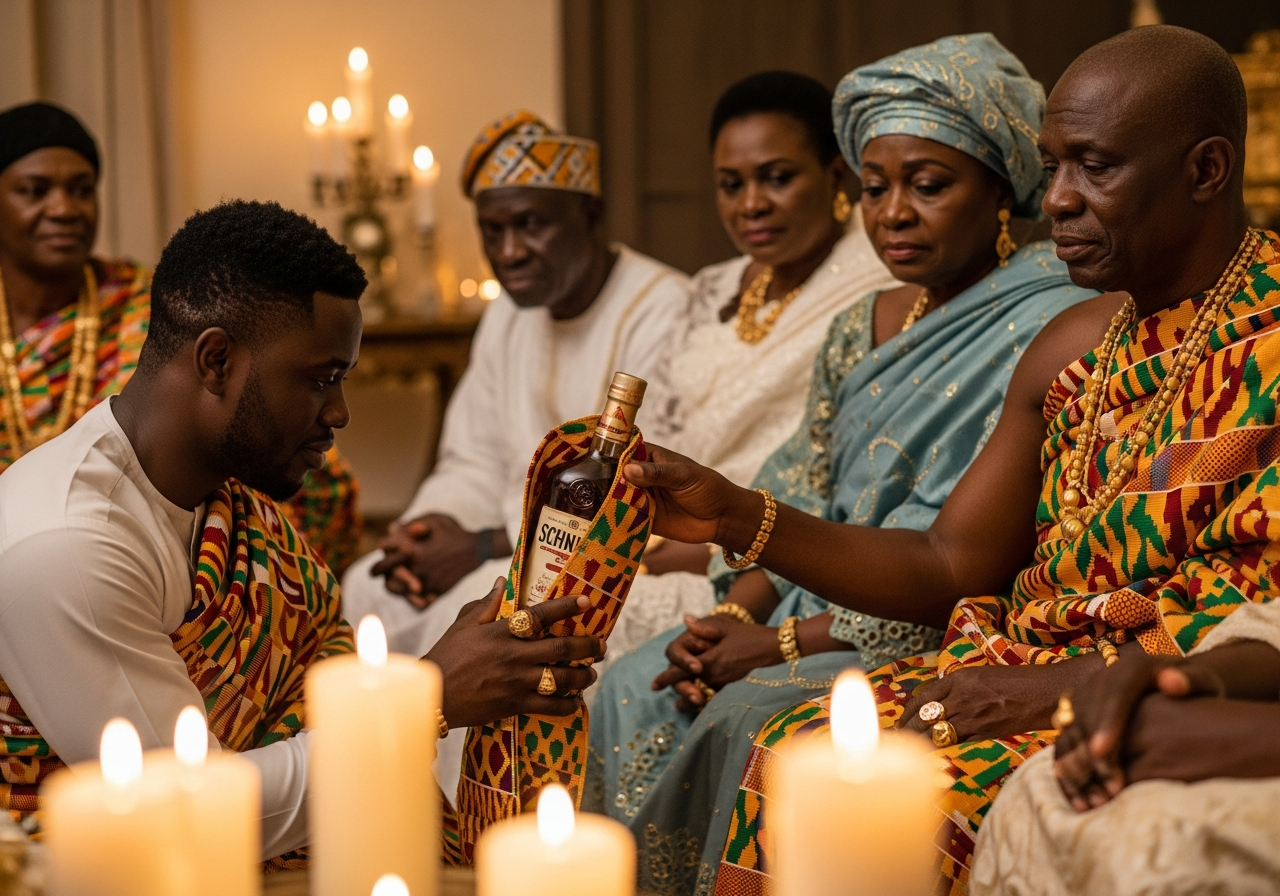
Knocking
The groom's family visits formally with schnapps, kola nuts, and gifts. The degree of formality and the specific items vary by region and social standing, but the structure is universal across all Akan subgroups.
Kente Selection
Ntama na Aware
The couple consults with weavers and family elders to select kente patterns whose names and meanings reflect the values of their union. Many families commission custom kente with the couple's names woven into the border.
Adwa (Thanksgiving)
A post-wedding thanksgiving held at the family home, where the newly married couple formally greet and receive blessings from every elder present. The bride is guided through the house by a female elder who names each room and its significance.
What Makes This Tradition Unique
Sacred Elements
Matrilineal Lineage
In Akan culture, family membership is traced through the mother. A man's children belong to his wife's clan. This shapes inheritance, naming, and how families negotiate. The wedding doesn't just join two people, it joins two abusua.
Strip-Woven Kente
Kente is woven in four-inch strips on traditional looms, then sewn together. The mastery of pattern combinations, warp and weft in dialogue, has been recognised by UNESCO as Intangible Cultural Heritage of Humanity.
Adinkra Philosophy
Over 300 adinkra symbols encode Akan philosophy in visual form, appearing on cloth, walls, jewellery, and pottery. The Sankofa bird (go back and fetch it) is most universally resonant: look back to move forward with wisdom.
Attire
Akan brides wear kente in their family's colours, often with a duku (headwrap) crafted from matching fabric. Layers of Krobo glass beads, from simple strands to elaborate chest-plates, are the definitive Akan bridal accessory.
Grooms wear kente draped toga-style, typically a dark base (etu/indigo) with bright warp stripes. Gold sandals, rings, and a walking staff complete the ceremonial look for men of standing.
The Music
Akan wedding music blends highlife guitar rhythms with traditional drumming. The Atumpan talking drums from Ashanti, the kpanlogo from Accra, and Adaha brass bands from the Cape Coast are all found at significant Akan celebrations.
Practical Guide
For Guests Attending a Akan Wedding
Arrive 30–60 minutes after the stated time, African time is a courtesy, not a failing.
Any African print (kente, ankara, batik) works well for guests; all-black is avoided as it evokes funerals.
Bring a gift; cash in an envelope is the most practical and warmly welcomed option.
If invited to eat, accept, refusing food is seen as a cold rejection of the family's hospitality.
Useful Phrases
Words for the Occasion
Greeting elders first is essential
Said to the couple