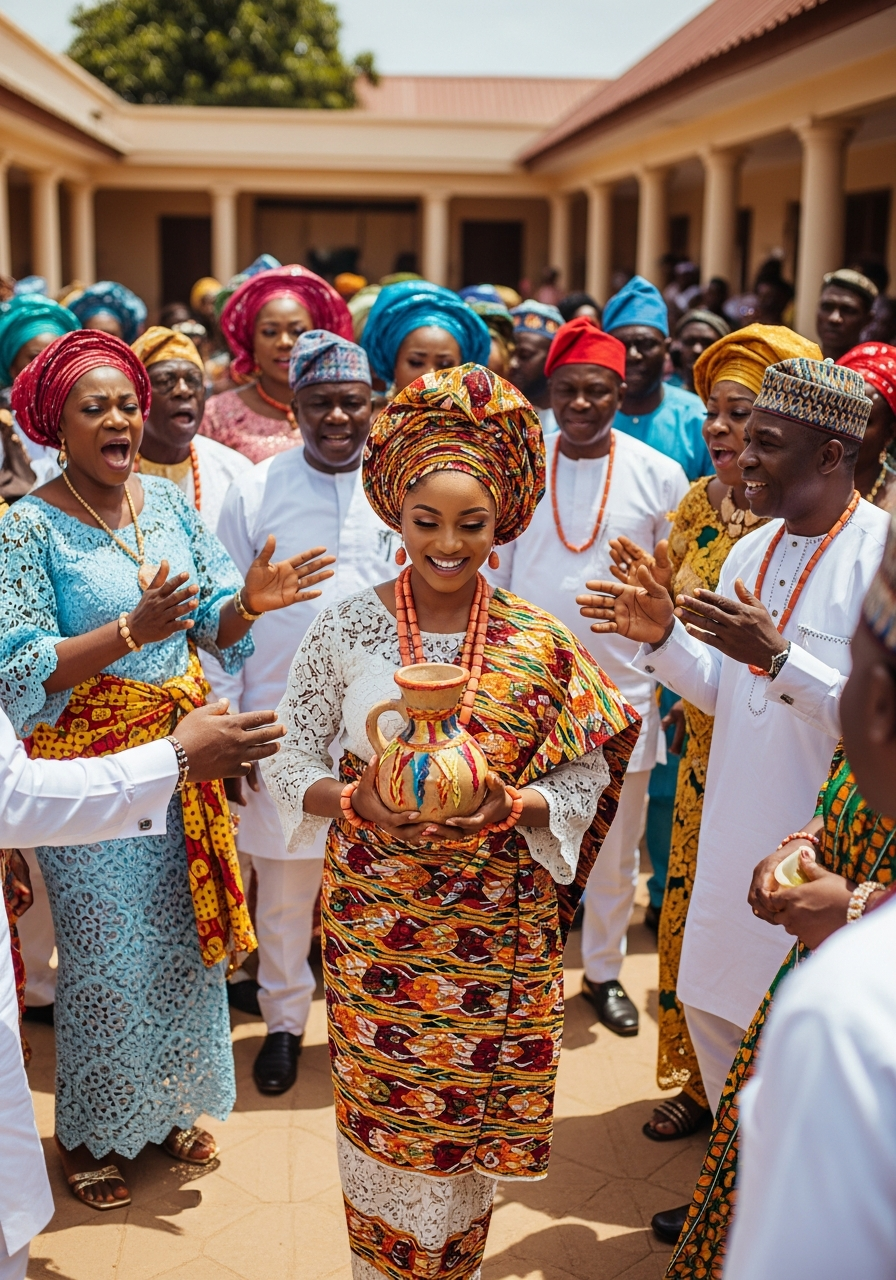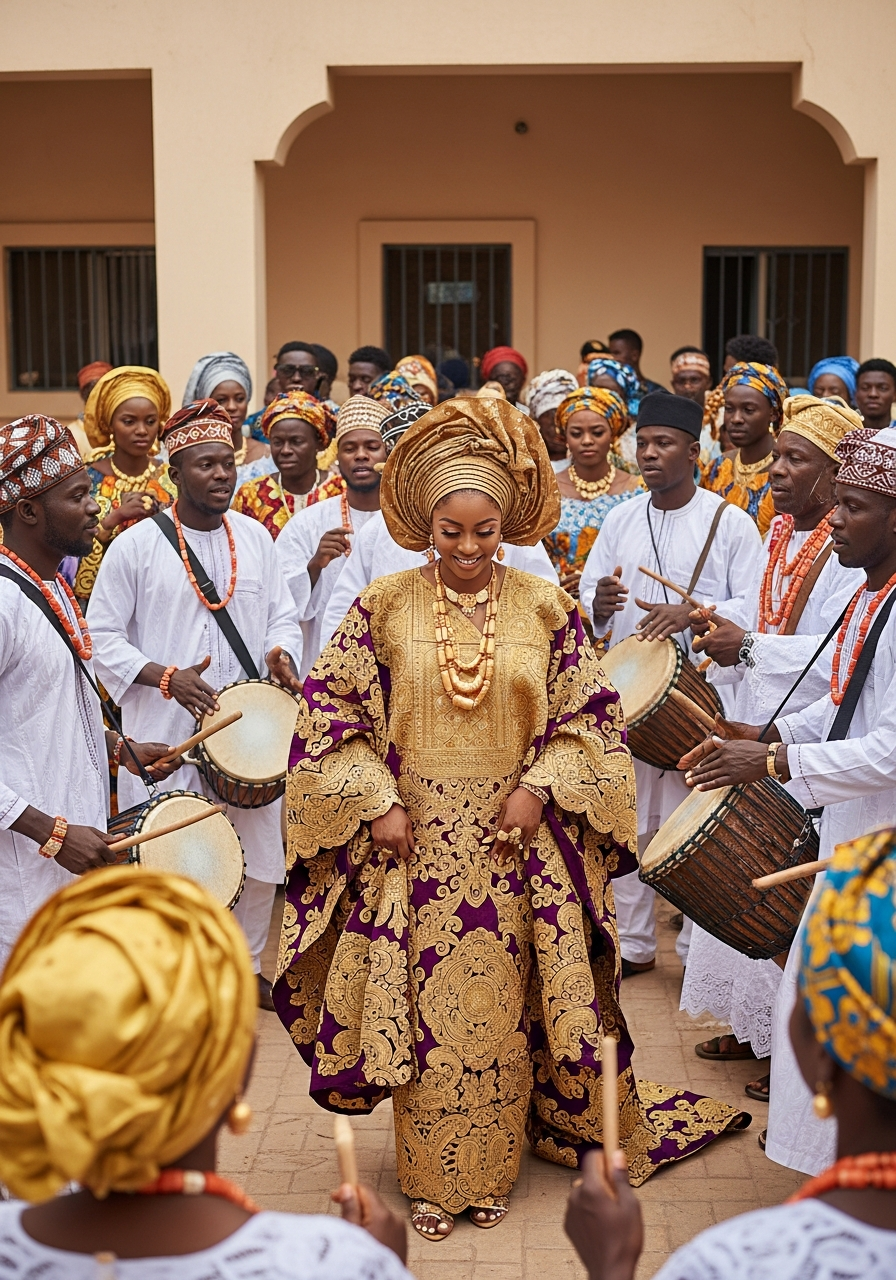
Ashanti · Royal Kente & Fontomfrom Drums·Akan · Knocking Ceremony·Fante · Asafo & Holland Cloth·Ga · Kpanlogo Celebration·Ewe · Agbadza Drums·Dagomba · Lunsi Praise Drummers·Krobo · Dipo Beadwork·Yoruba · Gele & Aso-oke·Igbo · Wine Carrying·Hausa · Kamu Gate Ceremony·Habesha · Coffee Ceremony·Wolof · Sabar & Xalam·Maasai · Enkiama Beadwork·Ashanti · Royal Kente & Fontomfrom Drums·Akan · Knocking Ceremony·Fante · Asafo & Holland Cloth·Ga · Kpanlogo Celebration·Ewe · Agbadza Drums·Dagomba · Lunsi Praise Drummers·Krobo · Dipo Beadwork·Yoruba · Gele & Aso-oke·Igbo · Wine Carrying·Hausa · Kamu Gate Ceremony·Habesha · Coffee Ceremony·Wolof · Sabar & Xalam·Maasai · Enkiama Beadwork·

← HOME

Cultural Intelligence

African Wedding
Traditions

From Ghana's kente-clad Knocking Ceremonies to Hausa Kamu celebrations and Ethiopian coffee blessings. Explore the ceremonial language of African love.

Interactive · Africa

The Wedding Map
of Africa

Tap or hover any country to preview its wedding tradition. Follow the gold beacons; each one marks a living ceremonial culture.

9 countries documented
·5 in research

West Africa

Ghana's Wedding Heritage

Seven distinct traditions, from the Ashanti royal courts of Kumasi to the Krobo bead-makers of Odumase and the Lunsi drummers of Tamale.
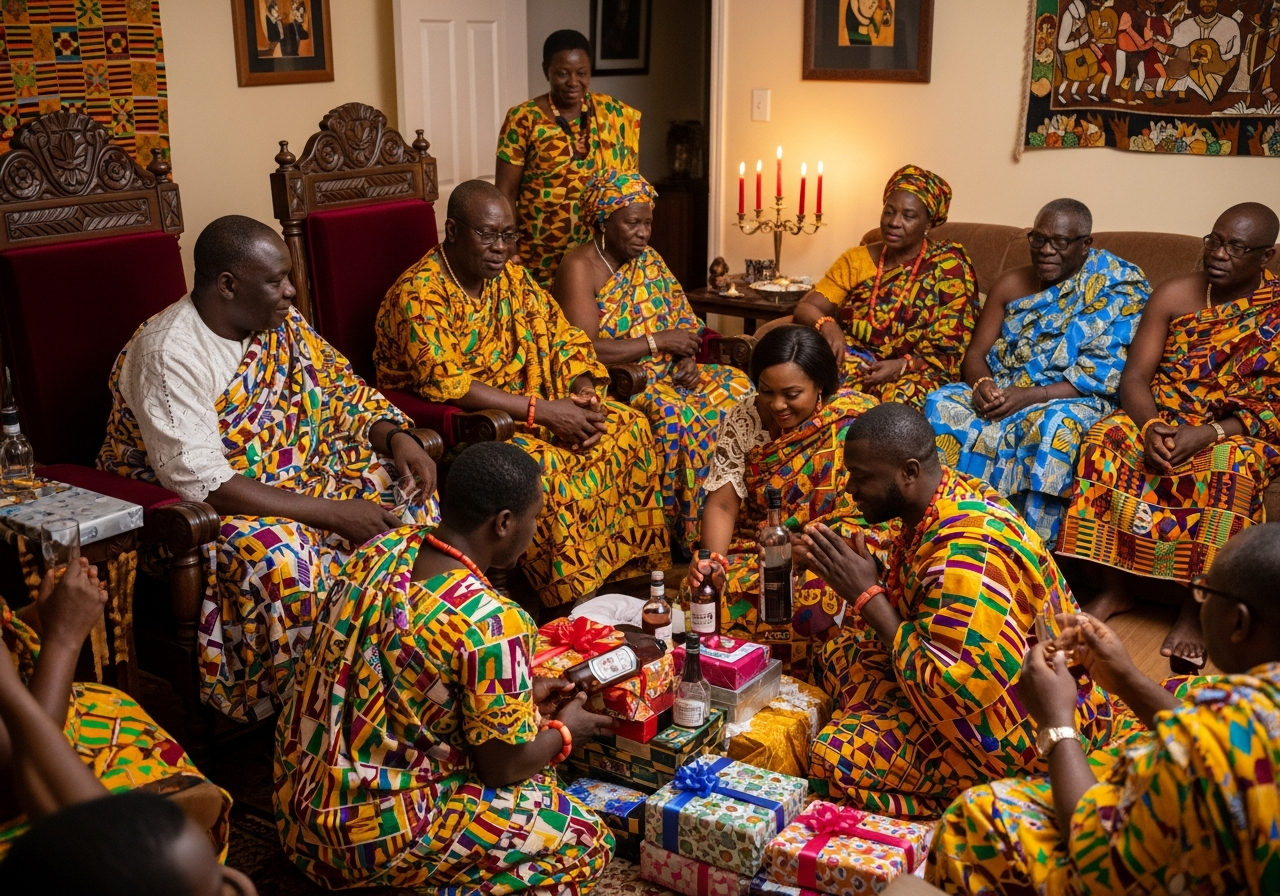
Fante traditional wedding
🇬🇭
Ghana
Central Region

Fante

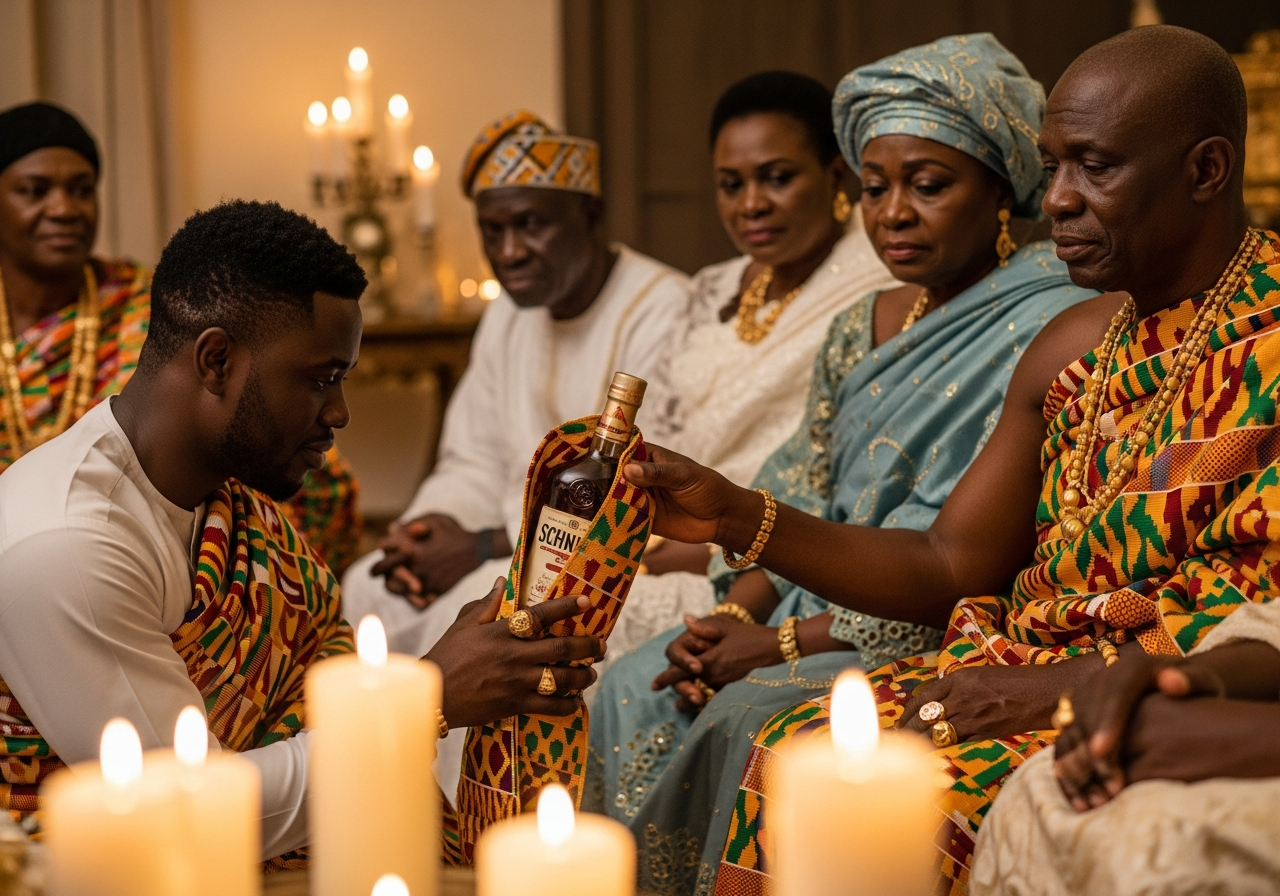
The Fante Akan people of Ghana's Central Region carry the complex inheritance of Africa's oldest European contact zone, centuries of trade, mission Christianity, and proud maritime culture woven into a single ceremonial identity. Their weddings are warm and direct compared to the more ceremonially formal Ashanti: the knocking ceremony proceeds with less elaborate protocol but equal sincerity, and families speak plainly through their chosen spokespersons. British Methodist and Anglican Christianity integrated deeply into Fante life from the 19th century, so most Fante weddings include a church blessing alongside the traditional ceremony. The Asafo warrior companies, each Cape Coast town has several, with distinctive flags and fierce community pride, still parade and fire muskets to mark the family's status. Fante brides often wear both a European white gown and kente within the same wedding day, a natural expression of a people who have always held multiple worlds at once.

2
Traditions
5
Weddings
Explore →
Ga traditional wedding
🇬🇭
Ghana
Greater Accra Region

Ga

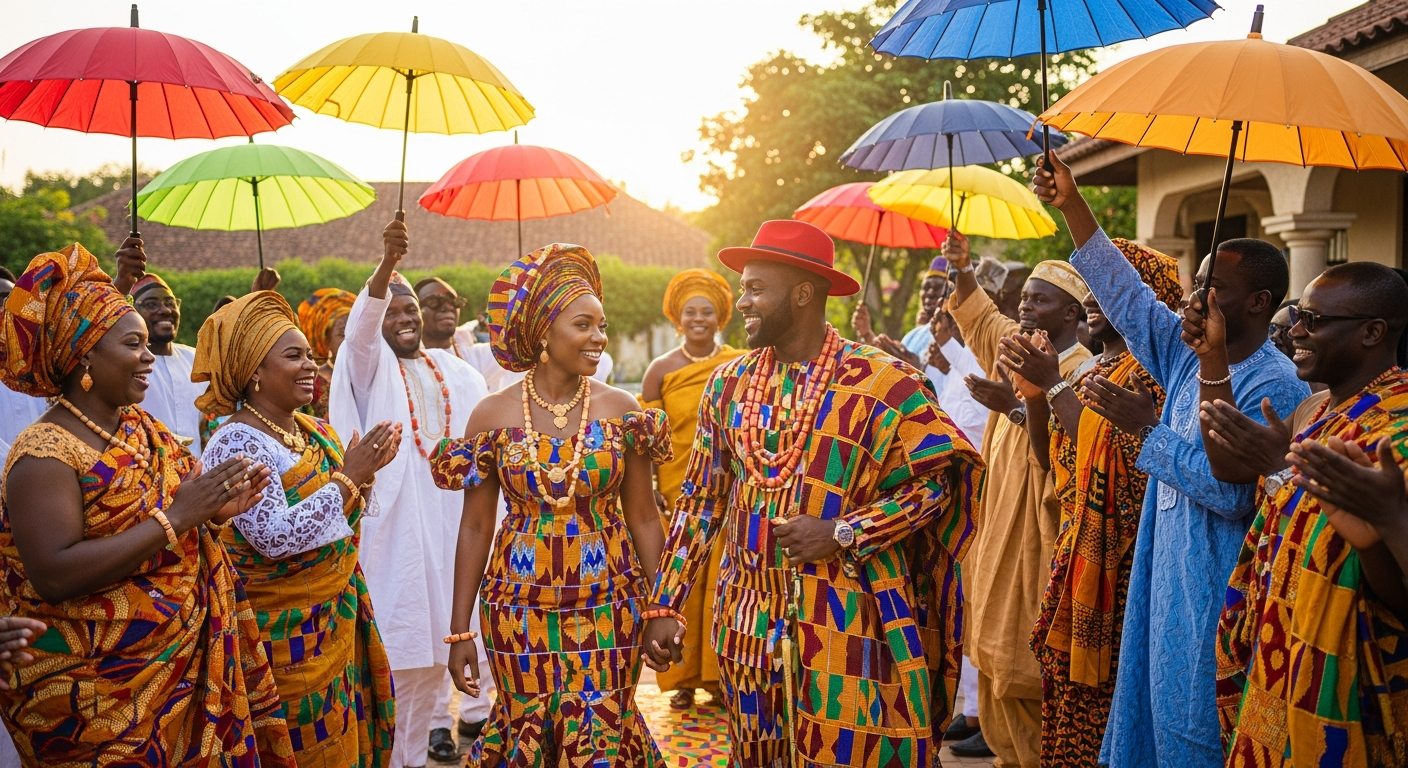
The Ga people of Accra are the original inhabitants of Ghana's capital, and their weddings carry the full weight of a people who have held this coastline for centuries. The ceremony begins with a libation poured to the gods of the Ga state, led by the Wulomo priest or a family elder, inviting ancestral protection over the union. Parasol processions escort the bride through the community under a ceremonial umbrella, drawing neighbours into the celebration from the street. The Kpanlogo drum, fast, percussive, and unmistakably coastal, announces the bride's arrival and drives the dancing that follows. Ga brides wear layered kente and adinkra fabrics alongside coral beads, and the wedding feast is as much a spiritual act as a social one, honouring both the living family and those who came before.

4
Traditions
8
Weddings
Explore →
Ewe traditional wedding
🇬🇭
Ghana / Togo
Volta Region

Ewe

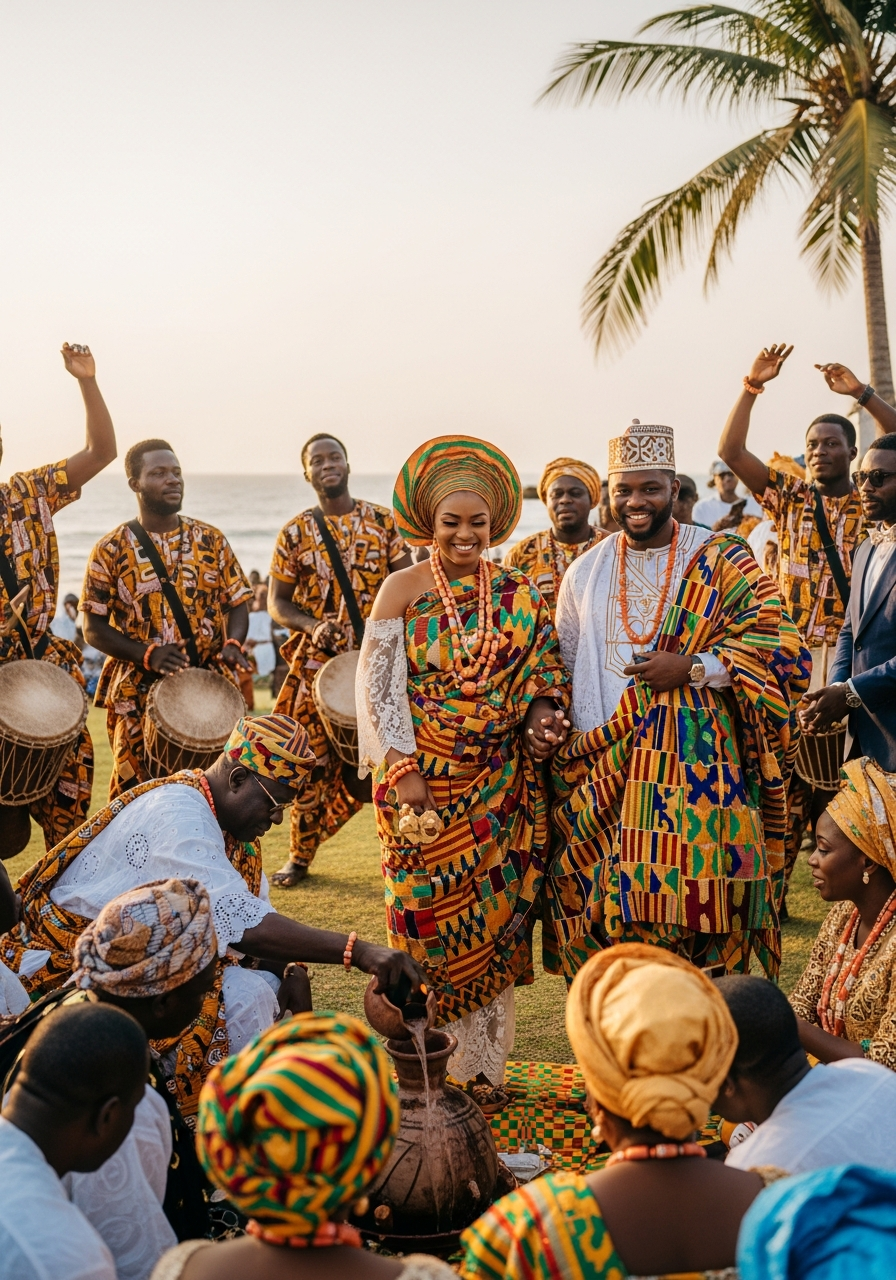
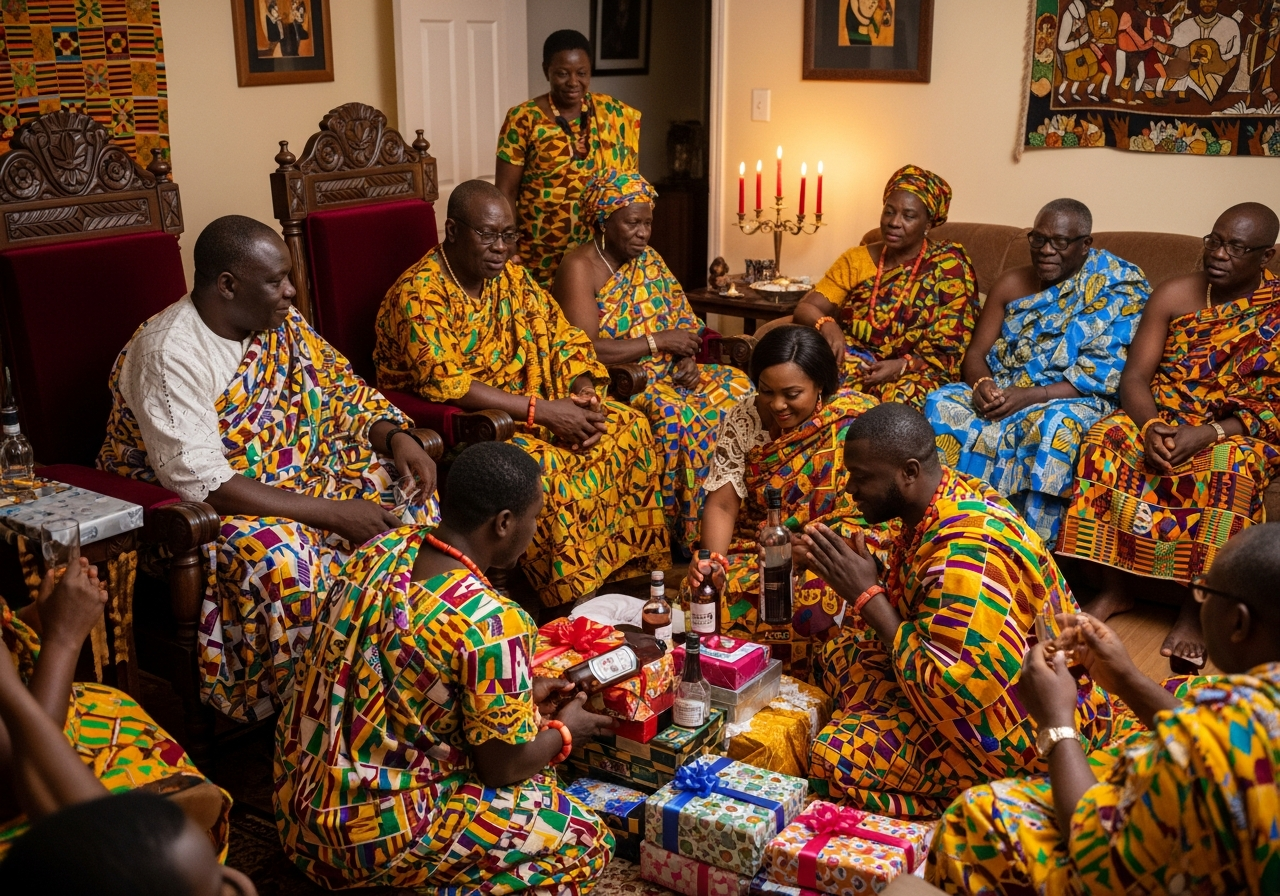
The Ewe people straddle the Volta Region of Ghana and southern Togo, and their wedding tradition centres on the Agbadza, a powerful communal drum and dance ceremony performed at all major rites of passage. The Agbadza is not background entertainment; it is the ceremony's heartbeat, and no significant Ewe wedding proceeds without it. Ewe kente cloth, distinct from Akan kente in its geometric boldness and striking colour contrasts, is woven by both men and women and plays a central role in bridal adornment. The ceremony involves extensive family deliberation: representatives from both sides exchange gifts formally, and the union is confirmed through shared drink and prayer. An Ewe wedding is a community event of extraordinary warmth, the feast, the music, and the dancing understood as acts of communal thanksgiving for a love made public.

3
Traditions
7
Weddings
Explore →
Dagomba traditional wedding
🇬🇭
Ghana
Northern Region

Dagomba

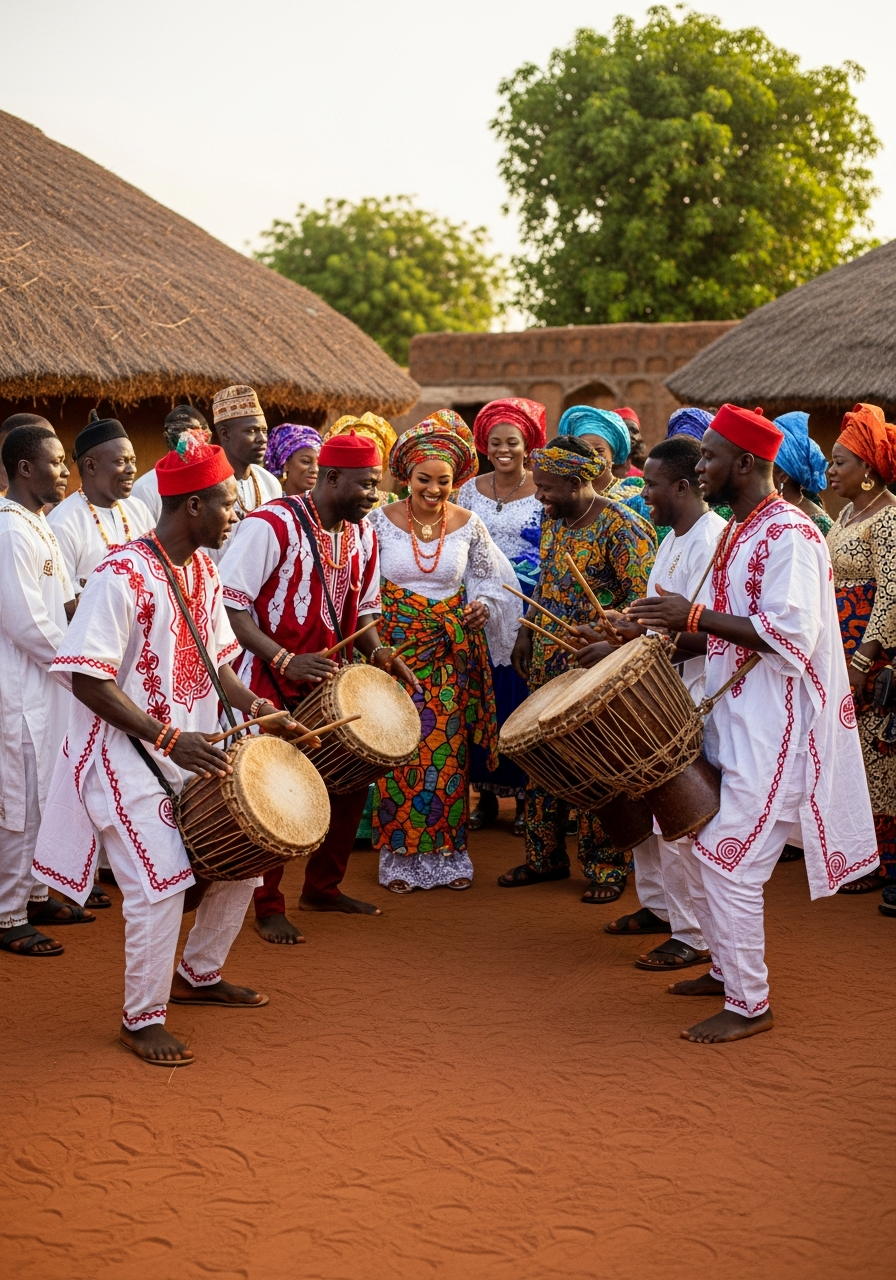
The Dagomba of northern Ghana are custodians of one of Africa's most sophisticated oral history traditions, the Lunsi royal drummers, who sing the genealogy of every chief and nobleman going back generations. At Dagomba weddings, the Lunsi perform both families' histories before and after the ceremony, situating the union within centuries of lineage. Islamic practice, adopted across most of the north, shapes the ceremony's structure: the Fatiha is recited, the Sadaki (bride gift) is formally declared, and a feast follows that draws the entire neighbourhood. The role of the Na (chief) or his representative lends authority to significant weddings. The combination of pre-Islamic Dagomba tradition and West African Islam creates a ceremony that is wholly distinct from both southern Ghanaian and Sahelian neighbours, ancient, dignified, and deeply communal.

4
Traditions
6
Weddings
Explore →
Krobo traditional wedding
🇬🇭
Ghana
Eastern Region

Krobo

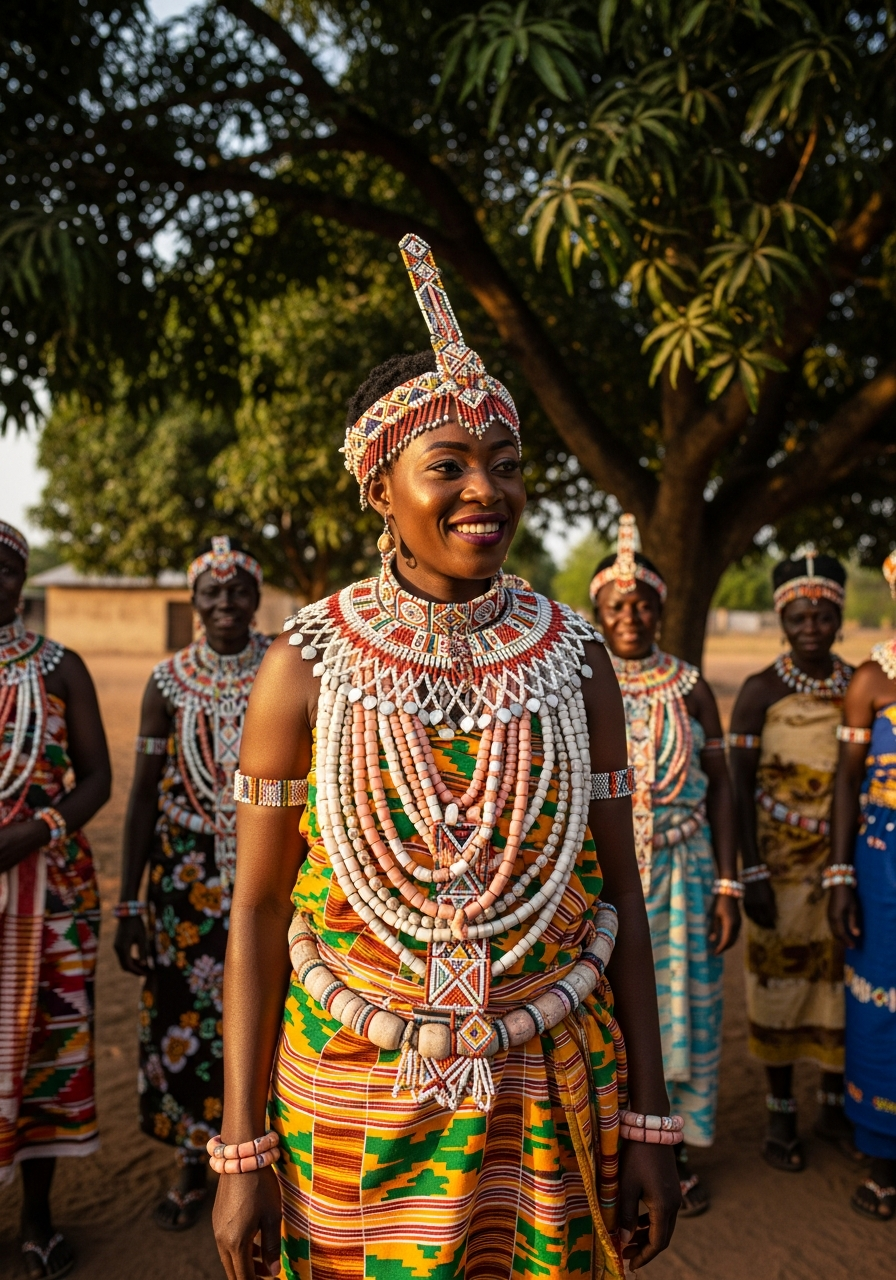
The Krobo people of Ghana's Eastern Region are world-renowned for their extraordinary beadwork, glass trade beads carried across generations that form an unbroken link between living women and their ancestors. The Dipo initiation ceremony, a rite of passage for young women, culminates in the beaded adornment a Krobo bride wears at her wedding: Bodom and Akoso beads layered from neck to collarbone, declaring lineage, status, and beauty to all who see her. The bridal procession, ululation, drumming, and dance, moves through the community before the formal exchange of drinks and gifts between families. Men of the family play an equally visible role, dressed in their finest cloth, often arriving in delegations that negotiate with evident ceremony. Krobo beadwork has earned international recognition as fine art, but within the community it remains a living language, one read fluently by those who know how.

2
Traditions
4
Weddings
Explore →

From the Heartland to the Continent

From Ghana, the story spreads.

Across the Sahara and the savanna, through rainforest and the Great Rift Valley, past the Niger Delta and the Ethiopian Highlands. Africa is a continent of ceremony. What follows is the rest of its wedding story.

West Africa

Nigeria & West Africa
Hausa traditional wedding
🇳🇬
Nigeria / Niger
Northern Nigeria

Hausa

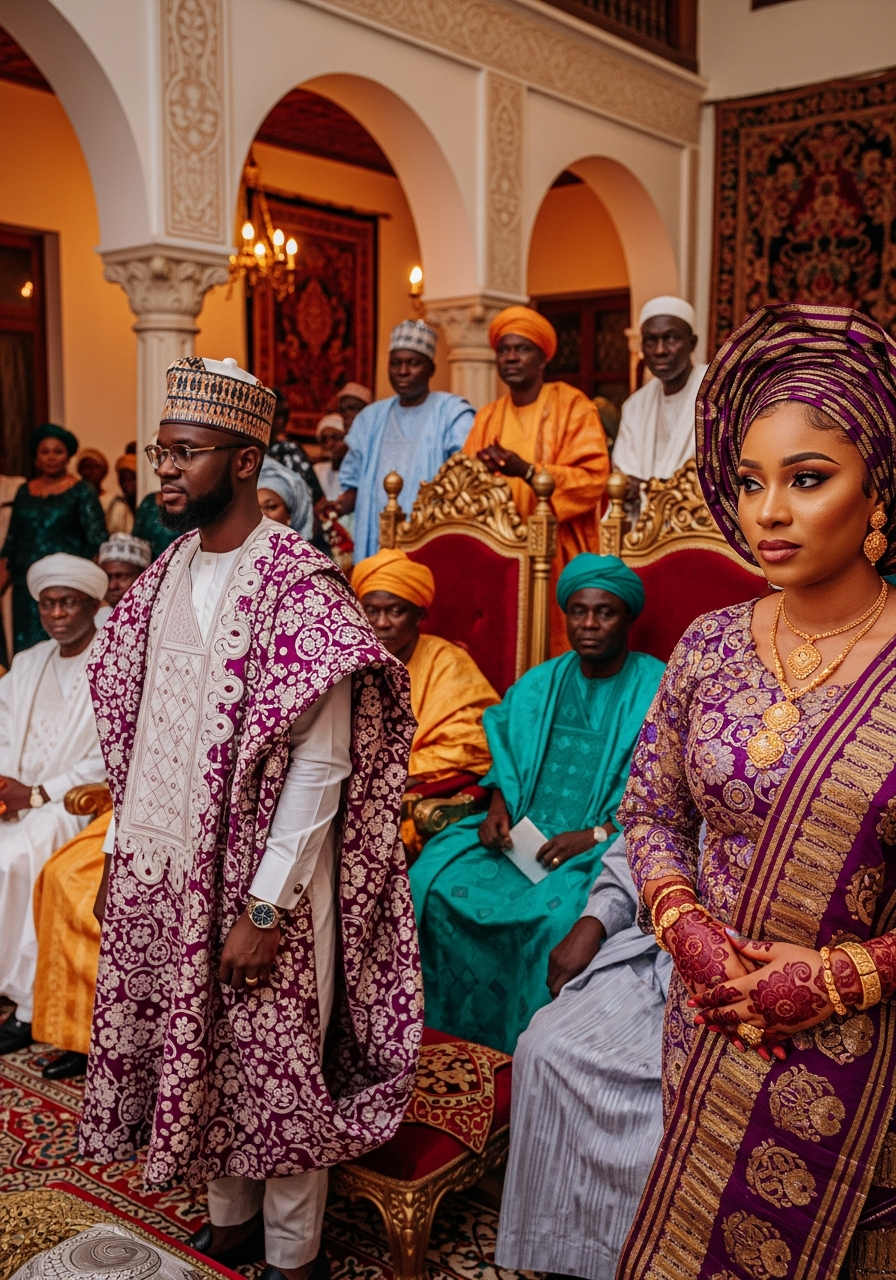
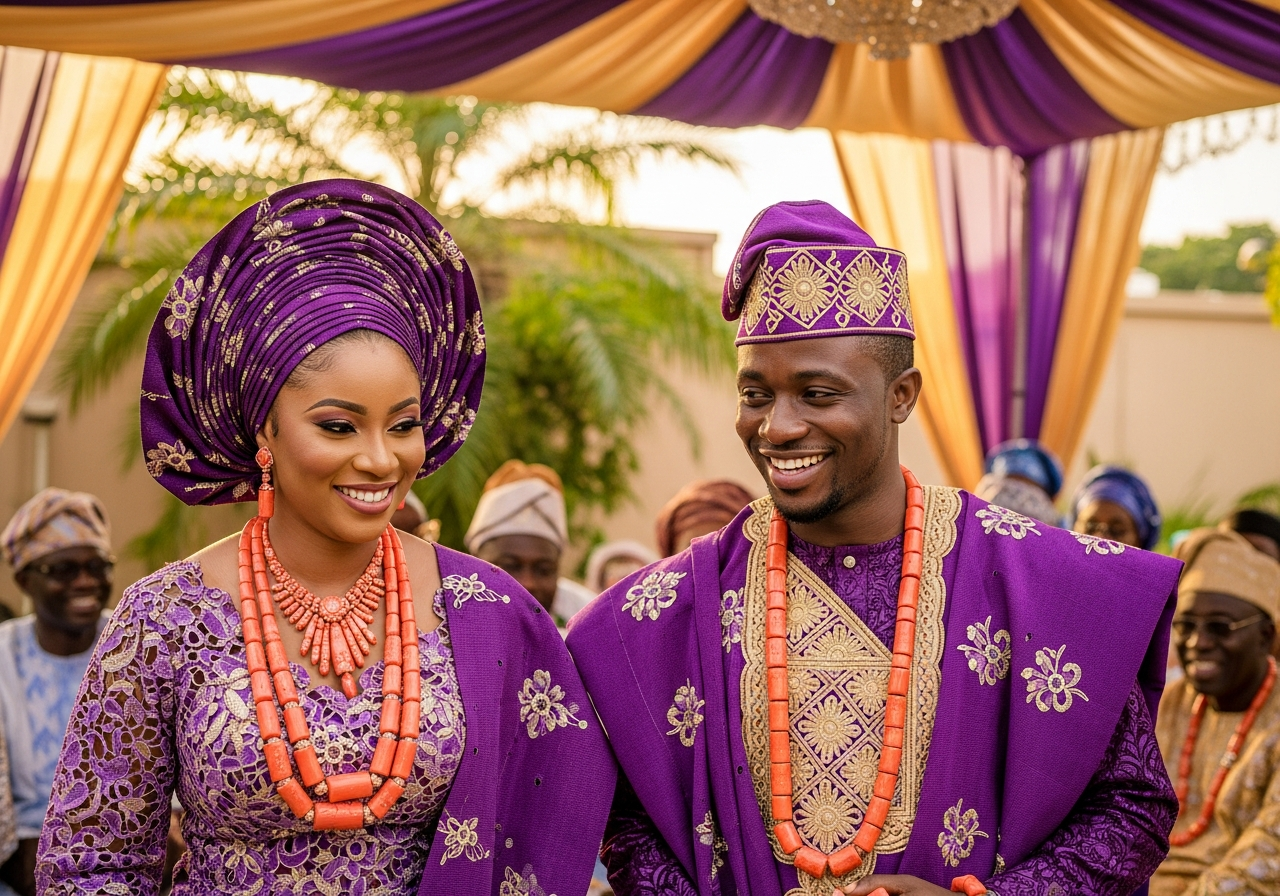
Hausa weddings are shaped by Islamic tradition and the rich courtly culture of the Hausa-Fulani emirate system, producing ceremonies of considerable elegance and social sophistication. The Kamu, a night of celebration at the bride's family home, is the emotional heart of the wedding: henna (lalle) artists spend hours decorating the bride's hands and feet with intricate geometric patterns while women sing, dance, and offer advice through song. The Fatiha is recited the following morning, and the formal signing of the Nikah marriage contract before community witnesses marks the legal union. The Sadaki, the bride gift declared publicly, establishes both parties' commitment before the entire gathering. The feast that follows reflects the family's standing, elaborate tuwon shinkafa, suya, and ceremonial distribution of food to the neighbourhood are expected. Hausa bridal attire is a study in restrained richness: layers of fine fabric, gold jewellery, and a composed dignity drawn directly from the emirate court aesthetic.

3
Traditions
8
Weddings
Explore →
Wolof traditional wedding
🇸🇳
Senegal
Dakar & Northern Senegal

Wolof

The Wolof are the dominant cultural group of Senegal, and their weddings blend Islamic ceremony with deep pre-Islamic social structure and an acute sense of communal status and dignity. The Takk engagement ceremony establishes the formal agreement between families: gifts, kola nuts, and prayers mark the beginning of the process. The Jali, griot singers who are custodians of family history, are engaged months in advance, and their performance at the wedding is as significant as the ceremony itself: they sing the lineages of bride and groom, honouring the ancestors who made the union possible. The Sabar drum defines the celebration's energy, loud, polyrhythmic, and communal, it pulls neighbours into the street and keeps the dancing going until late into the night. Wolof bridal attire is among the most elaborate in West Africa: grand boubous in silk and brocade, towering headwraps, and gold jewellery that signals both family wealth and careful aesthetic judgment. The Wolof concept of 'kersa', dignity and discretion, runs through every element of the day.

3
Traditions
5
Weddings
Explore →

East Africa

East Africa & the Horn
Habesha traditional wedding
🇪🇹
Ethiopia / Eritrea
Ethiopian Highlands

Habesha

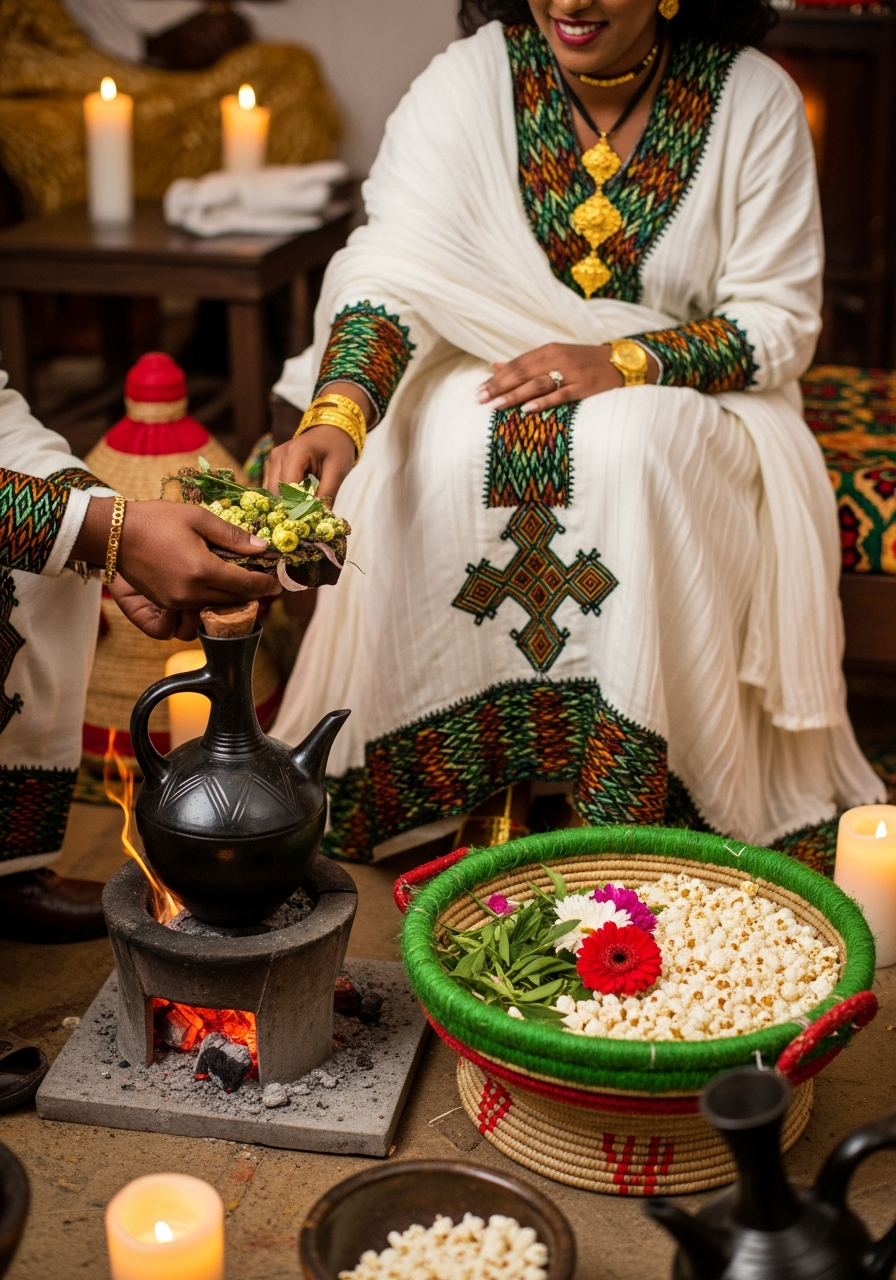
Habesha weddings unite Ethiopia's deep Christian Orthodox tradition with ancient pre-Christian customs, producing ceremonies of unusual spiritual density that unfold across multiple days. The Telosh engagement, conducted through family intermediaries called shimagles, formally establishes the union before the wedding day arrives. The ceremony itself centres on the habesha kemis, the white embroidered dress worn by the bride, its cross-stitched borders tracing patterns from Lalibela church art, and the three-round coffee ceremony that blesses the union and calls the community to witness. The priest chants liturgical blessings in Ge'ez, Ethiopia's ancient liturgical language, invoking generations of ancestors and saints as protectors of the marriage. The wedding feast operates on the principle of radical hospitality: injera and wot are prepared in vast quantities, tej honey wine is served in traditional birile flasks, and no guest should leave hungry. Amhara and Tigrinya Habesha weddings differ in specific prayers, attire details, and the role of godparents, but both share the same conviction that marriage is a covenant witnessed by God, family, and the whole community.

4
Traditions
7
Weddings
Explore →
Maasai traditional wedding
🇰🇪
Kenya / Tanzania
Great Rift Valley & Northern Tanzania

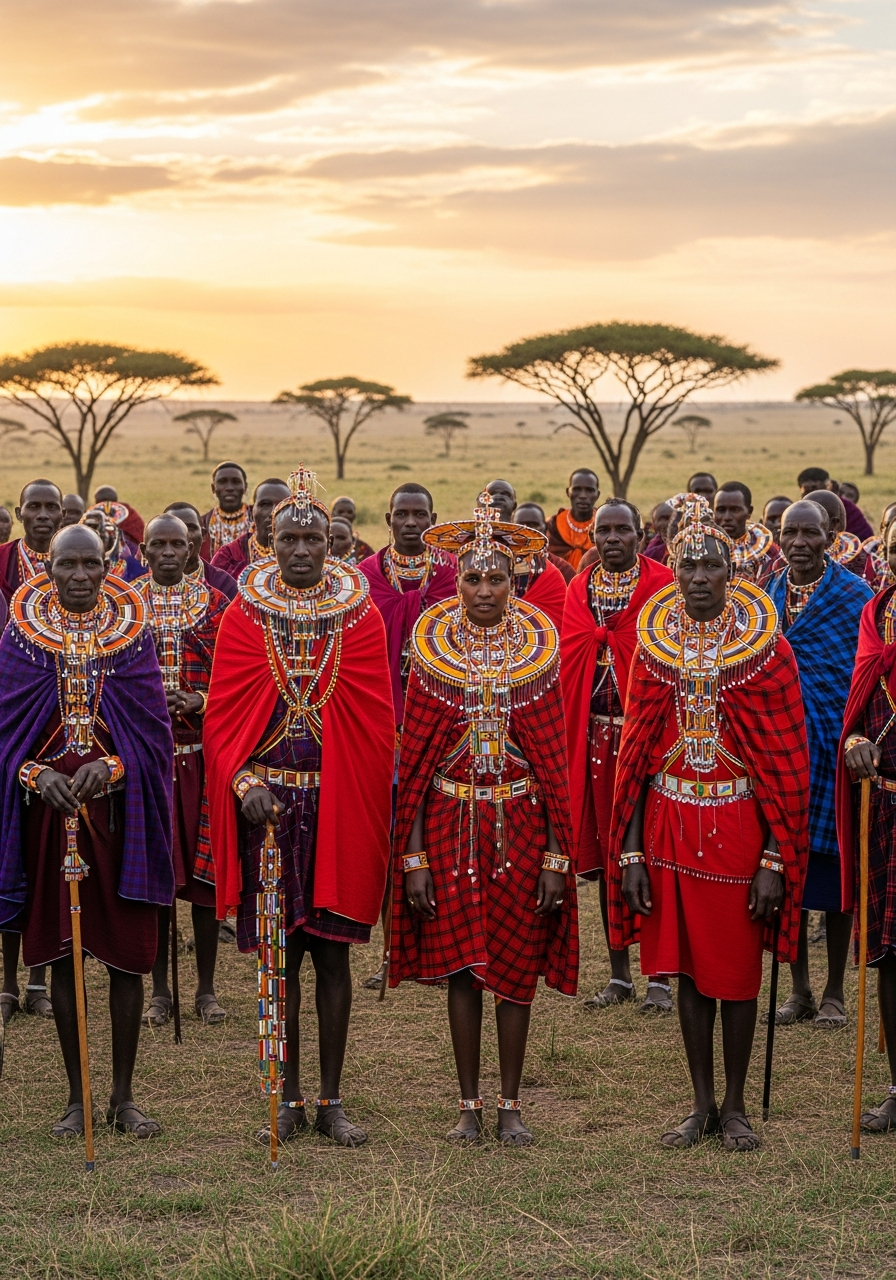
Maasai

Maasai weddings are among the most visually striking ceremonies on earth, rooted in a pastoral culture where cattle, age-sets, and elder authority structure every significant transition. The bride is adorned with layers of beaded necklaces (enkiama) from neck to chest, each colour carrying specific meaning: red for courage and warrior strength, blue for sky and water, white for purity and new beginnings. The ceremony involves the ritual shaving of the bride's head by her mother, the blessing by elders using cattle fat and milk, and the formal procession to the groom's manyatta (homestead) accompanied by the entire community singing in harmony. The groom's age-set, men who were initiated together and share a lifelong bond, play an active ceremonial role throughout. Cattle are the measure of the bride's worth and the family's honour, and the number exchanged at the union is a public statement of respect that the community will remember for generations.

3
Traditions
5
Weddings
Explore →

Southern Africa

Southern Africa

Zulu traditional wedding
🇿🇦
South Africa
KwaZulu-Natal

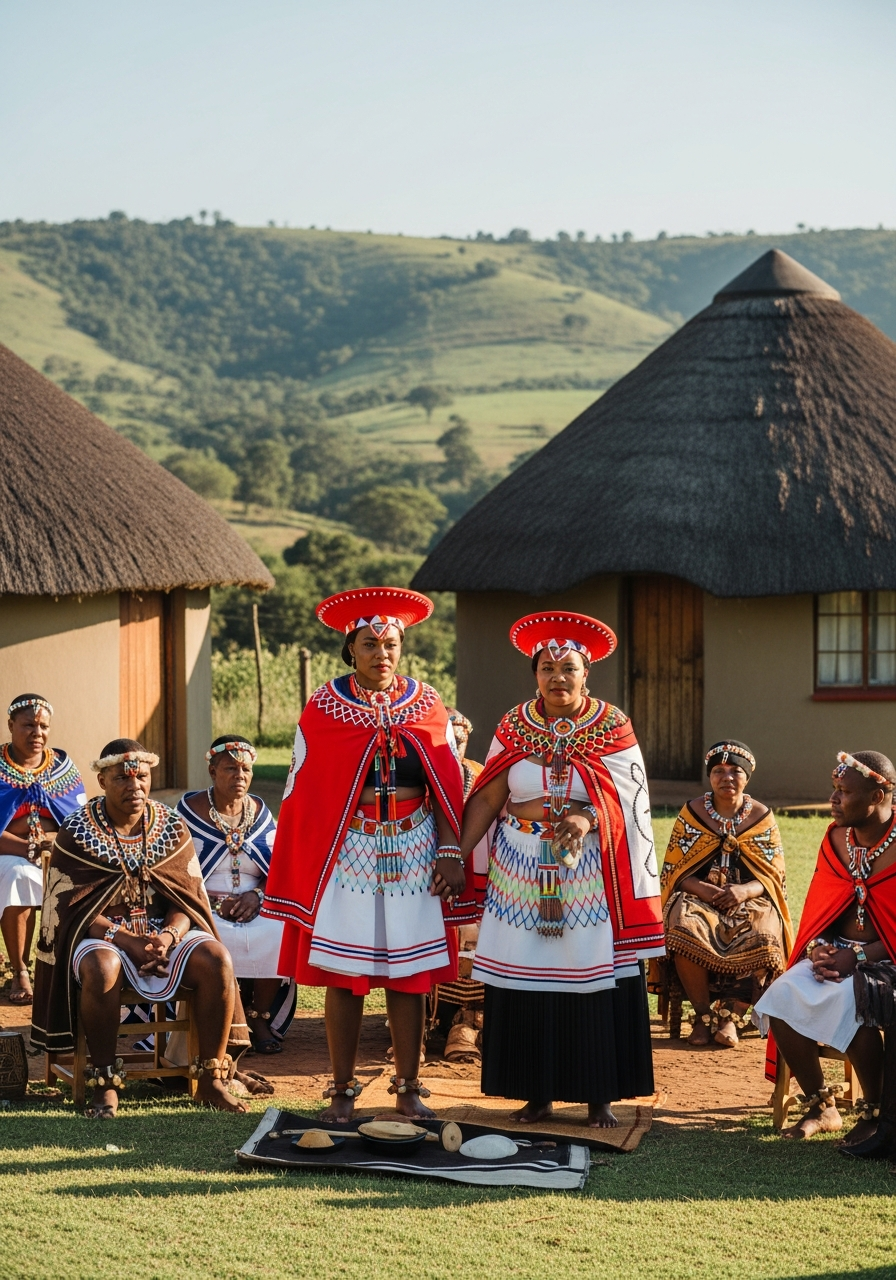
Zulu

The Zulu people of KwaZulu-Natal have maintained one of Africa's most powerful wedding traditions, built around the Lobola negotiation, the sacred slaughter, and the Umabo gift ceremony. Zulu weddings are formal covenants between two clans, witnessed by both the living and the ancestors. The isidwaba — the black leather pleated skirt worn by the bride — is among the most recognisable items of traditional attire on the continent. Cattle carry sacred weight in every part of the ceremony: their negotiation, their sacrifice, and their presence announce the seriousness of the union to the community and to the departed. The izimbongi (praise poet) recites both families' genealogies in rapid rhythmic verse, turning the wedding into a moment of public historical record.

5
Traditions
8
Weddings
Explore →
Xhosa traditional wedding
🇿🇦
South Africa
Eastern Cape & Western Cape

Xhosa

The Xhosa people of South Africa's Eastern Cape are holders of one of the continent's most ceremonially precise wedding traditions. The ikhazi (lobola) negotiation begins the process months before the wedding: family representatives meet formally, speaking in measured traditional language, to agree the bridewealth that seals the alliance between clans. On the wedding day, the bride's most visible marker is ibomvu — the red ochre paste applied to her face, neck, and shoulders by elder women of her family — marking her transition from daughter to wife in a language read fluently across the Eastern Cape. The umabo ceremony, in which the bride's family presents gifts to the groom's household each item named aloud and received with song, formally joins the two families not in celebration alone but in obligation. Nelson Mandela was Xhosa; the culture's dignity, eloquence, and ceremonial gravity are recognised worldwide.

4
Traditions
3
Weddings
Explore →

15 cultures and growing

Submit your culture's story.