Ghana · Eastern Region, Odumase-Krobo
The Krobo
Wedding Tradition
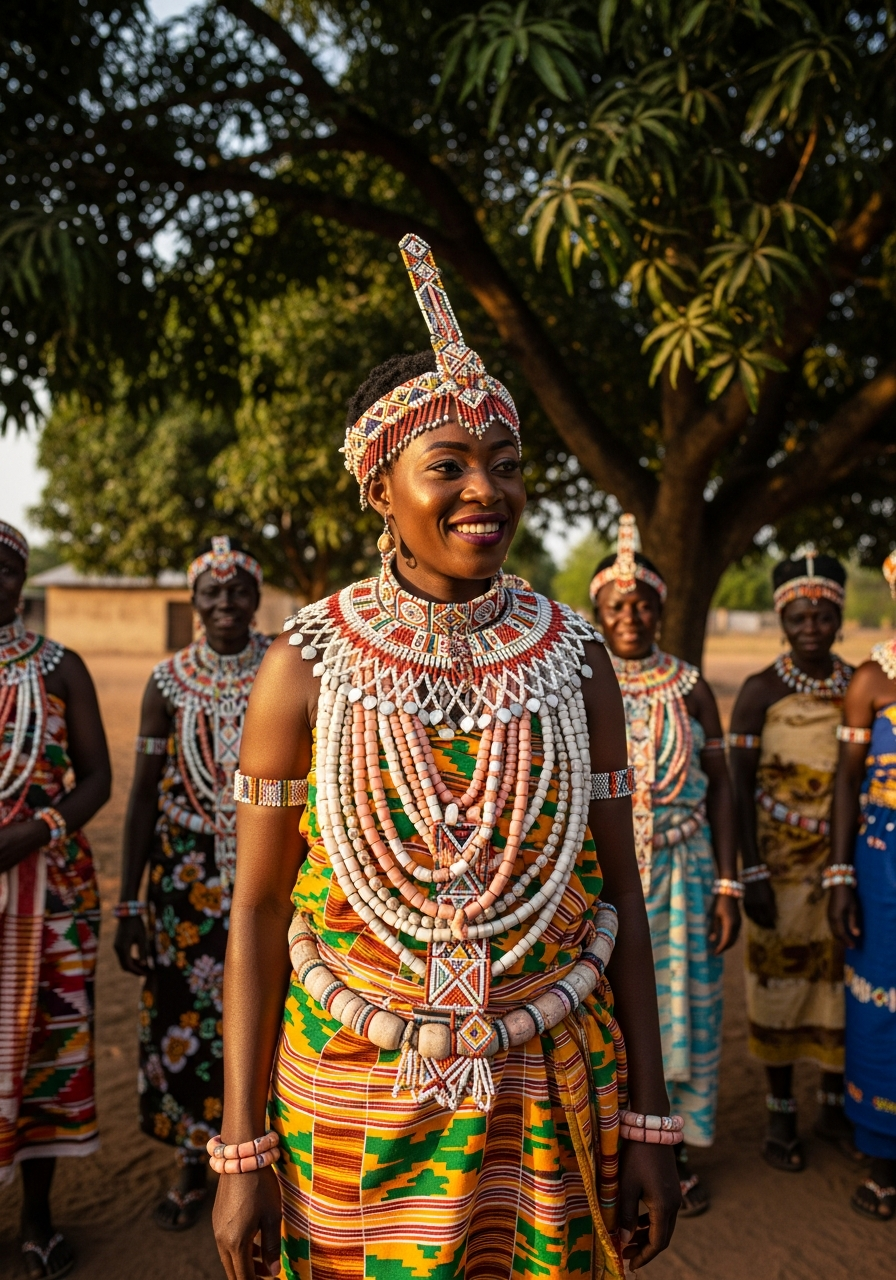
The Krobo people of Ghana's Eastern Region are the unrivalled masters of glass bead-making in West Africa. For the Krobo, beads are not jewellery, they are a language. Each bead type carries a name, a meaning, and a history. The Dipo ceremony, the Krobo rite of passage for young women, is the foundation upon which all Krobo wedding traditions are built, a bride who has not passed through Dipo is not considered fully prepared for marriage.
Krobo brides are famous across Ghana and the diaspora for the extraordinary layered bead adornment they wear on their wedding day, chest-plate arrangements of handcrafted glass beads that can take years to collect. Each strand in a Krobo bride's display represents a chapter of her life story.
Quick Facts
The Wedding Structure
Key Ceremonies
Dipo
Rite of Passage
The Dipo is a multi-day initiation ceremony for young Krobo women that precedes marriageability. Participants are taught Krobo values, history, and the meaning of the beads they will wear. The ceremony concludes with a public celebration where the women are formally introduced as adults.
Klama
Engagement
The formal engagement ceremony where the groom's family presents gifts including kola nuts, schnapps, and cloth. The bride's family counts and blesses each item. The klama seals the formal intention and sets the date.
Bead Ceremony
On the wedding morning, elder women of the bride's family help her dress in her full bead regalia, a process that can take several hours. Each bead strand is placed with deliberate care, and prayers are spoken over each layer. The bride's full display is the culmination of years of collection.
What Makes This Tradition Unique
Sacred Elements
Krobo Glass Beads
Made from powdered glass packed into terracotta moulds and fired in kilns, Krobo beads have been traded across West Africa for centuries. The 'bodom' (old bead), antique beads passed through generations, are the most sacred, worn only at significant rites.
Dipo Markings
Women who have completed Dipo are identifiable by subtle body markings that remain with them for life. These markings are a certification of cultural knowledge and social readiness, visible credentials worn on the body.
The Bead Display
A Krobo bride's bead display communicates her family's lineage, her personal history, and her spiritual status. The arrangement is not random, elder women of the family make deliberate decisions about which beads go where and why.
Attire
The Krobo bride wears a layered bead ensemble that covers the chest, neck, and often the waist, an extraordinary display of handcrafted glass beads, each piece meaningful. The clothing beneath is often kente or a specially printed fabric.
The groom wears kente or a well-tailored suit in colours that complement the bride's bead display. Some grooms wear a single strand of significant Krobo beads, a gift from the bride's family, as a symbol of acceptance.
The Music
The Klama is both a dance and a song form unique to the Krobo, a slow, elegant procession dance performed by women at important celebrations. Klama singers have maintained their repertoire orally for generations, and hearing it performed live is a remarkable cultural experience.
Practical Guide
For Guests Attending a Krobo Wedding
Do not touch the bride's beads without explicit invitation, they are sacred objects, not costume jewellery.
The Dipo completion is a source of enormous pride; acknowledging the bride's preparation with respect is always appropriate.
Kente or Ghanaian print fabric is ideal for guests; the event will be visually spectacular.
If you receive a bead gift from a Krobo family, understand that it represents a significant act of trust and connection.
Useful Phrases
Words for the Occasion
Said to cement the union