Nigeria · Southwest Nigeria, Benin, Togo
The Yoruba
Wedding Tradition
The Yoruba people of southwest Nigeria number over fifty million and have one of the world's most vibrant and elaborate wedding cultures. A Yoruba traditional wedding, the 'Introduction' (Intro), is a multi-act production of pageantry, fashion, and family negotiation that can span an entire day. And that is before the white wedding, the registry, and the church ceremony are factored in.
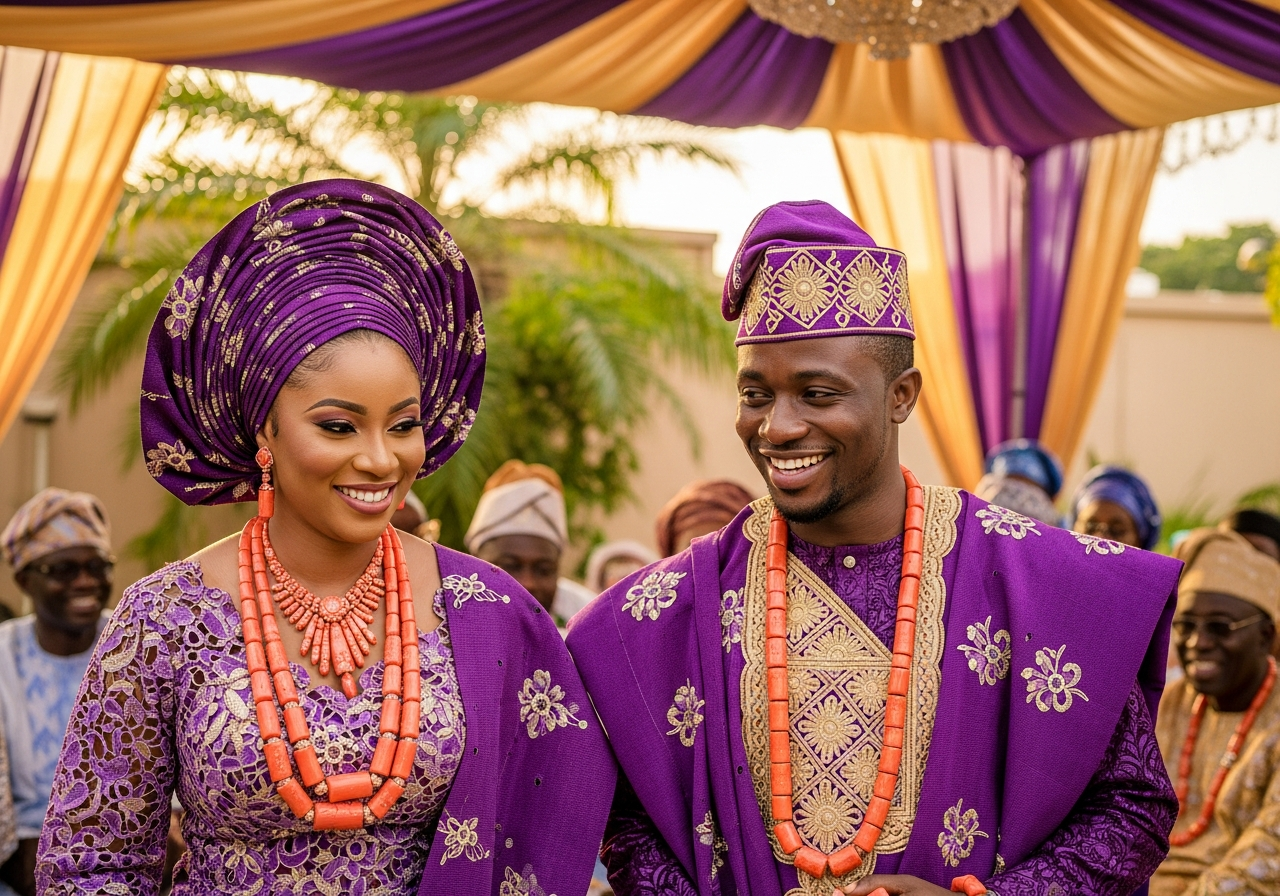
At the heart of Yoruba wedding beauty is the gele, the spectacular headwrap that Yoruba women tie into architectural sculptures of fabric. Gele-tying is an art form practised by specialists (professional gele-tyers are in high demand at every wedding), and the height, shape, and fabric of the gele communicates the wearer's family status, age, and intention.
Quick Facts
The Wedding Structure
Key Ceremonies
Introduction (Intro)
Idana
The formal family introduction ceremony where both families meet officially. The groom's family brings a list of required items (provided by the bride's family in advance), including fabric, drinks, jewellery, and cash. Each item is presented, counted, and accepted or returned for renegotiation.
Traditional Ceremony
Igbeyawo
The main traditional wedding, a spectacular event where the bride, surrounded by her 'asoebi' (family and friends in matching fabric), is handed over to the groom's family in a ceremony of food, music, and pageantry presided over by the Alaga Ijoko (female MC).
Palm Wine Presentation
The bride carries a cup of palm wine through the crowd of dancing guests. The groom is somewhere in the audience, when she finds him, she kneels and presents the cup. His drinking from it publicly seals the union. The crowd's reaction to his location is part of the theatre.
What Makes This Tradition Unique
Sacred Elements
Gele
The gele is tied from aso-oke, brocade, or special gele fabric. The tying is done by professional specialists who create different shapes, from the classic fan to elaborate architectural forms. A badly tied gele is noticed; a spectacular one is remembered for years.
Aso-oke Fabric
Hand-woven in three types, aran (bright), sanyan (off-white), and etu (dark indigo), aso-oke is the prestige fabric of Yoruba celebration. The entire family dresses in matching aso-oke (called 'asoebi'), creating a visual unity that announces their collective pride.
Alaga Ijoko
The female master of ceremony at a Yoruba traditional wedding. She is not merely an MC, she controls the pace, the protocol, and the drama of the entire day. A skilled Alaga Ijoko is a rare talent who has spent years learning the protocols of Yoruba family negotiations.
Attire
The Yoruba bride wears an iro (wrap skirt), buba (blouse), and gele, all in matching aso-oke fabric in her family's chosen colour for the day. The gele is the centrepiece: its height, shape, and perfection define the bride's look. Heavy gold jewellery completes the ensemble.
The groom wears agbada, an elaborately embroidered flowing gown worn over matching trousers and shirt. A fila (cap) in the same fabric completes the look. The quality of the agbada's embroidery is a direct statement about the groom's family's tastefulness.
The Music
Talking drums (dundun) set the ceremonial rhythm. Jùjú music, pioneered by King Sunny Ade, is the classic Yoruba wedding sound: intricate guitar rhythms overlaid with steel guitar, talking drum, and praise vocals. Afrobeats and Amapiano now share the reception floor.
Practical Guide
For Guests Attending a Yoruba Wedding
The asoebi system is key: if invited to buy the couple's family fabric, it is courteous to do so, it signals your membership in the celebration.
Aso-oke gele, ankara, or formal attire is appropriate; the event will be spectacularly dressed.
During the traditional ceremony, when the Alaga Ijoko calls the groom's family forward, they must dance in, never walk.
Prostrating (for men) or kneeling (for women) before Yoruba elders is not optional, it is the expected greeting.
Useful Phrases
Words for the Occasion
E se gan = Thank you very much
Said to someone sitting at the ceremony
Universal Yoruba blessing