Nigeria · Southeast Nigeria
The Igbo
Wedding Tradition
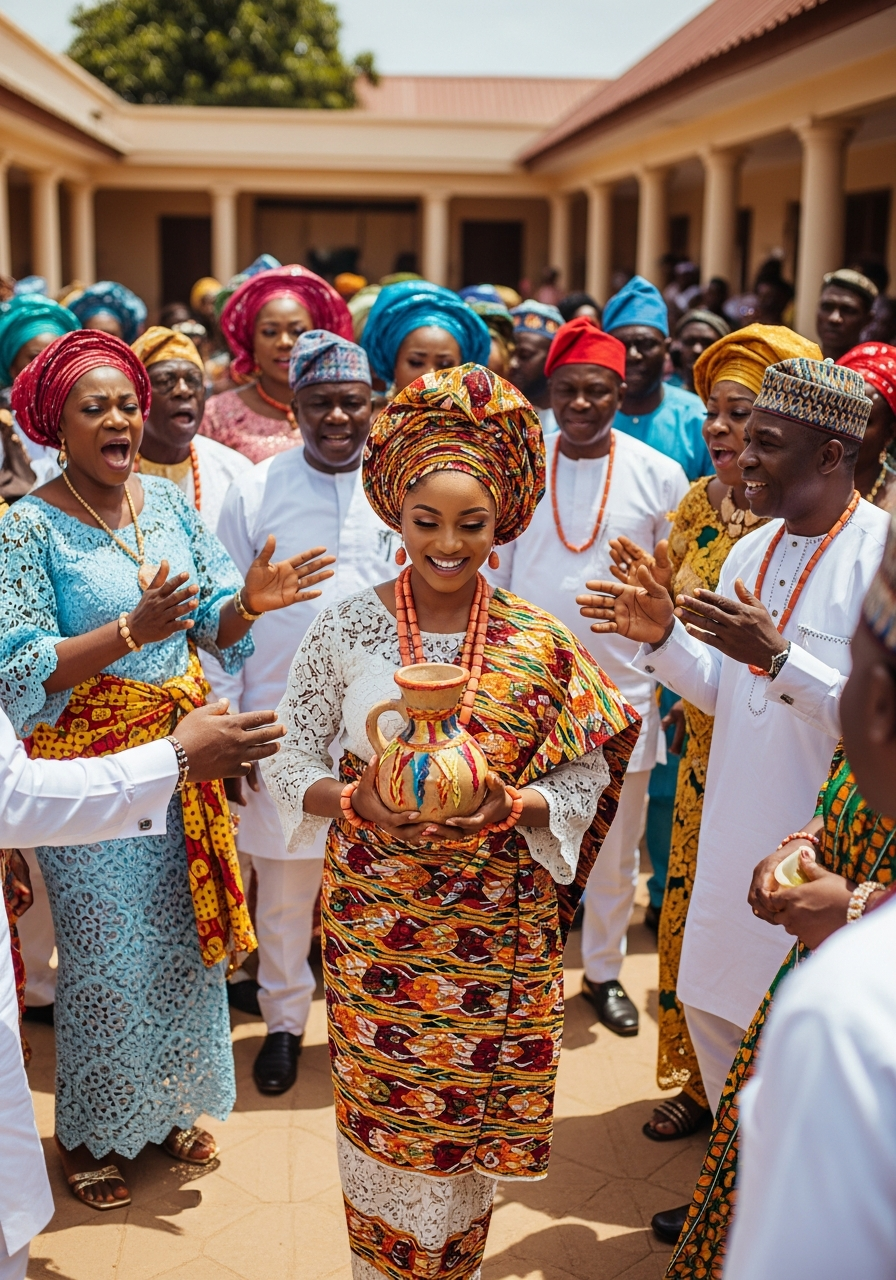
The Igba Nkwu, the Igbo wine-carrying ceremony, is one of the most theatrically powerful moments in all of African wedding culture. The bride, carrying a cup of palm wine, moves through a crowd of dancing, celebrating guests. Somewhere in the crowd is her groom. When she finds him, she kneels and offers him the cup. He drinks. The crowd erupts. In that single act, the union is declared and witnessed by everyone present.
Igbo wedding culture places enormous weight on family honour, community witness, and the public declaration of commitment. The Introduction ceremony, the wine-carrying, and the white wedding together form a three-act structure that satisfies both family tradition and modern expectation.
Quick Facts
The Wedding Structure
Key Ceremonies
Introduction
Ikụ Aka N'ọnụ Ụzọ
The first formal meeting of both families. The groom's family presents kola nuts, palm wine, and a list of requested items. The bride's family deliberates privately, then returns to accept and set the next steps. No man proposes to a Yoruba woman, he presents to her family.
Igba Nkwu
Wine Carrying
The traditional ceremony's climax: the bride carries palm wine through the dancing crowd to find and offer it to her groom. Her kneeling to present the cup is her public declaration of choice. His acceptance is his. The entire gathered community witnesses this mutual commitment.
Oji Ceremony
Kola Nut Breaking
The kola nut ceremony opens every formal Igbo occasion. The eldest man present breaks kola and pronounces blessings in Igbo: 'Onye wetara oji wetara ndụ', he who brings kola nut brings life. Every prayer asked, every name called, is validated by the kola.
What Makes This Tradition Unique
Sacred Elements
Palm Wine
Fresh palm wine, drawn from the raffia palm at dawn, before it has time to ferment, is the sacred drink of Igbo ceremony. It is offered to ancestors first, then elders, then the couple. The wine in the Igba Nkwu cup is not symbolic; it is the actual agreement.
George Fabric
George fabric, a richly textured cotton and silk blend originally imported from India, now produced locally, is the prestige textile of southeast Nigeria. An Igbo bride's George wrapper, blouse, and headwrap represent the family's investment in her presentation.
Kola Nut Protocol
The kola nut (oji) is the most sacred object in Igbo ceremony. It must be presented to the eldest man first. To hand a kola nut to a woman in a traditional context is a deliberate act with social implications. The broken pieces are distributed; none is wasted.
Attire
The Igbo bride wears a George wrapper (two-tiered skirt) in a rich pattern, a matching blouse, and a coral bead ensemble, a full set of coral bead jewellery (necklaces, earrings, headpiece) that is the definitive Igbo bridal look. Red and coral are the traditional bride's colours.
The groom wears a traditional Isiagu (lion head print top) or a plain cream agbada with embroidered trim, matching trousers, and a red chief's cap (okpu). The Isiagu is distinctly Igbo and signals cultural pride.
The Music
Live highlife music from southeast Nigeria, distinct from Ghana highlife, with a more horn-driven, dance-floor-focused energy, is the classic Igbo wedding sound. In the ceremony, traditional songs called 'Egwu Nkwa' are performed by women singers, creating an emotional counterpoint to the celebrations.
Practical Guide
For Guests Attending a Igbo Wedding
When the Igba Nkwu begins, clear a path and let the bride find her groom, do not direct or guide her.
Accept kola nut at the opening of any ceremony; your acceptance validates the occasion.
George fabric or Isiagu for men; George wrapper or ankara for women, Igbo events reward cultural dressing.
If you want to give money to the couple during the reception, approach the table and spray the couple, this is the Igbo reception currency of joy.
Useful Phrases
Words for the Occasion
Daalu nne/nna = Thank you mother/father (respectful)
Said to the couple and elders