Nigeria · Northern Nigeria, Niger, Sudan
The Hausa
Wedding Tradition
Hausa wedding culture in northern Nigeria fuses Islamic practice with pre-Islamic court traditions to create a ceremony of great dignity and colour. The Hausa are the largest single ethnic group in West Africa and have maintained a sophisticated cultural identity shaped by centuries of trans-Saharan trade, Islamic scholarship, and royal court tradition.
The Kamu ceremony, a joyful, ceremonial 'tug of war' in which the groom's family pretends to take the bride by force while the bride's family playfully resists, is one of the most distinctive wedding traditions in all of Africa. It is entirely performative, but executed with great theatrical commitment on all sides.
Quick Facts
The Wedding Structure
Key Ceremonies
Fatiha
Islamic Marriage Contract
The Quranic marriage ceremony conducted by the Imam in the presence of witnesses and the wali (bride's guardian). The bride's consent is sought privately before the ceremony. The Mahr (gift from groom to bride stipulated in the contract) is agreed and announced.
Kamu
Ceremonial Taking of the Bride
The groom's family arrives at the bride's house to collect her. The bride's family feigns resistance, there is music, singing, drumming, playful wrestling, and dancing. The bride is eventually 'released' to great celebration. It is theatre with deep roots in community bonding.
Lalle
Henna Night
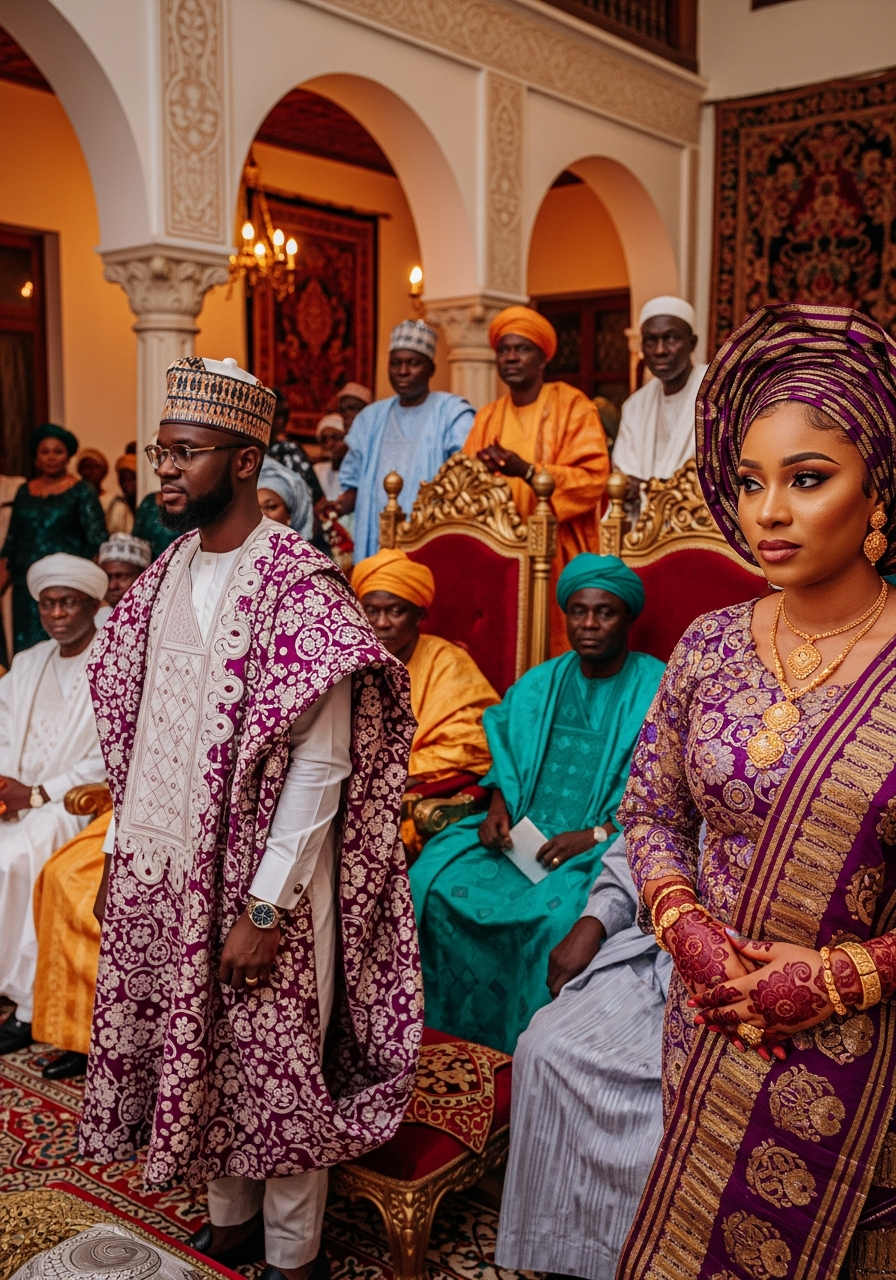
The henna ceremony for the bride and her close female friends and family, conducted the night before the wedding. Professional henna artists (lalle-tyers) create elaborate patterns on the bride's hands and feet. The darker the henna, the more love from the husband.
What Makes This Tradition Unique
Sacred Elements
Lalle (Henna)
Hausa henna patterns are distinct from Moroccan or Indian styles, they tend toward bold, filled geometric forms with symbolic motifs. The henna night is a women-only celebration of music, dance, and intimacy, marking the bride's final evening as an unmarried woman.
The Akad Nikah
The Islamic marriage contract is the legal and spiritual foundation of the Hausa wedding. It specifies the Mahr (a gift from groom to bride that belongs to her alone), the witnesses, the conditions, and the mutual consent. A Hausa woman has the right to stipulate her own conditions.
Kamu Drama
The joy of the Kamu is in its performative resistance. The bride's family sings songs asking why this man is taking their daughter; the groom's family sings back their worthiness. It is a dialogue in song, a comedy, and an affirmation of the bonds between the families.
Attire
The Hausa bride wears a richly embroidered ankara or damask outfit in bold colours, emerald green, royal blue, or deep purple, with a delicate veil and gold jewellery. On the Lalle night, a simpler white or cream outfit allows the henna to be the centrepiece.
The groom wears an embroidered babanriga (a large flowing robe) over a kaftan and wide trousers, topped with a turban. The quality and complexity of the embroidery is a statement of family standing. White is the traditional colour for the Fatiha.
The Music
Kakaki (royal trumpets) announce significant family ceremonies in the Hausa court tradition. At celebrations, the goge (one-stringed fiddle) and calabash percussion create a distinctly northern sound. Contemporary northern Nigerian pop music is popular at receptions.
Practical Guide
For Guests Attending a Hausa Wedding
Dress modestly: in a Muslim Hausa context, covered arms and legs for women are expected at all traditional ceremonies.
The Fatiha is a solemn religious ceremony, phones away, voices low, attire conservative.
At the Kamu, participate in the playful energy, clapping, singing along if you know the songs, and cheering is part of your role.
If you attend the Lalle, bring a small gift for the bride, perfume, jewellery, or cloth are all appropriate.
Useful Phrases
Words for the Occasion
Said as a blessing for the couple
Said by the MC when a ceremony starts