Ghana · Northern Region, Tamale
The Dagomba
Wedding Tradition
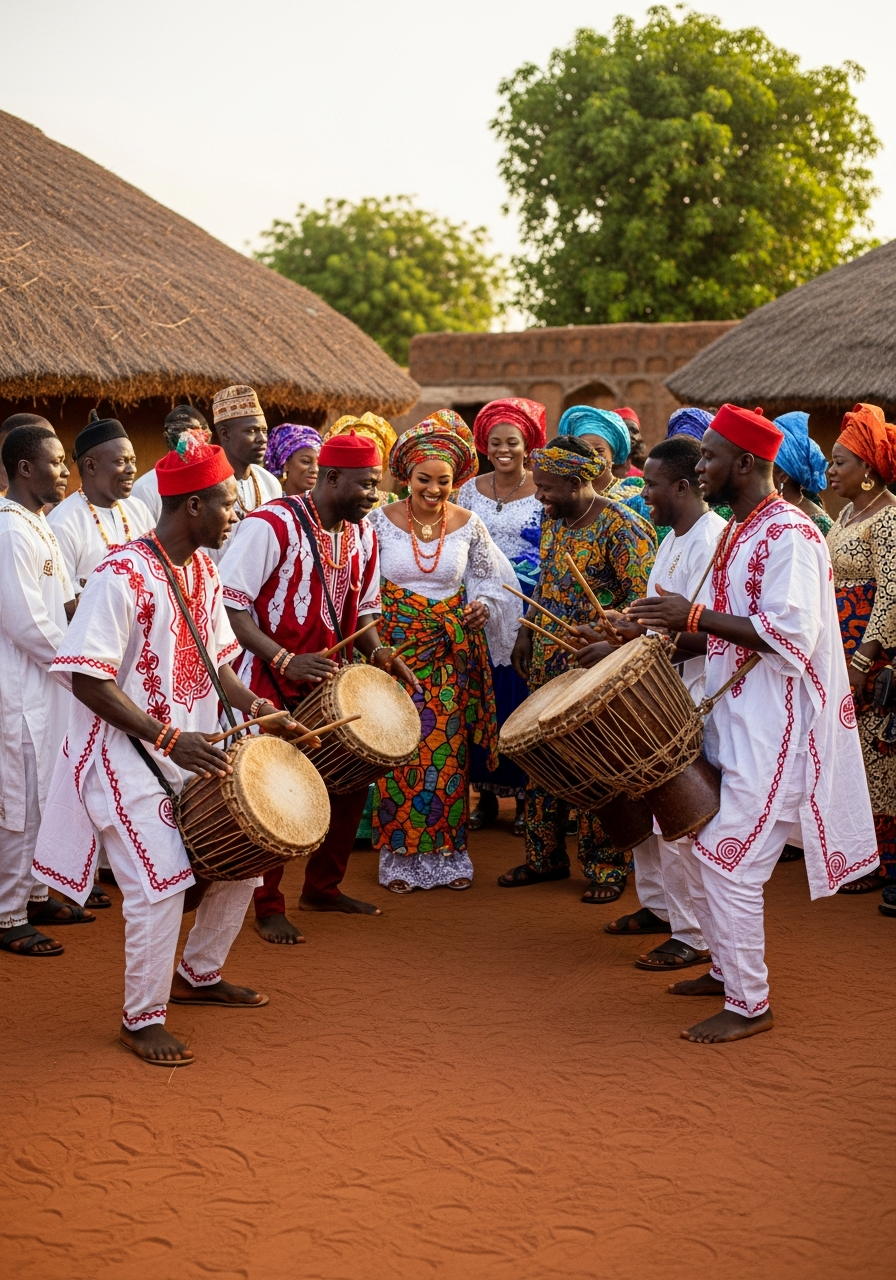
The Dagomba people of northern Ghana's savanna carry one of the continent's most ancient and living court traditions: the Lunsi. These hereditary royal drummers are both musicians and oral historians, the guardians of the Dagomba genealogy, able to trace royal lineages back twenty generations through drum-speech. At a wedding of any significance, the Lunsi perform.
Dagomba wedding culture blends Islamic practice, the majority of Dagomba are Muslim, with pre-Islamic court traditions that predate the arrival of Islam in the region by centuries. The result is a ceremony of profound layered meaning, where the Fatiha prayer coexists with royal drums that remember names the written record has forgotten.
Quick Facts
The Wedding Structure
Key Ceremonies
Kpema
Engagement Gift
The formal presentation of gifts from the groom's family to the bride's, including kola nuts, tobacco, livestock, and an agreed sum. The scale of the kpema signals the groom's family's status and seriousness.
Fatiha
Islamic Marriage Prayer
The Islamic Fatiha ceremony, conducted by the Imam, formalises the union in front of witnesses. The bride is represented by her father or male guardian (wali). The marriage contract (Akad Nikah) is signed and witnessed.
Lunsi Drumming
The Lunsi drummers perform the genealogy of both families, naming ancestors and praising the lineages being joined. This is not entertainment, it is a legal and spiritual record being laid into living memory. The performance can last for hours.
What Makes This Tradition Unique
Sacred Elements
The Lunsi Drums
The hourglass-shaped talking drum (luŋa) can replicate the tonal patterns of the Dagbani language, turning speech into percussion. A master Lunsi can perform the genealogy of a royal family stretching back 600 years, all from memory, all in rhythm.
Naa Luni (Royal Protocol)
Even at private weddings, the protocol of the Dagomba court shapes proceedings. Seating, order of address, who speaks first, who receives gifts first, all follow rules that have governed the Dagomba court since the 15th century.
Islamic & Traditional Blend
Dagomba Islam is syncretic and deeply local. The same ceremony that begins with a Quranic recitation may end with the pouring of libation for pre-Islamic ancestors. Both are honoured; neither cancels the other.
Attire
The Dagomba bride typically wears a richly embroidered smock (fugu) in white or cream, with layers of gold and amber jewellery. The face may be adorned with traditional markings for significant ceremonies.
The groom wears a fugu, the hand-sewn smock of northern Ghana, in white or a bold colour, with a traditional cap (dansinkran). For royal families, the regalia is considerably more elaborate.
The Music
The Lunsi talking drums are the ceremonial soundtrack of a Dagomba wedding. At the reception, the goje (a one-stringed violin played with a bow) and calabash percussion create a hypnotic northern rhythmic texture unlike anything heard in southern Ghana.
Practical Guide
For Guests Attending a Dagomba Wedding
Do not speak while the Lunsi are performing, the drum-speech is a legal and spiritual record, and interruption is disrespectful.
Wear a smock (fugu) if you have one; it is the most appropriate and appreciated outfit for guests in the north.
Greet the eldest person in the room first, always, in Dagomba culture, age confers authority.
Do not point the sole of your foot toward elders when seated; this is deeply disrespectful.
Useful Phrases
Words for the Occasion
Islamic greeting also used
Arabic origin, universally used in Dagomba context