Ghana · Volta Region & Togo
The Ewe
Wedding Tradition
The Ewe people of Ghana's Volta Region and across the border into Togo have one of West Africa's most sophisticated drum traditions, one where the Agbadza ceremony is not merely music accompanying a wedding, but a conversation with the cosmos. Every rhythm pattern, every movement of the Agbadza dance, encodes meaning that trained participants can read.
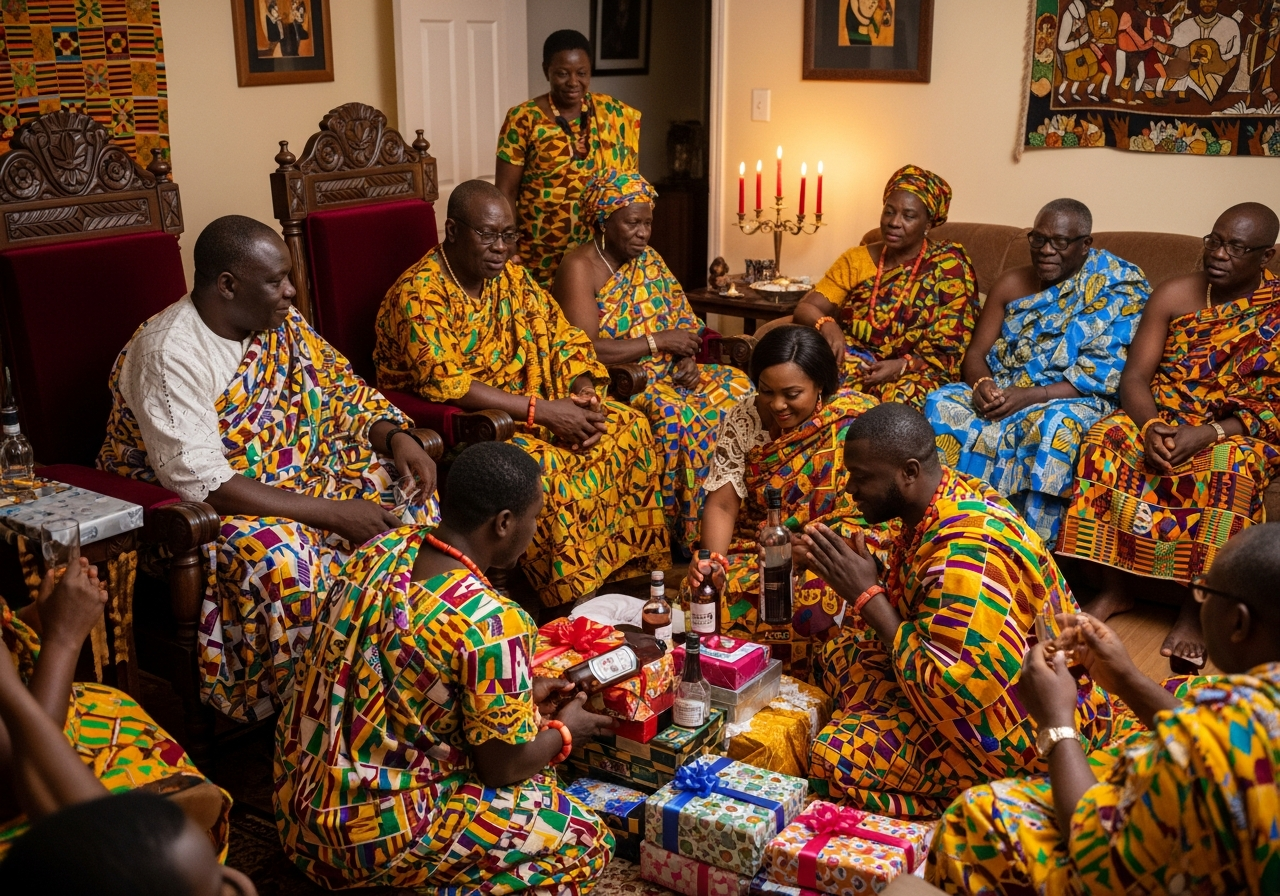
Ewe kente, woven in a distinct style from Ashanti kente, is characterised by geometric precision and bold colour combinations that reflect the Volta Region's unique weaving lineage. An Ewe bride dressed in her family's kente is wearing several generations of skill and intention.
Quick Facts
The Wedding Structure
Key Ceremonies
Adzaŋutifafa
Engagement
The formal engagement ceremony where the groom's family visits the bride's home with schnapps, kola nuts, and gifts. The bride's family's response and counter-gifts shape the terms of the union's formal recognition.
Agbadza
Ceremonial Dance
The Agbadza is a communal dance ceremony where the entire family participates. The lead drummer directs the dancers through a series of rhythmic conversations, some joyful, some contemplative, some ecstatic. To know Agbadza is to know the Ewe heart.
Habobo
Wedding Feast
The communal feast where both families share a meal together for the first time as one family. Dishes specific to the Volta Region, including akple (fermented corn paste) with palm nut soup, are prepared in large quantities by the women of the family.
What Makes This Tradition Unique
Sacred Elements
Agbadza Drums
The kagan (tenor), kidi (alto), and atsimevu (master drum) work together to create the Agbadza polyrhythm. The atsimevu speaks, it directs, comments, and converses. Those who know the language of the drum hear a full text.
Ewe Kente
Ewe kente uses narrower strips and more geometric, angular patterns than Ashanti kente. It is associated with particular lineages and ceremonial contexts. Wearing Ewe kente from a lineage not your own is considered presumptuous.
Volta River Blessing
For Ewe families living near the Volta River, a visit to the river, or the pouring of water from the river into the ceremony, connects the new union to the living geography that has shaped the Ewe people for millennia.
Attire
The Ewe bride wears her family's kente, distinctive for its tight geometric patterns and rich earth tones mixed with vivid colours. Beaded jewellery, a headwrap in matching fabric, and sandals complete the look.
The groom wears Ewe kente draped in the traditional style, or a well-tailored suit in colours that complement the bride's cloth. A walking staff and rings signal his formal commitment.
The Music
The Agbadza polyrhythm is the sound of Ewe celebration. At the reception, the music transitions between traditional drumming and contemporary highlife. The Bɔbɔ (a recreational Ewe dance) is also performed at informal celebrations.
Practical Guide
For Guests Attending a Ewe Wedding
The Agbadza drum will invite you to dance, accept the invitation, no matter your skill level.
Ewe kente outfits are perfectly appropriate for guests; any African print works well.
Akple (fermented corn paste) may be challenging for the uninitiated; accept it respectfully and try a small portion.
Greet the couple's parents before the couple, Ewe culture places enormous weight on parental respect.
Useful Phrases
Words for the Occasion
Said to guests arriving
A warm greeting asking how your journey was