South Africa · Eastern Cape & Western Cape
The Xhosa
Wedding Tradition
The Xhosa people of South Africa's Eastern Cape are one of the continent's most ceremonially precise cultures. Their weddings are structured around a series of formal rituals — the ikhazi (lobola) negotiation, the application of red ochre, and the umabo gift ceremony — each designed not merely to celebrate a union but to create an unbreakable bond between two family systems. Nelson Mandela was Xhosa; the culture's eloquence, dignity, and ceremonial gravity are recognised worldwide.
What distinguishes Xhosa tradition from its Zulu neighbours is the depth of the transition ceremonies for the bride. The ibomvu, the red ochre paste applied to her skin by elder women, is not decoration. It is a public marking of passage: she is leaving one identity and entering another, and the ochre announces this to all who see her. By the time she reaches the umabo ceremony, she is already visually transformed.
Quick Facts
The Wedding Structure
Key Ceremonies
Ikhazi Negotiations
Lobola
Family representatives of the groom visit the bride's family to negotiate the bridewealth, historically in cattle, now often partially in cash. The negotiations are formal, respectful, and conducted through a designated spokesman. Agreement creates a bond between families, not merely between individuals.
Ibomvu Ceremony
Red Ochre Application
Elder women of the bride's family apply ibomvu — a paste of red ochre, animal fat, and sometimes aromatic herbs — to the bride's face, neck, and shoulders. The application is a ceremony in itself, accompanied by song and instruction from the elders. The ochre marks the bride as a woman in transition.
Umabo
Gift Ceremony
The bride's family brings blankets, clothing, and household goods to the groom's family home. Each item is named aloud by a designated speaker and received with a song from the groom's family. The ceremony formally welcomes the bride into her new clan and creates obligations of care that flow in both directions.
What Makes This Tradition Unique
Sacred Elements
Red Ochre (Ibomvu)
The red clay paste worn by Xhosa married women is not cosmetic — it is a marker of status, belonging, and transition. A bride wearing ibomvu on her wedding day is communicating her passage to all who see her, in a visual language read fluently across the Eastern Cape.
Click Language (isiXhosa)
isiXhosa is distinguished by its incorporation of click consonants, one of the most linguistically distinctive features of any language on earth. At formal ceremonies, speaking the language correctly — particularly the clicks — carries profound weight. Elder speeches in isiXhosa carry authority that translation cannot fully render.
Imvunulo (Bridal Dress)
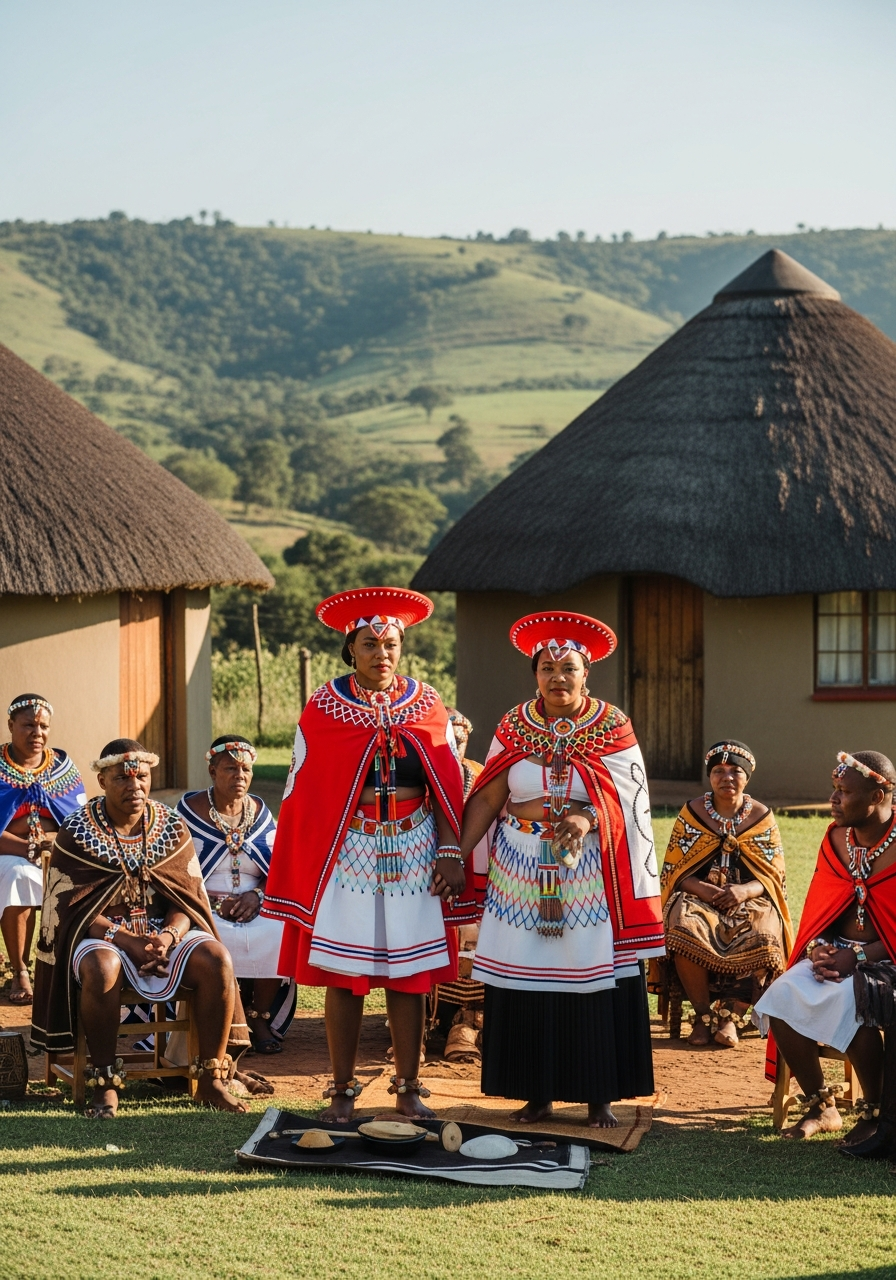
The complete Xhosa bridal ensemble — ochre skin, beaded aprons, copper neck rings, and headwrap — is called imvunulo. It is assembled with guidance from elder women and each element is chosen for its specific meaning within the family's tradition. No two imvunulo are identical.
Attire
The Xhosa bride wears ibomvu (red ochre) on her skin, a beaded doek (headwrap) in the family's colours, copper neck rings (izingcwekazi), and layered beaded aprons. The overall effect is one of extraordinary visual power: red, copper, and white beads against ochre-painted skin.
The Xhosa groom wears a formal suit or traditional dress depending on the family's preference, often with a leopard-skin headband or shoulder cloth. For deeply traditional families, an animal-skin ensemble is worn, echoing warrior heritage and the gravity of the covenant being made.
The Music
Xhosa music is defined by its choral tradition — deep, interlocking harmonies sung without instruments, shaped by the click rhythms of the language itself. The umngqungqo is a ceremonial song form reserved for important occasions. Traditional wedding songs are sung by both family sides in alternating call-and-response that can last for hours.
Practical Guide
For Guests Attending a Xhosa Wedding
Red is the colour of the bride — unless you are specifically included in the bridal party, avoid wearing red ochre shades out of respect for her transformation.
If elder women speak in isiXhosa during the ceremony, give complete quiet attention even if you do not understand — the ceremony is alive in the language.
Gifts of blankets are significant in Xhosa tradition; bringing a quality blanket as a gift to the family is a gesture that will be warmly received and long remembered.
The umabo gift-giving ceremony moves at a ceremonial pace. Resist any impulse to hurry it — the slowness is the point. Each gift named aloud and received with song is a moment of building.
Useful Phrases
Words for the Occasion
Molweni — greeting more than one person
Said with sincerity, not just as formality
A profound expression used in ceremonial blessing
Said at moments of ceremony and celebration