South Africa · KwaZulu-Natal
The Zulu
Wedding Tradition
The Zulu people of KwaZulu-Natal have maintained one of Africa's most powerful wedding traditions, built around the Lobola negotiation, the sacred slaughter, and the Umabo gift ceremony. Zulu weddings are not simply the union of two people but a formal covenant between two clans, witnessed by the living and the ancestors.
Lobola, often translated as 'bridewealth', is the foundation of the Zulu marriage process. Conducted by senior family representatives, the negotiation determines the number of cattle (or their cash equivalent) that the groom's family will present to the bride's family. This is not a purchase; it is a covenant of respect between lineages, and it creates obligations and bonds that last generations.
Quick Facts
The Wedding Structure
Key Ceremonies
Lobola Negotiations
Ukudinga
Senior male representatives of both families meet, often over multiple evenings, to negotiate the bridewealth. The groom is not present. The negotiations are formal, governed by traditional protocol, and conducted through a spokesman. Agreement is celebrated, recorded in writing, and binds both families.
Umkhehlo
Final Preparation
The final ceremony before the wedding, during which the bride's family formally separates her from her girlhood. Beadwork is presented, songs are sung, and the women of the family transmit accumulated wisdom through ceremony.
Umabo
Gift Ceremony
On the morning after the wedding night, the bride distributes gifts to all members of her new family, from elders to the youngest child. Each gift is selected carefully. The ceremony is the bride's formal introduction to her new clan and her first act of care within it.
What Makes This Tradition Unique
Sacred Elements
Cattle
In Zulu culture, cattle are sacred — carrying social, spiritual, and economic significance simultaneously. When cattle are slaughtered at a Zulu wedding, it is a gift to the ancestors, an acknowledgement that they are invited into the occasion, and a demonstration of the family's generosity.
Isidwaba
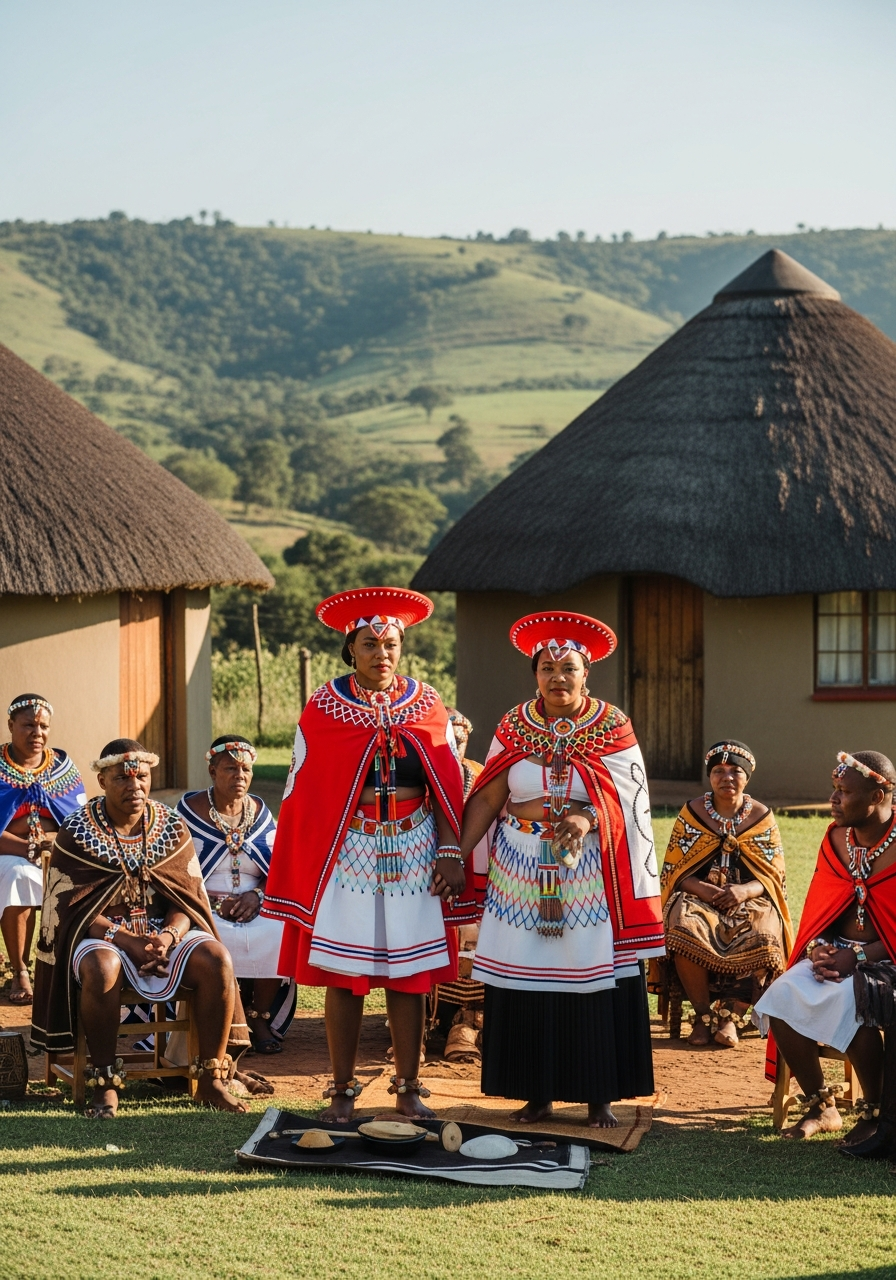
The black leather pleated skirt worn by the Zulu bride is one of the most recognisable items of traditional attire in Africa. Paired with the isicwaya (a skin top) and elaborate copper and beadwork, the imvunulo transforms the bride into a living emblem of her culture.
Izibongo (Praise Poetry)
The izimbongi (praise poet) recites the bride's and groom's lineages in rapid, rhythmic verse at key moments. This is genealogical documentation performed in public — announcing to all present who these people are and where they come from.
Attire
The Zulu bride wears the isidwaba (black pleated leather skirt), isicwaya (animal-skin top), and isigege (headband). Her neck, chest, and arms are covered in intricate beadwork — each colour carrying meaning within Zulu beadwork symbolism. Red and black dominate, signifying her transition from maiden to wife.
The Zulu groom wears animal skins including the ibheshu (rear skin apron) and umutsha (front skin apron), with fur adornments. He carries a knobkierie (walking stick) and shield. The outfit reflects warrior heritage and the gravity of his commitment.
The Music
The Zulu wedding soundscape is anchored by isigqi (singing in close harmony) and the ingoma dance, in which young men and women perform athletic, leaping dances while singing. The deep resonance of Zulu choral tradition — characterised by call-and-response and extraordinary harmonisation — fills the entire celebration.
Practical Guide
For Guests Attending a Zulu Wedding
Dress respectfully; bright colours and African prints are welcome. Avoid red unless you are part of the bridal party.
When the izimbongi performs, give complete attention. You are witnessing one of Africa's oldest living art forms.
If cattle are slaughtered, understand that this is a sacred act of hospitality and ancestral communication, not merely meal preparation.
Accept umqombothi (traditional sorghum beer) if offered by elders; it is the drink of ceremony and community.
Useful Phrases
Words for the Occasion
Response: 'Ngikhona' — I am here
Used in praise and formal address
A communal affirmation, said in unison