Senegal · Senegal, The Gambia
The Wolof
Wedding Tradition
The Wolof people are the largest ethnic group in Senegal and carry one of West Africa's most influential cultural traditions. The Wolof social system, with its distinct noble, artisan, and griot (jali) castes, shapes every aspect of wedding ceremony. The jali, hereditary praise singers and oral historians, are the indispensable masters of ceremony at any Wolof wedding of significance.
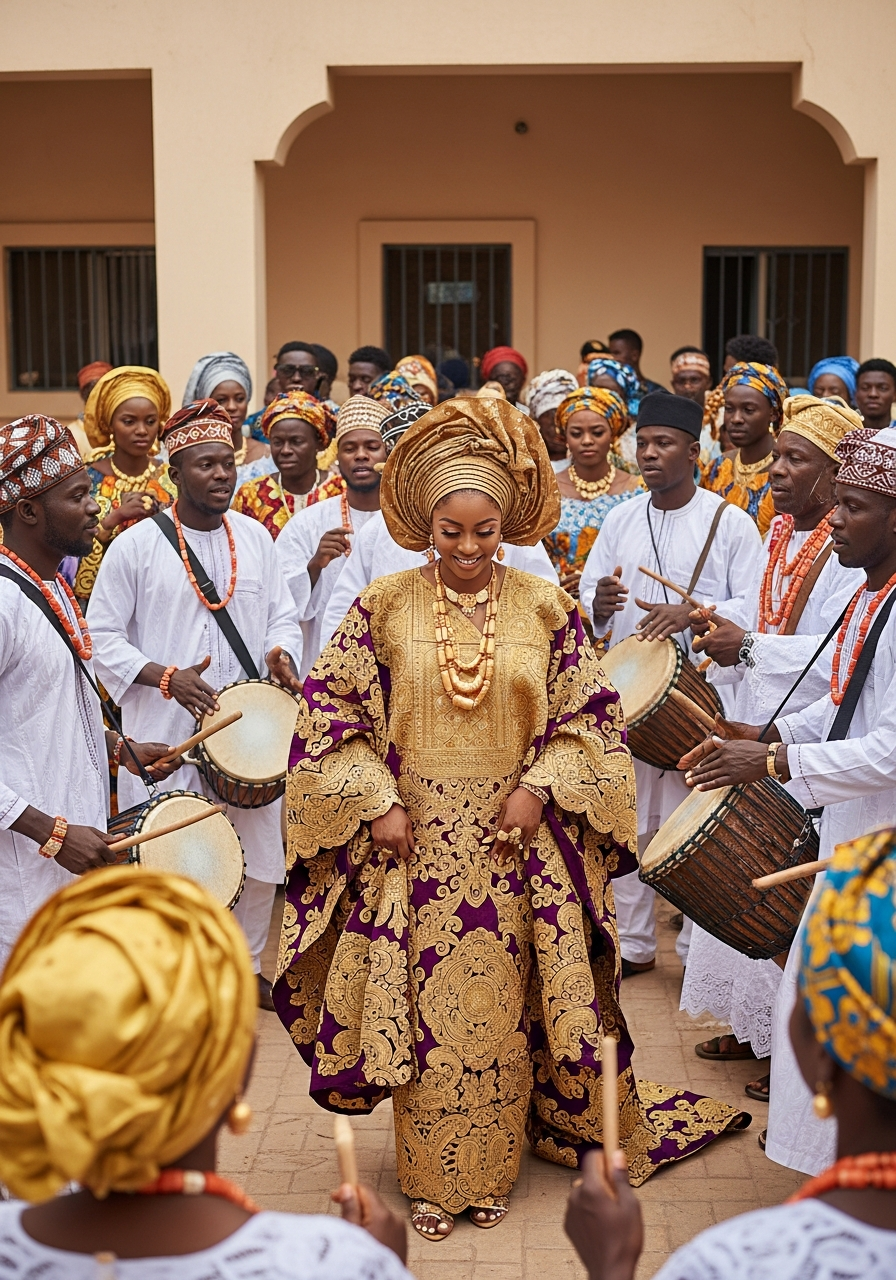
A Wolof wedding is never a small affair. The grand boubou, an elaborately embroidered flowing gown that can require weeks of needlework, and the accompanying jewellery, fabric gifts, and communal feasting create a celebration of communal abundance. The Sabar drums drive the celebration into the night with a rhythmic intensity that is uniquely Wolof.
Quick Facts
The Wedding Structure
Key Ceremonies
Ndiabar
Engagement
The formal engagement where the groom's family sends representatives with kola nuts, cola, fabric, and gifts to formally request the bride's hand. A key gift is the 'xarit', gifts specifically for the bride's close friends, acknowledging the social network that has supported her.
Akad Nikah
Islamic Marriage Ceremony
The Islamic marriage contract is conducted by the Imam in the presence of witnesses and the bride's wali. The Mahr is announced publicly. Unlike some Islamic traditions, Wolof women often participate directly in the ceremony, a reflection of Wolof women's historically strong social position.
Sabar Celebration
The Sabar is both a drum type and a dance form unique to Wolof culture. At the wedding reception, professional Sabar drummers create an irresistible polyrhythm that draws every guest to the dance floor. The dancing is athletic, improvisational, and deeply communicative, women take turns in the centre, engaging in a movement dialogue with the drummers.
What Makes This Tradition Unique
Sacred Elements
The Jali (Griot)
Hereditary praise singers who have memorised the genealogies, histories, and praises of hundreds of families. At a Wolof wedding, the jali performs the lineage of both families, calling their ancestors by name and praising their qualities. To hear your lineage performed in public by a master jali is a profound experience.
Grand Boubou
The grandest item of clothing in West African Muslim fashion, the grand boubou is a wide, flowing three-piece outfit for men, or a voluminous dress and veil for women. The embroidery, done by specialist embroiderers, can take weeks and represents a family's investment in their presentation.
Thiéboudienne Feast
Senegal's national dish, rice cooked in tomato-fish broth with whole fish and vegetables, is the centrepiece of the Wolof wedding feast. Preparing thiéboudienne for 500 guests requires an army of experienced cooks and begins the night before. The quality of the thiéboudienne reflects the family's reputation.
Attire
The Wolof bride wears a grand boubou in bright colours, emerald, royal blue, or fuchsia, with heavy gold jewellery including the ndawrabine (traditional bead necklace) and gold ear clips. The fabric is often specially commissioned damask or bazin riche.
The groom wears a grand boubou in complementary or matching fabric, with an embroidered kaftan and a tagelmust (turban) or flat prayer cap. The embroidery on a Wolof groom's boubou is a public statement of his family's standing.
The Music
The Sabar drum, a tall, single-headed drum played with one hand and one stick, creates the rhythmic foundation of Wolof celebration. The djembe and tama (talking drum) accompany. Griots perform praise songs in Wolof over the percussion, weaving genealogy into the beat. Mbalax, Senegal's popular music pioneered by Youssou N'Dour, now dominates reception playlists.
Practical Guide
For Guests Attending a Wolof Wedding
When the jali calls the family names and lineages, listen attentively, this is not background music, it is the family's oral history.
Grand boubou or formal African attire is appropriate; Senegalese weddings are among the most elegantly dressed events in West Africa.
Accept thiéboudienne enthusiastically, the pride taken in its preparation means your pleasure is their honour.
At the Sabar, clap and cheer when someone dances well; this is your role as an audience member and it is essential.
Useful Phrases
Words for the Occasion
Response to 'how are you'
Standard Muslim greeting
Said to the couple