Kenya / Tanzania · Great Rift Valley & Serengeti
The Maasai
Wedding Tradition
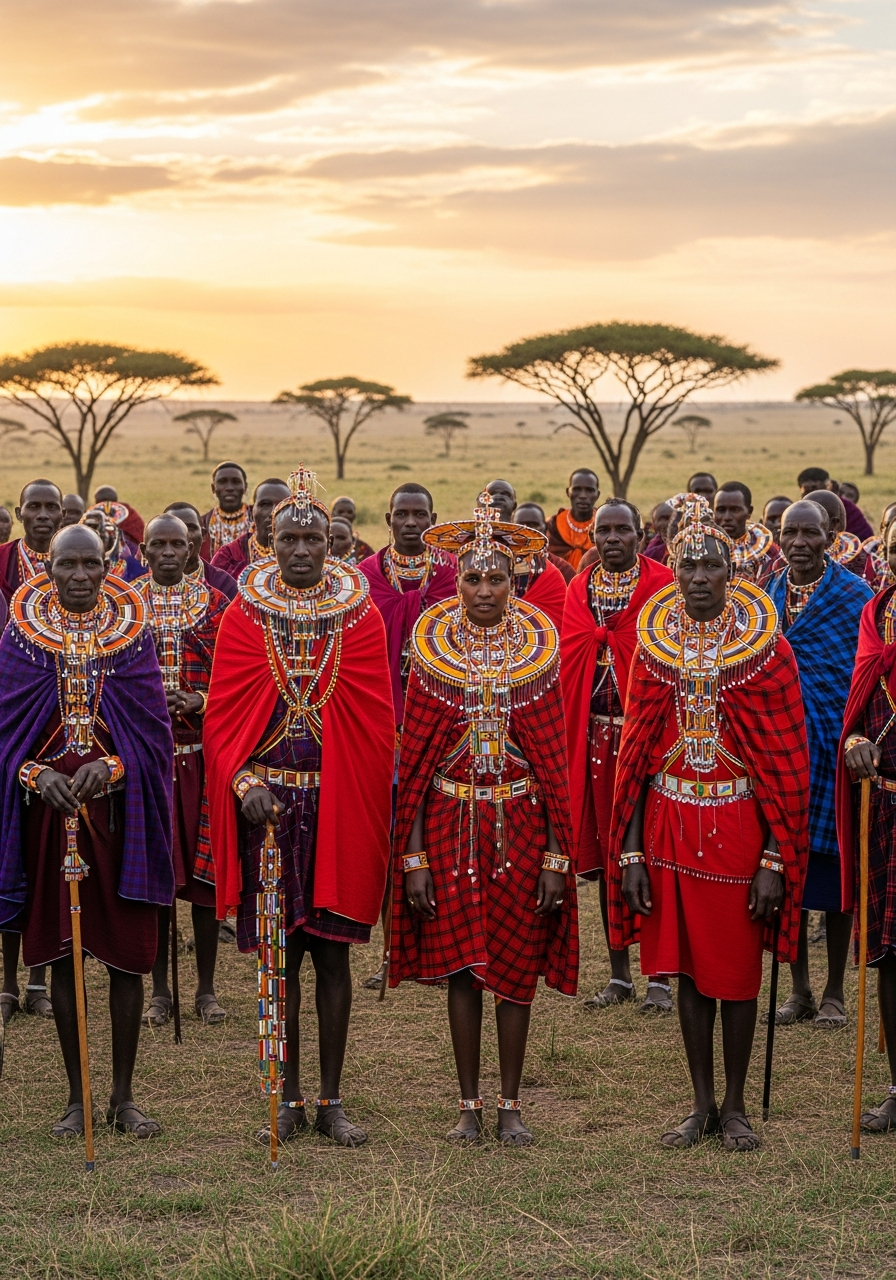
The Maasai of Kenya and Tanzania are one of Africa's most recognisable peoples, and one of its most culturally intact. Semi-nomadic pastoralists of the Great Rift Valley and Serengeti, the Maasai have maintained their customs, dress, and cosmology through two centuries of colonial pressure and modern encroachment. The Enkiama, the cattle negotiation that forms the foundation of Maasai marriage, is a ceremony that has been conducted in the same way for hundreds of years.
Maasai beadwork is a complete language. Every bead colour carries meaning: white for peace and purity, red for warrior blood and courage, blue for the sky and water, green for the grass and nourishment, orange for warmth and friendship. A Maasai woman's bead ensemble communicates her age, marital status, clan, and spiritual standing at a glance.
Quick Facts
The Wedding Structure
Key Ceremonies
Enkiama
Cattle Negotiation
The central marriage ceremony in Maasai culture. The groom's family presents cattle, goats, and honey beer to the bride's family. The number and quality of cattle is negotiated by elders over several meetings. Cattle are not payment, they are the physical form of the bond between the families.
Olpul
Meat Feast
A ritual feast of roasted meat, conducted by the men of the age-set, marks the formal beginning of the groom's new social status as a husband. The feast takes place outside the settlement (manyatta), and the songs sung at Olpul are exclusive to this occasion.
Blessing of the New Home
After the Enkiama, the bride is led to her new home (inkajijik), built by her in accordance with Maasai tradition, since it is the women who build and own the homes. Elder women bless the threshold with milk, fat, and blood, calling the ancestors to inhabit the space.
What Makes This Tradition Unique
Sacred Elements
Beadwork Communication
Maasai beadwork is not decorative, it is a social text. A young warrior's (moran) beaded collar, a married woman's beaded necklace layers, the disc earrings indicating motherhood, all are read instantly by those who know the code.
Cattle as Currency of Love
For the Maasai, cattle are not wealth in the abstract, they are living relationships. A man's cattle represent his relationships with other families, his ancestors' accumulations, his children's futures. Negotiating cattle is negotiating life itself.
Age-Set System
Maasai society is organised by age-sets (ilkiama) that move through life together, from boyhood to warrior (moran) to junior elder to senior elder. A man's age-set determines what ceremonies he can participate in and what social responsibilities he holds. Marriage moves a man from moran to elder.
Attire
The Maasai bride wears the shuka, a vibrant plaid blanket in reds, blues, and blacks, wrapped and draped. Her bead ensemble is extraordinary: multiple layered disc necklaces, arm bands, and ear extensions that indicate her marital transition. The blue shuka colour is preferred by brides.
The groom, transitioning from moran (warrior), wears his ceremonial shuka and carries a spear and rungu (club) as symbols of his warrior status. He will soon lay these down, symbolically, to take up the spear of an elder, a man who protects through wisdom.
The Music
Maasai music is a cappella, there are no instruments in traditional Maasai song. The warriors perform Adamu (jumping dance), competing to leap highest while the group creates a vocal drone. Women's songs are equally powerful: high, clear melodies that carry across the open savanna.
Practical Guide
For Guests Attending a Maasai Wedding
If invited to an Adamu (jumping dance) competition, cheer energetically, the height of the jump reflects the warrior's pride.
Do not touch a Maasai warrior's weapons or headdress without permission, they carry deep personal and spiritual significance.
Bring milk, honey, or a practical gift; among the Maasai, practical gifts are the most respectful.
Accept meat if offered at the Olpul, refusing food from a family that has killed an animal in your honour is a significant gesture of rejection.
Useful Phrases
Words for the Occasion
Said to the couple