Culture
Ewe
Location
Ho, Volta Region, Ghana
Published
March 2026
Traditions
Agbadza Drumming
Kente of the Volta
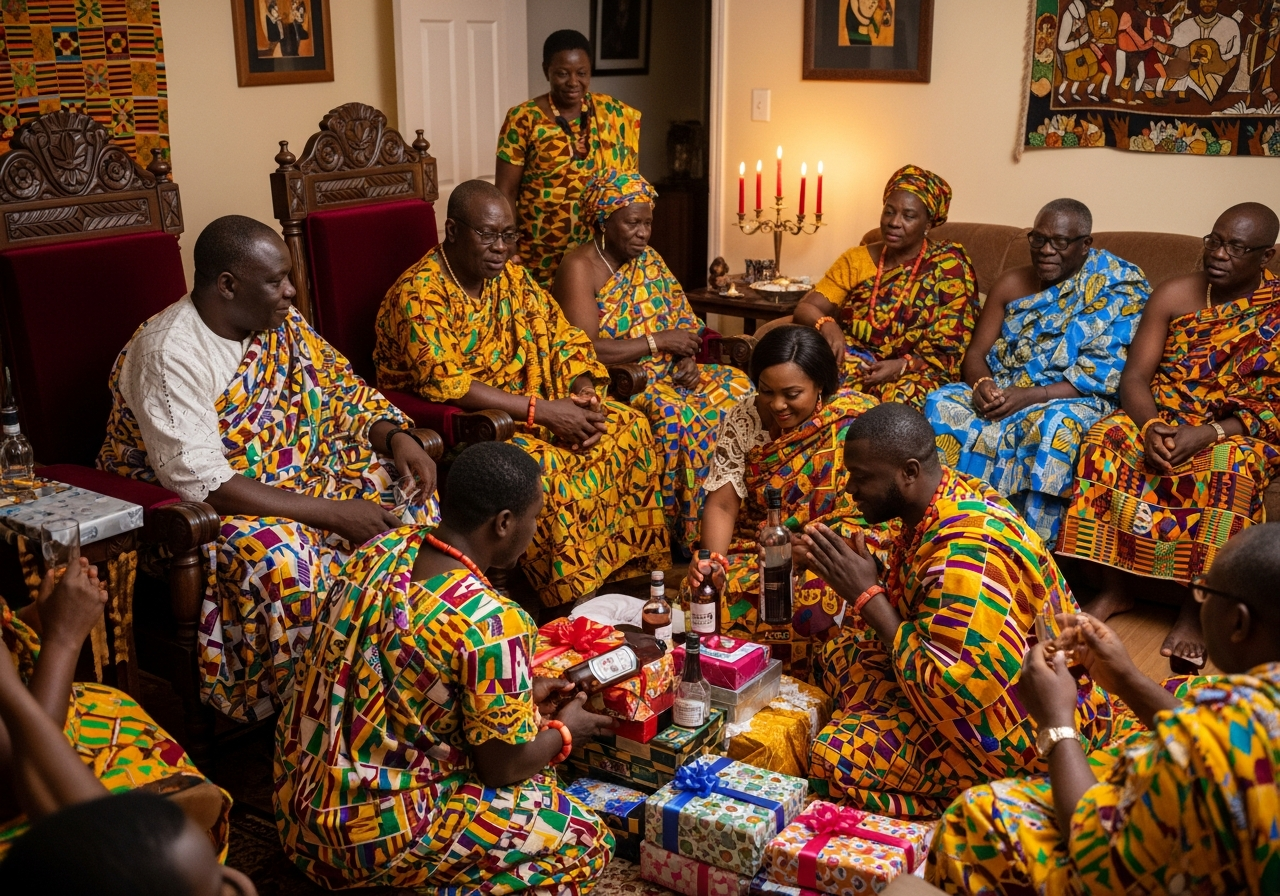
Ama and Edem met in Ho while both were working with an NGO documenting Volta Region textile traditions. They spent two years learning to read the same cloth before they agreed to spend a lifetime reading it together. Their wedding, held across two days in the family compound where Ama's great-grandmother was married, was designed from the beginning to be a ceremony that their children's children would be told about.
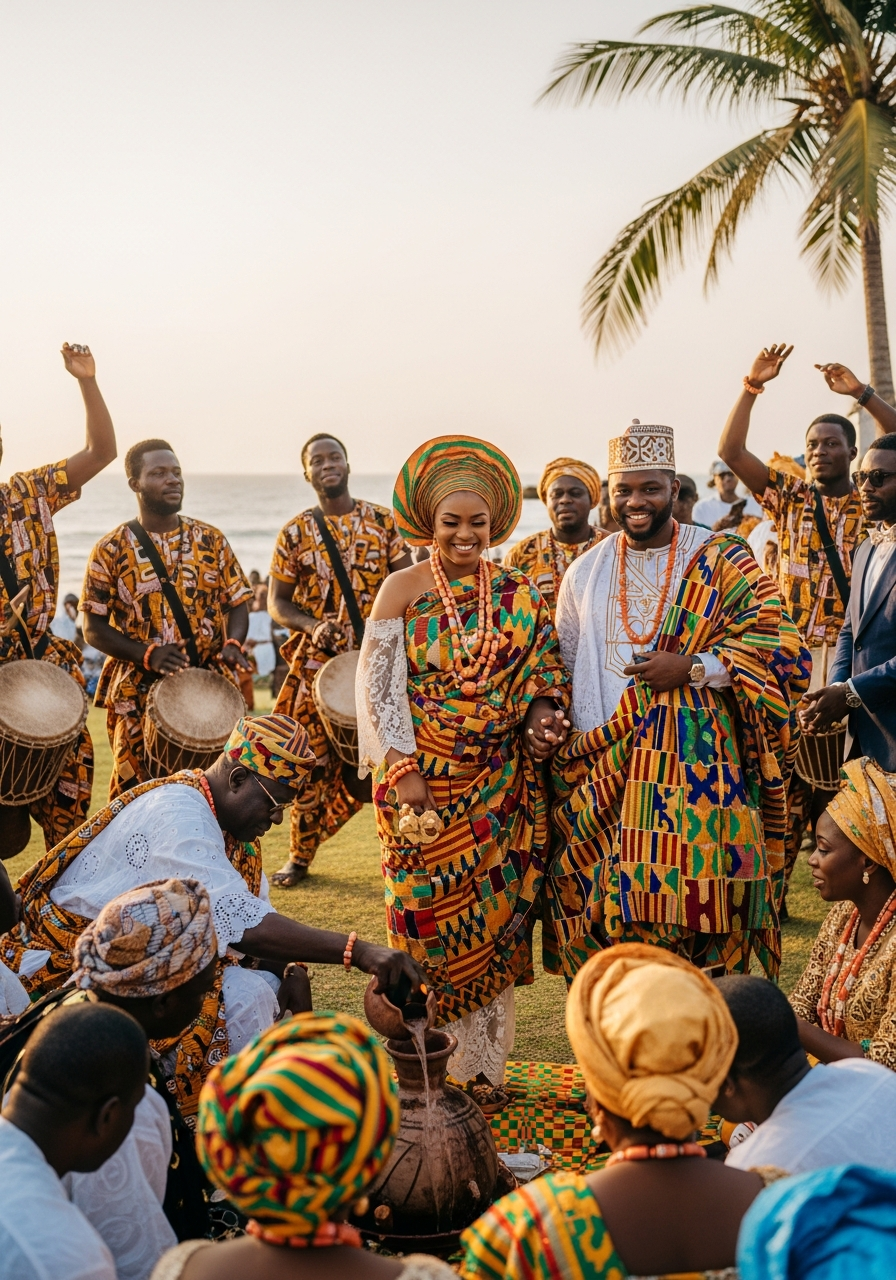
The Agbadza drumming ensemble that played at the Ewe traditional ceremony had been assembled by Edem's uncle, who tracked down three drummers from three different districts to recreate the sound his grandfather had heard at every major family event. When the drums started at sunset on the first evening, Ama's mother stood up without being asked and began to dance in the style that Ewe women have danced for centuries: spine straight, feet barely leaving the ground, arms tracing patterns in the air.
Ama wore kente hand-woven by a weaver in Hohoe who had been making cloth for her family for thirty years. The pattern was commissioned specifically for the day, its name (Agbenoxorxor, meaning 'the beauty of a new beginning') chosen by the couple together. Both families agreed: they had never seen a wedding done this right.
Share this story