Yɛkɔware Editorial
Published 18 April 2026 · 14 min read
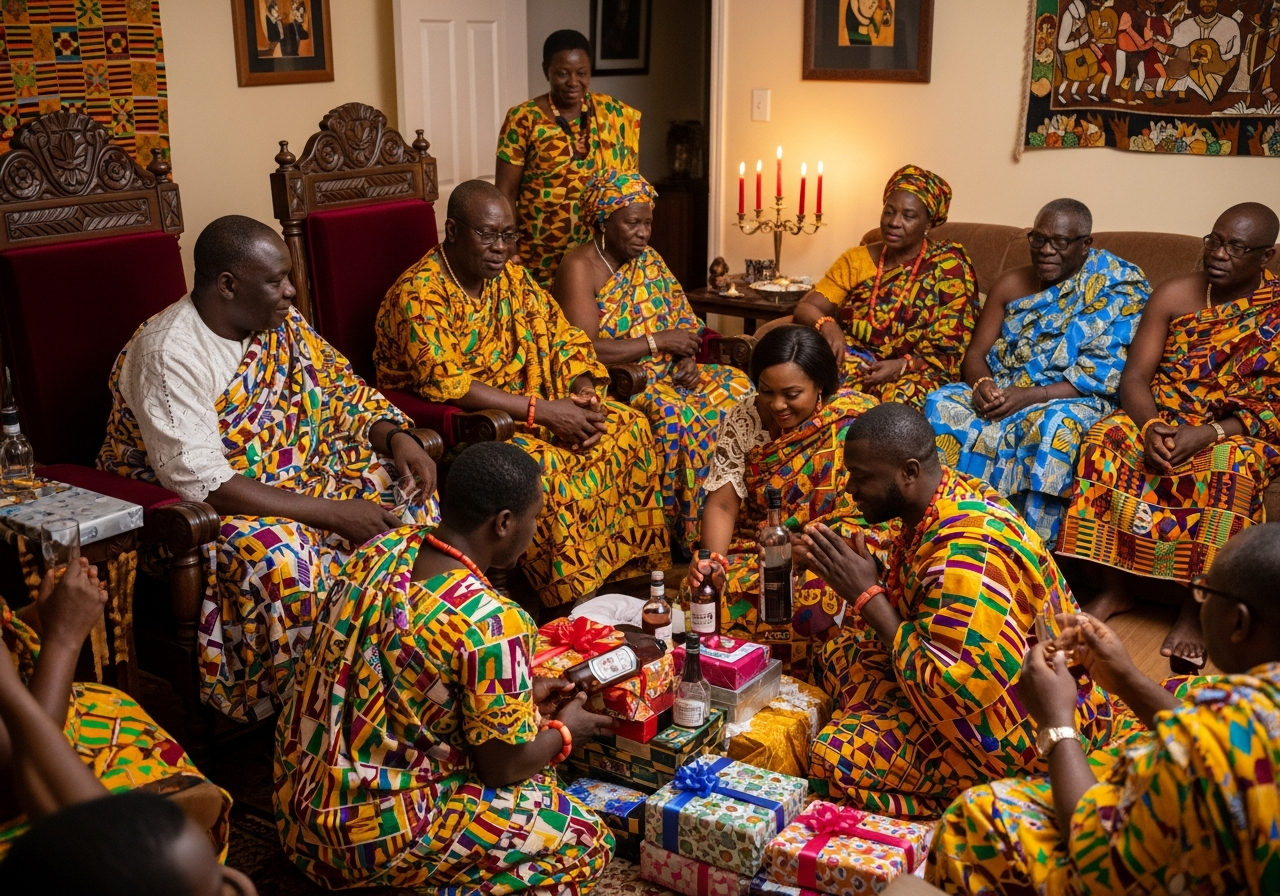
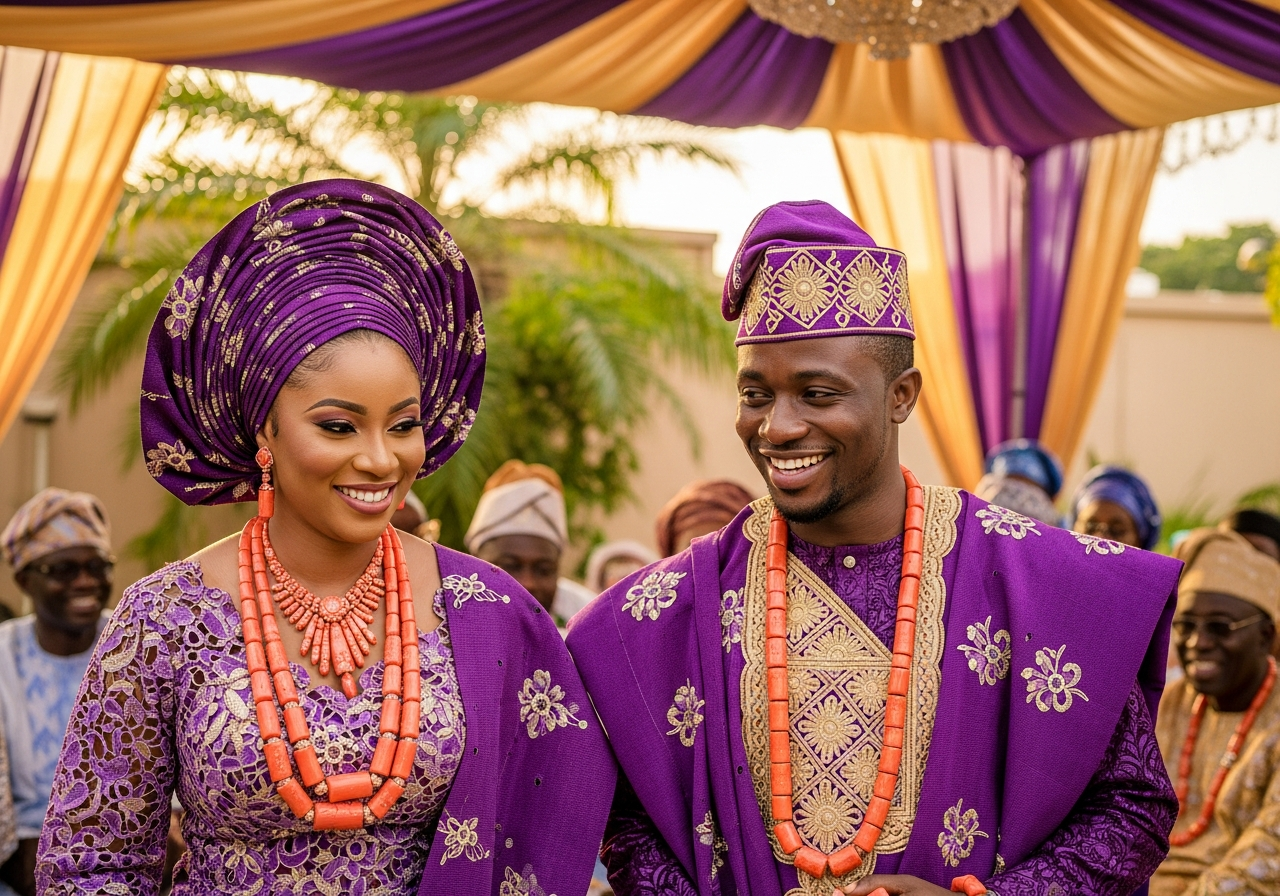
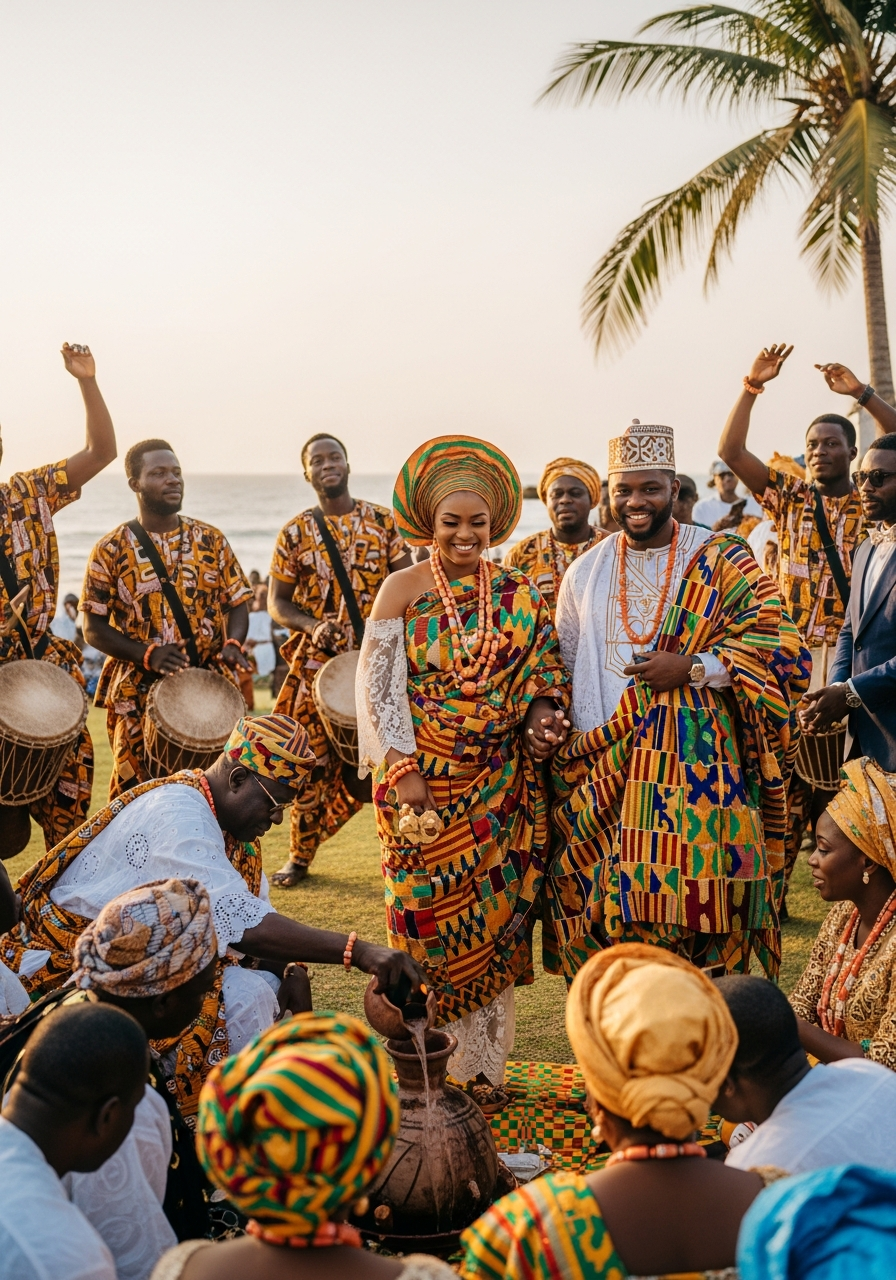
Every weekend in London, Toronto, New York, and Amsterdam, an African couple stands in a rented hall, a community centre, or a carefully chosen venue and performs a ceremony that their grandparents performed on a different continent. The drumming is the same. The proverbs are the same. The fabric sourced from specialist importers in Brixton or Queens is the same fabric sold in markets in Accra and Lagos. What is different is everything that surrounds the ceremony.
The scale of what they are managing
Planning a traditional African wedding in the diaspora requires managing two simultaneous logistical operations: the ceremony itself, and the education of everyone involved in it. Vendors who have never heard of a Knocking Ceremony must be briefed. Venues that do not understand why the drumming needs to start at 7pm must be negotiated with. Family flying in from Accra, Lagos, or Nairobi must be housed, transported, and coordinated.
Adaeze, a Nigerian-British software engineer who married her Igbo husband in South London in 2024, describes the challenge: 'We had to write a two-page document explaining the Igba Nkwu to our venue. They had never seen a ceremony where the bride walks through a crowd looking for her groom. They thought she was lost.' The venue manager, once briefed, became one of the event's most enthusiastic supporters. But the briefing took time, time that was not in the original plan.
What makes it work
The couples who navigate this most successfully are those who commit fully to the traditional ceremony rather than diluting it for a perceived Western audience. 'We decided early that we were not going to explain anything to anyone on the day,' says Kwame, a Ghanaian-American who held an Akan Knocking Ceremony and traditional wedding in Atlanta in 2023. 'We gave guests a printed cultural guide, we had an MC who narrated the ceremony in English, and then we just did the ceremony. Fully. People were moved because they could feel the authenticity.'
The ceremony does not need to be explained to be felt. It needs to be done correctly.
The most critical resource for diaspora couples is a network of vendors who understand the traditions. Photographers who know when not to use flash during a libation. Caterers who can source the right ingredients. DJs who understand that the talking drums section of a Yoruba reception is not the moment to switch to Afrobeats. Florists who understand that certain colours mean different things in different cultural contexts.
What the elders say
Not everyone in the older generation is enthusiastic about diaspora ceremonies. Some families feel that performing a traditional ceremony outside its native context is a diminishment. Others feel the opposite: that performing the ceremony in London or Toronto is an act of cultural preservation in a world that threatens to absorb their children's identities.
'My grandmother cried when we did the Knocking Ceremony in Birmingham,' says Ama, a Ghanaian-British bride who married in 2024. 'She said she never thought she would see it done properly this far from home. That was enough for me.' The diaspora wedding is, ultimately, a declaration: we are here, we have not forgotten, and we will teach our children what we were taught. The ceremony may be 6,000 miles from its origins, but its meaning is portable in a way that geography cannot touch.