Yɛkɔware Editorial
Published 30 April 2026 · 10 min read
You have been invited to an Akan Knocking Ceremony. Perhaps you received the invitation through a Ghanaian friend, or your partner's family has included you in this most formal of pre-wedding events. What is it, exactly? What will happen? What do you wear, what do you bring, and, critically, when do you speak and when do you remain silent?
What is the Knocking Ceremony?
The Knocking Ceremony, called Mpena Aware in Twi, is the formal declaration of marriage intent in Akan tradition. It precedes everything else: the traditional wedding, the church wedding, the registry. The groom's family travels to the bride's family home, announces themselves, and formally requests the bride's hand. Nothing is assumed. Nothing is casual. The visit is structured, the items are specific, and the speech, delivered by the family's Okyeame, or linguist, is an art form.
The name comes from the act of knocking on the door. You do not enter an Akan home for a serious occasion without knocking, announcing yourself, and being formally admitted. The ceremony is a scaled-up version of this foundational courtesy: the groom's family is knocking on the door of the bride's family, requesting to be let in: not just to the home, but to the lineage.
What to wear
Dress in African print fabric, kente, or a smart traditional outfit. This is not a jeans occasion. Women should wear a skirt or dress; men, at minimum, a well-pressed shirt and trousers in African fabric. Do not wear all black, which signals mourning in Akan culture. Do not wear more elaborate kente than the couple themselves. The safest choice is a clean, well-pressed Ankara or plain kente in modest colours.
What to bring
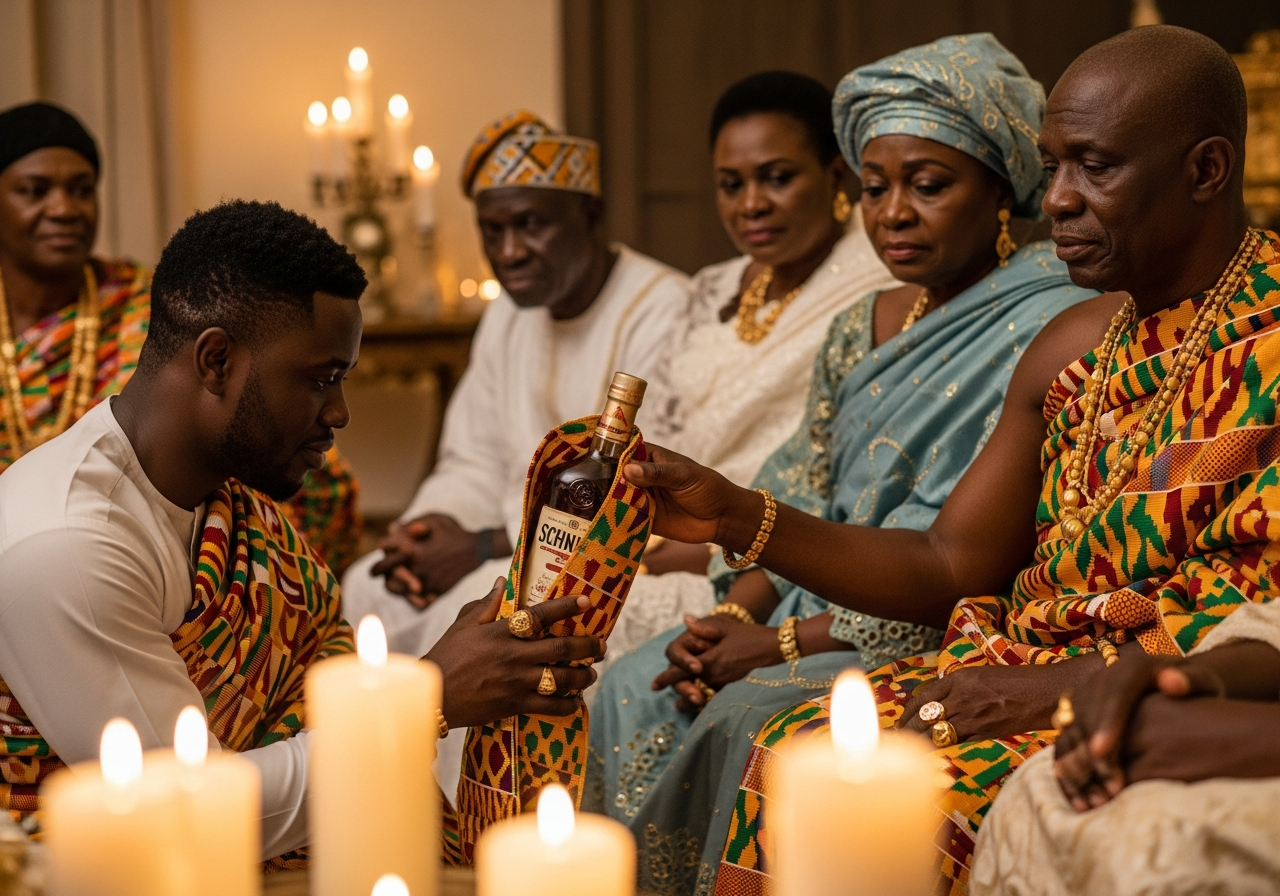
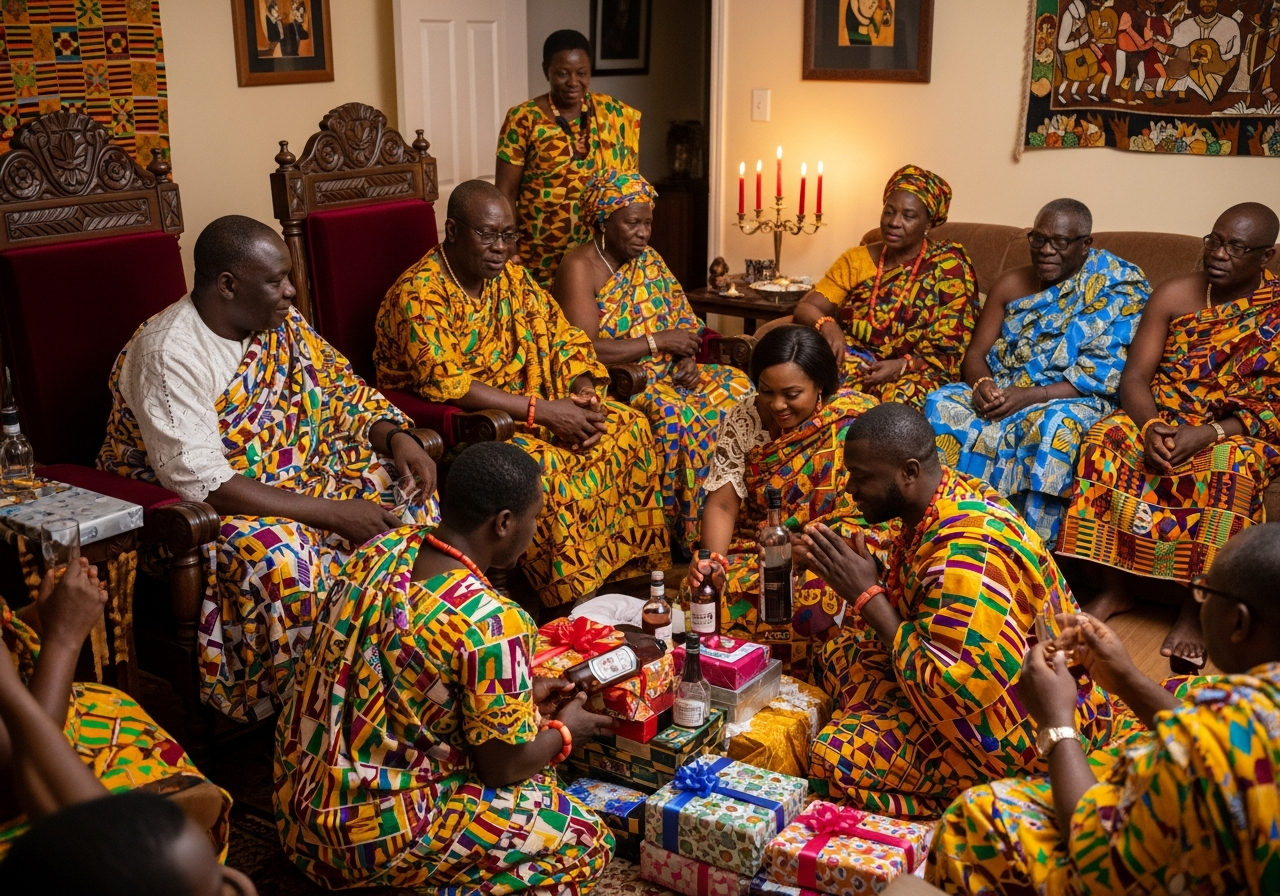
If you are a member of the groom's family, your family will have prepared a list. Common items include imported schnapps (non-negotiable in many families; it signals seriousness), kola nuts, cash in a decorated box, fabric, drinks, and food items. The specific list varies by family, region, and social standing. Ask the ceremony coordinator well in advance. Do not arrive empty-handed.
If you are a guest of the bride's family, you are there to witness and celebrate, not to present items. A small cash gift to the bride's mother, discreetly given at an appropriate moment, is always welcomed.
The sequence of events
The groom's family arrives and announces themselves at the entrance. The bride's family formally invites them in. Seats are assigned: groom's family on one side, bride's family on the other. The Okyeame from the groom's side speaks first, using proverbs and formal language. The bride's family's Okyeame responds. Items are presented one by one and named. The bride's family may accept, reject, or open negotiation on each item; this back-and-forth is traditional, not hostile.
When the Okyeame speaks, the room listens. You are watching a living art form that has survived centuries of change without losing its power.
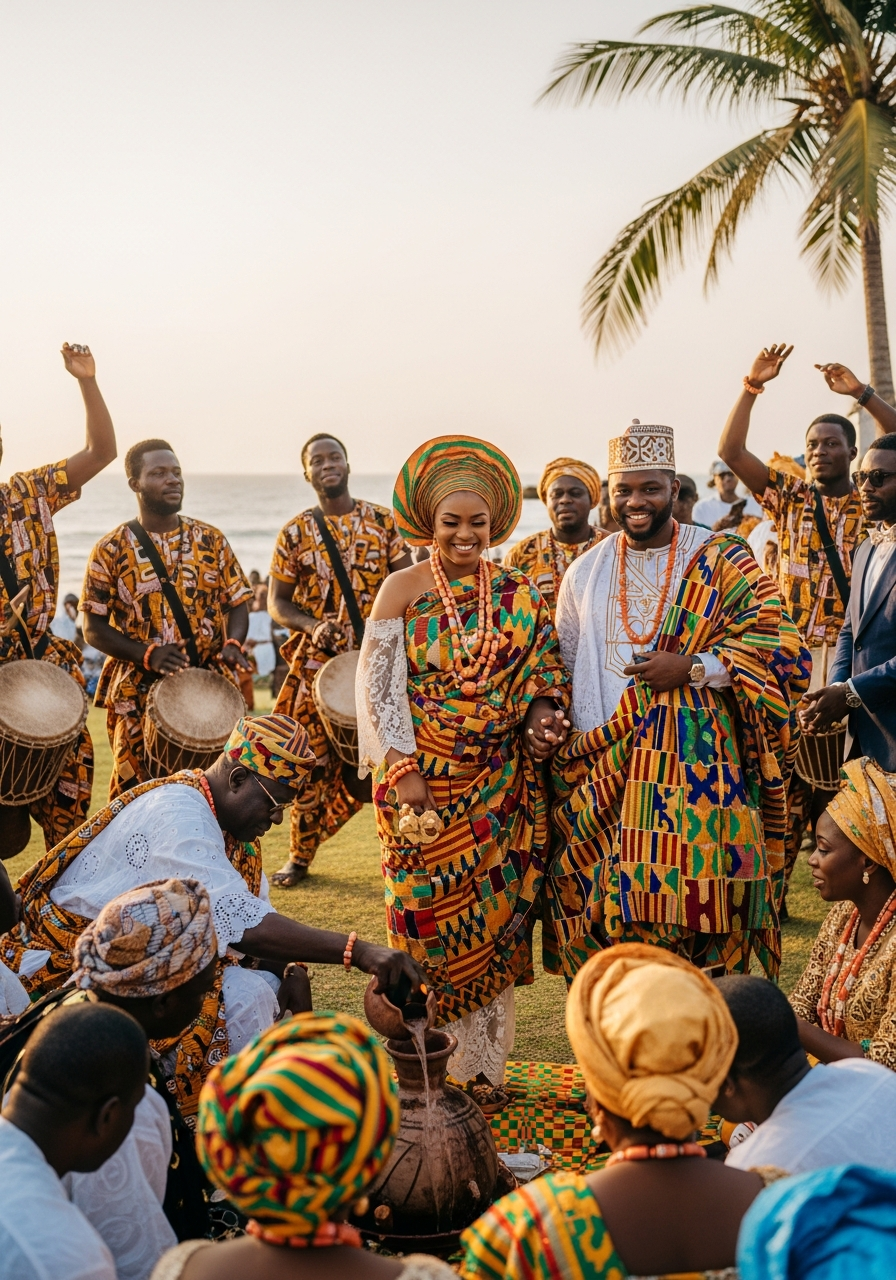
After the formal exchange, the bride is called to appear. She enters in formal dress, greeted by both families. Schnapps is opened and a libation poured for the ancestors. The mood shifts from ceremony to celebration: food appears, music begins, and the formal part of the day gives way to a family gathering.
For diaspora couples planning their own
Increasing numbers of Ghanaian diaspora couples are planning Knocking Ceremonies in London, Toronto, Amsterdam, and Atlanta. The core elements adapt well: the Okyeame role can be fulfilled by a trusted elder with oratory skills, the schnapps is available internationally, and kente can be sourced from Ghanaian community shops or ordered directly from Ghana. What matters is the structure, the sincerity, and the involvement of both families, not the geography.