Yɛkɔware Editorial
Published 2 June 2026 · 8 min read
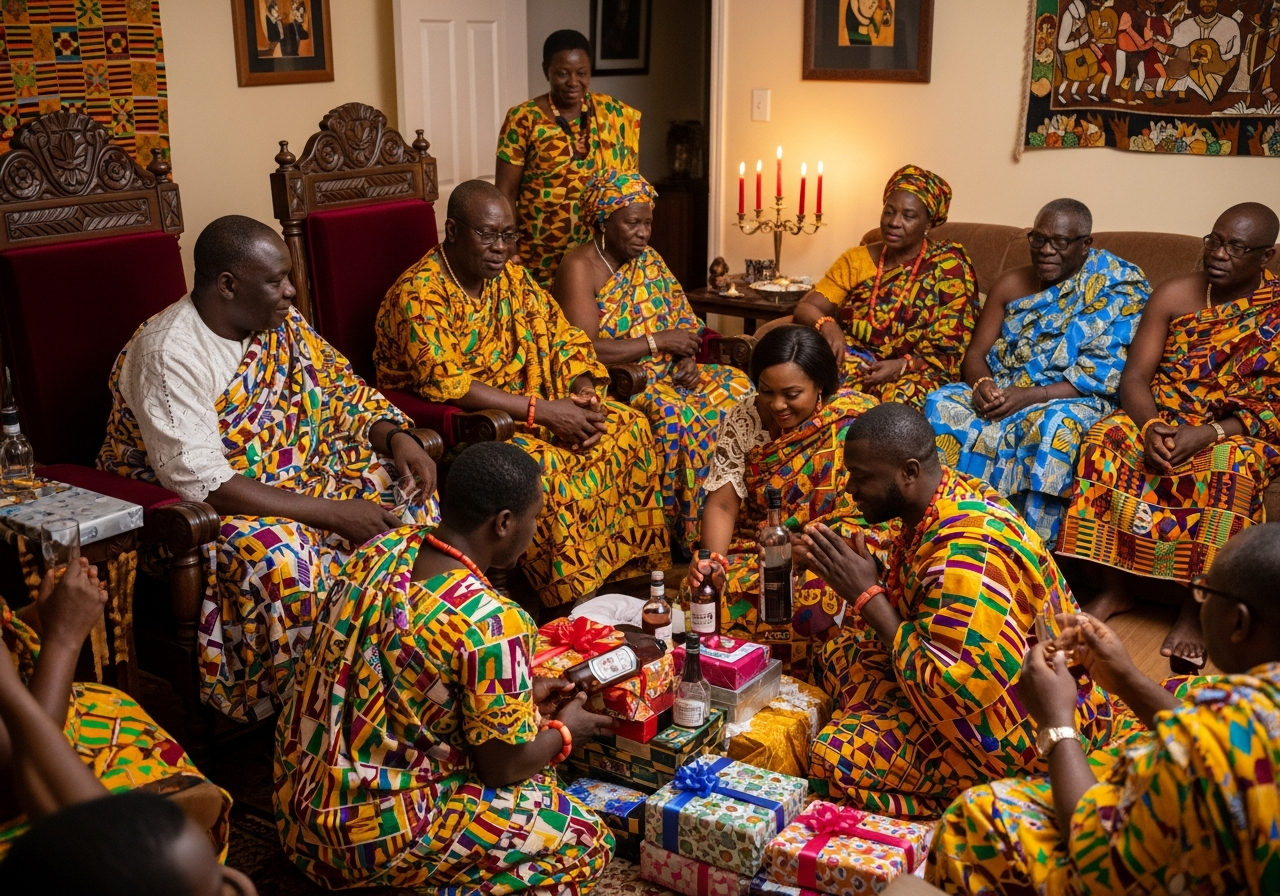
Kente cloth is not decoration. It is text. Every strip of kente woven on the narrow-band looms of Bonwire, the royal weaving village in Ghana's Ashanti Region, encodes a message. The pattern has a name. The name has a meaning. The meaning communicates status, intention, philosophy, and identity to everyone in the room who can read the cloth.
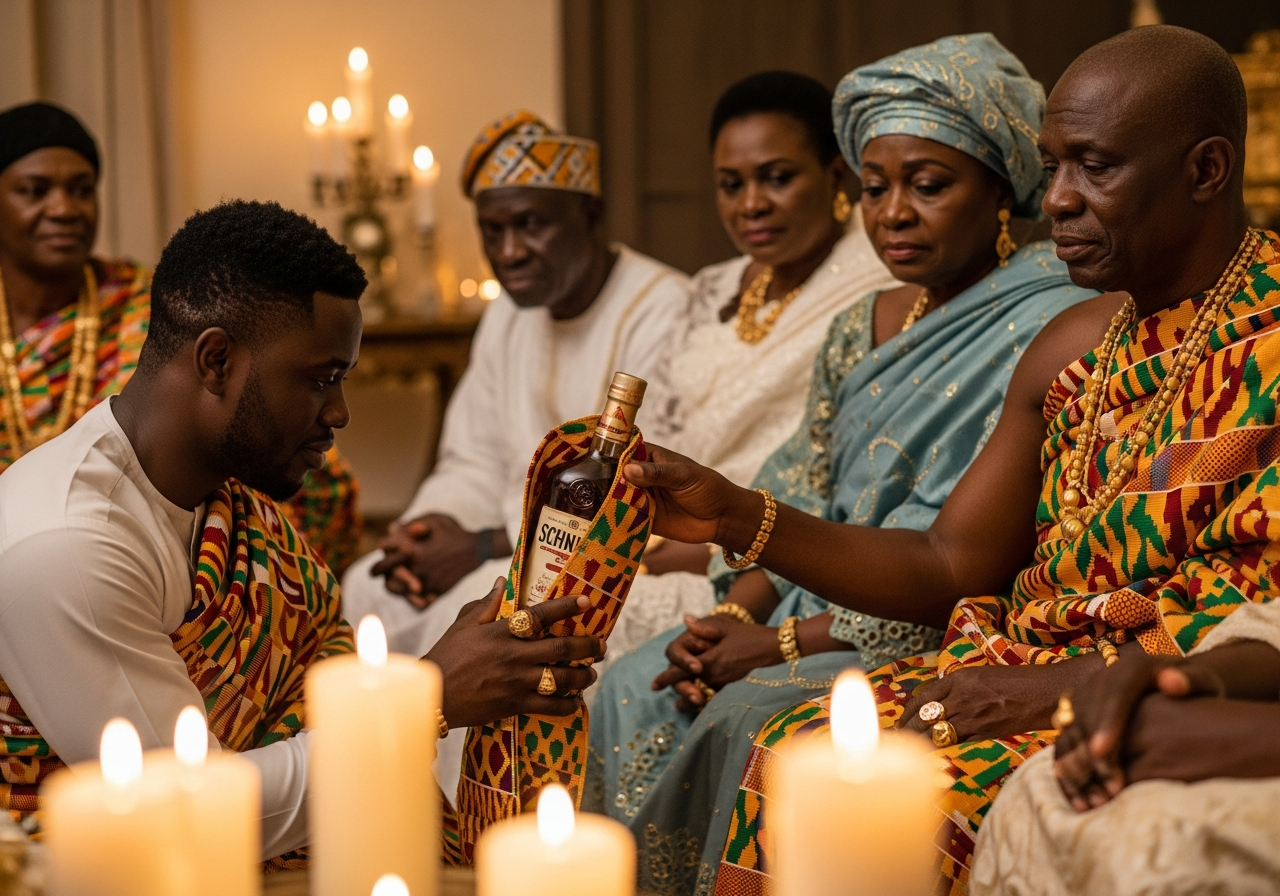
At an Akan wedding, this literacy matters. The wrong kente does not simply clash; it communicates. A pattern reserved for royalty worn by a commoner is a statement. A grief pattern worn to a wedding is deeply inappropriate. The couple's kente selection, made weeks before the ceremony with the help of family elders and a weaver who knows the names, is one of the most consequential decisions of the entire event.
How kente is made
Kente is woven in four-inch strips on traditional horizontal looms. The strips are then cut and sewn together with extraordinary precision. The mastery lies in the combination of warp and weft: the horizontal weft threads carry the pattern colours, while the vertical warp threads are typically white or gold. A single cloth of twelve to twenty strips can take weeks to weave, depending on the complexity of the pattern. UNESCO recognised kente weaving as an Intangible Cultural Heritage of Humanity in 2023.
Five patterns every guest should know
Oyokoman, the Ashanti royal pattern, is the most prestigious. Its red, gold, and green diagonal stripes were once reserved for Ashanti royalty. At a wedding, the couple's family may wear this pattern if they claim royal lineage, or to signal the gravity of the day. Adwinasa means 'all motifs are used up', a pattern so complex it represents mastery itself: a bride wearing it declares that nothing has been held back. Sika Futuru, meaning 'gold dust', is a predominantly gold cloth appropriate for grooms signalling prosperity. Asasia is deep blue or black with gold, traditionally worn by linguists and senior elders. Emaa Da means 'I have never seen this before', a cloth of such novelty it signals a new beginning, appropriate for a wedding in every sense.
When you put on kente, you put on the philosophy of a people. Every thread has been placed with intention.
Reading the colours
Beyond pattern names, colour carries meaning across all Akan traditions. Gold represents royalty, wealth, and high status. Green symbolises growth and renewal, often prominent at weddings. Red signals political passion and sacrifice, reserved for serious occasions; it appears at weddings only in certain positions. Blue represents peace, harmony, and love. White is associated with purity, spirituality, and ancestral connection. Black is used for funeral cloths and should not appear at a celebration.
For diaspora couples designing their kente for a wedding in London, Toronto, or New York, the challenge is not simply finding a weaver; it is learning this grammar before committing to a design. Yɛkɔware recommends connecting directly with certified Bonwire weavers, who can guide pattern and colour selection according to the specific meanings that family elders require.