Yɛkɔware Editorial
Published 14 May 2026 · 7 min read
The Igbo bride is among the most visually distinctive figures in African wedding tradition. Every element of her appearance is intentional, every material carries history, and the completed look, assembled over several hours on the morning of the Igba Nkwu, represents one of the most sophisticated bridal aesthetics on the continent.
The coral crown
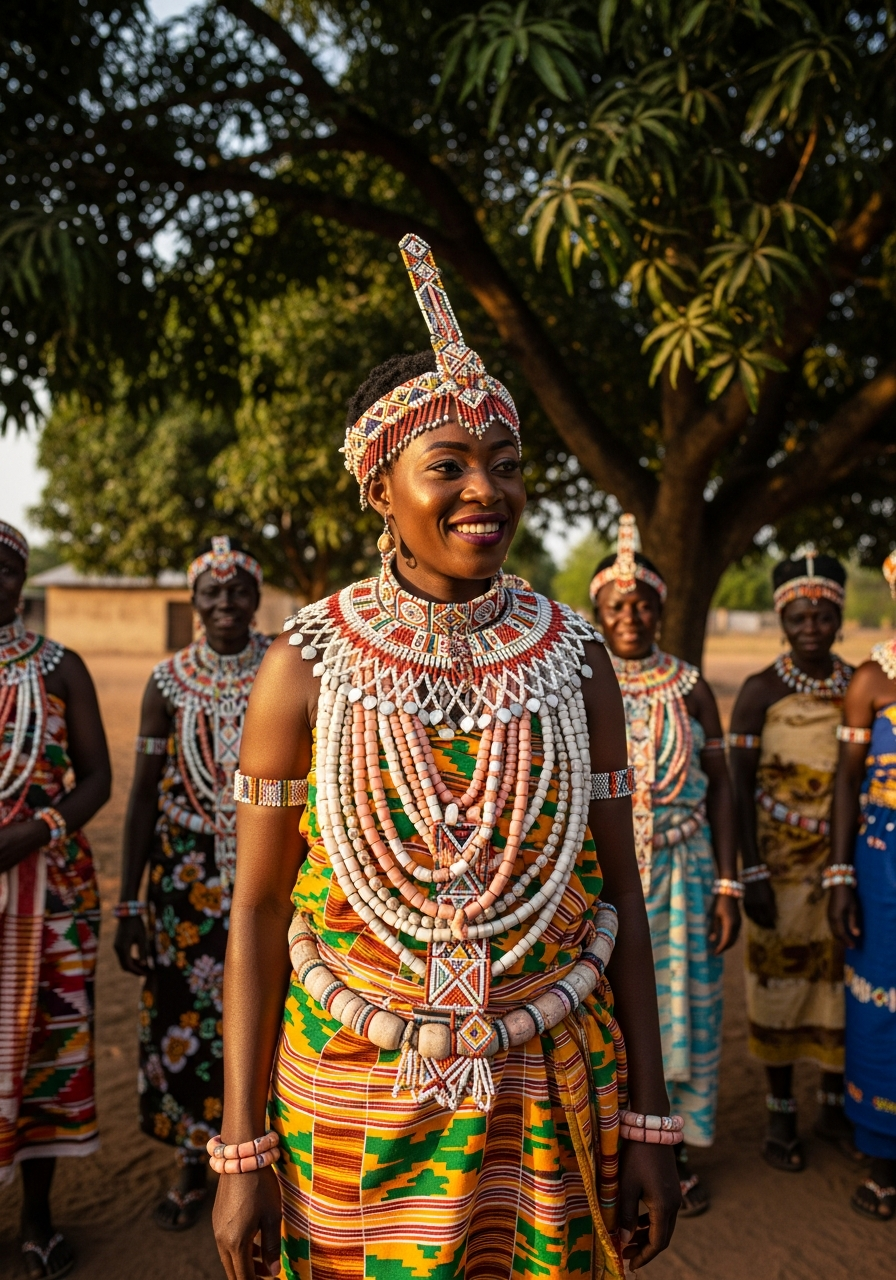
The Ichie Nwunye, the coral bead headdress, is the defining element of the Igbo bride. Made from high-grade coral beads, the best sourced from the depths of the Mediterranean and West African coastlines, the crown frames the face and signals the bride's elevated status. Coral is not cheap: a well-made Ichie Nwunye can cost several thousand dollars. Families begin assembling and inheriting these pieces across generations. Among the Igbo, coral is associated with wealth, authority, and spiritual protection.
The crown sits atop an elaborate traditional hairstyle or wig, often adorned with additional coral pins and gold accents. The neck carries multiple strands of coral graduating in size, from the finest at the top to the heaviest at the chest. Wrists carry coral and gold bangles. Anklets, called mgbaji, complete the frame at the feet, their soft rattling audible when the bride walks, an acoustic signature of her ceremonial movement through space.
George fabric: a colonial history worn with pride
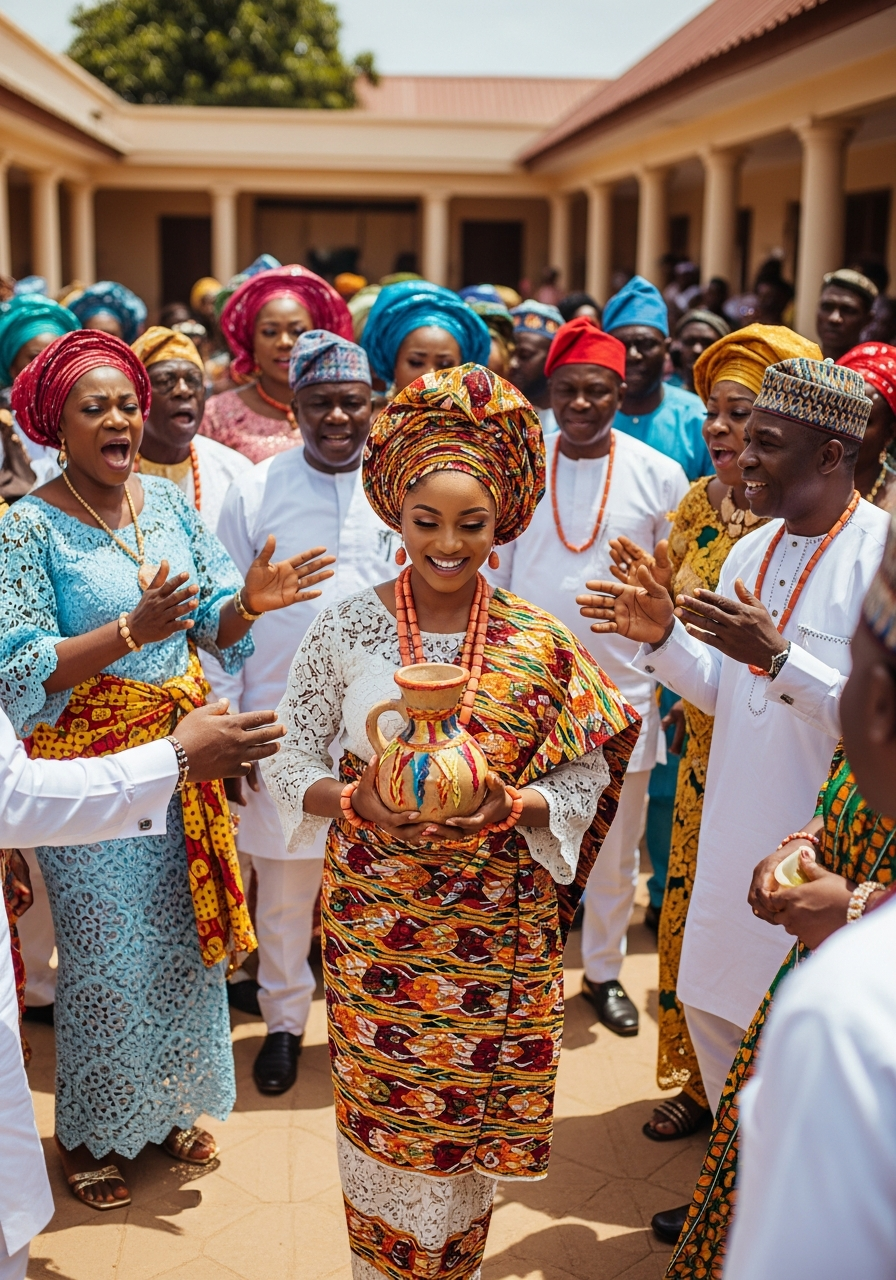
The George wrapper, the fabric draped around the bride's waist and torso, has a fascinating history. George fabric was introduced to the Niger Delta by Portuguese and later Dutch traders in the eighteenth and nineteenth centuries. Named after King George of England, the fabric (a thick, stiff, richly embroidered cloth) was adopted with enthusiasm by Igbo and Ijaw communities and transformed into a marker of prestige that continues to this day.
The finest George fabrics come from Madras, India, and from Swiss embroiderers. A quality George set for a bride typically costs between five hundred and several thousand dollars, depending on embroidery complexity and thread count. Igbo families spend months sourcing the right George for the ceremony, and the colour is often coordinated with the groom's and the wider wedding party's outfit.
Uli: writing on skin
Uli is not paint. It is calligraphy. Each line placed on the body is a sentence in a language that predates Arabic script in this region.
Uli is a traditional Igbo body art practice: geometric lines drawn in dark natural pigments on the arms, hands, neck, and décolletage. Historically applied by older women who had mastered the patterns, uli communicates belonging, transition, and celebration. At a wedding, uli marks the bride as a woman entering a new phase of her life. The patterns are not random; specific motifs denote marital status, family lineage, and the community's blessing.
The complete Igbo bridal look (coral crown, multiple bead strands, George wrapper, anklets, and uli body art) takes a full morning to assemble. The assembly itself, surrounded by female relatives who apply each element with commentary and laughter and occasional tears, is part of the ceremony. The bride emerges transformed, and the transformation is witnessed.