Yɛkɔware Editorial
Published 28 May 2026 · 12 min read
6:00am, and the gele session has already begun. In a compound in Ikoyi, Lagos, seven women crowd around the bride, each holding a length of stiff woven aso-oke fabric. A professional gele-tyer with twenty years of experience is directing them with quiet authority. The fabric will be folded, wrapped, and shaped into a crown. It will take ninety minutes. There will be three attempts before everyone agrees the architecture is correct.
The morning belongs to the women
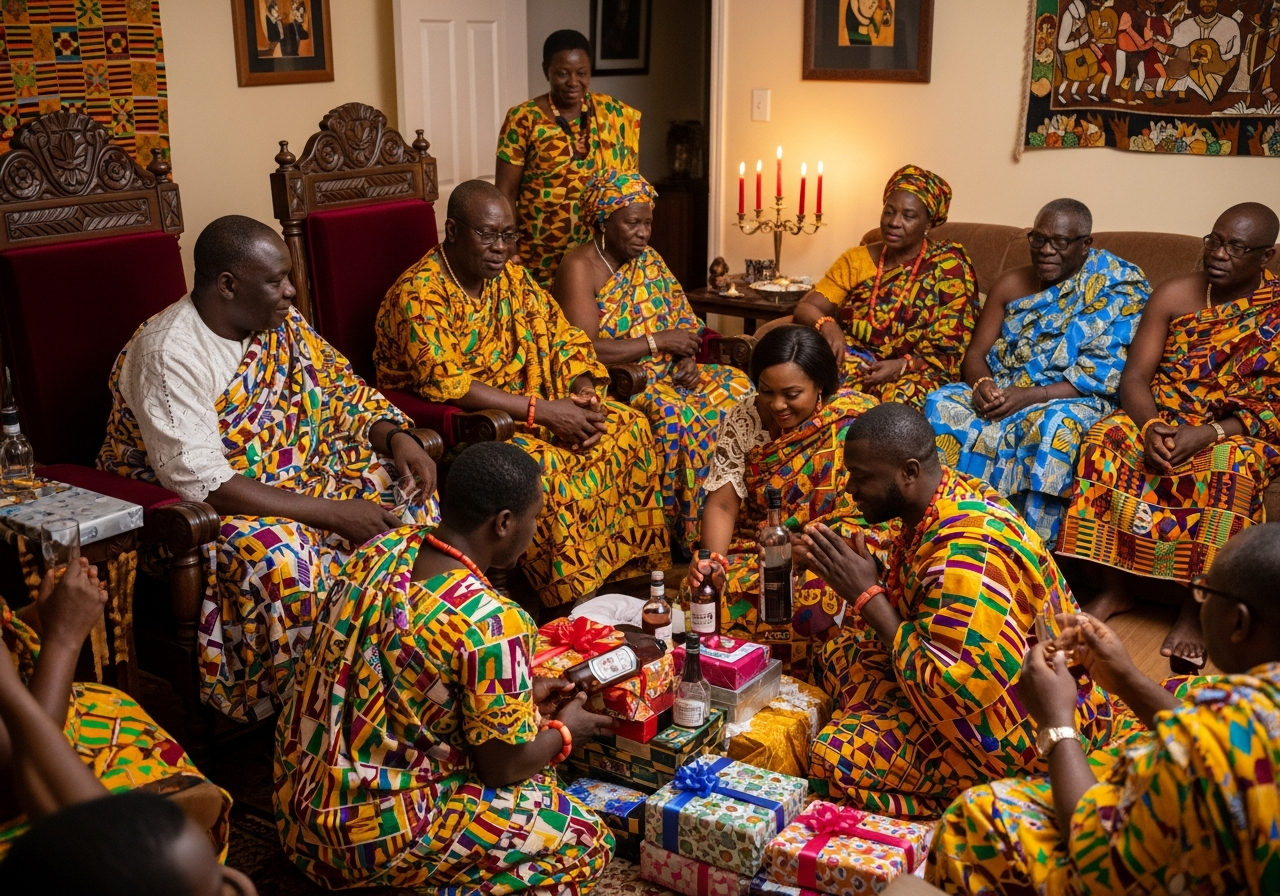
A Yoruba wedding does not begin with the bride and groom. It begins with the families. The bride's mother has been awake since 4:30am, coordinating the placement of chairs, the preparation of the jollof rice that will feed two hundred people, and the arrival of the professional MC who needs to be briefed on the family's titles. Meanwhile, on the other side of the city, the groom's family is gathering for their own morning prayers, led by the family patriarch who will speak the first blessings of the day.
By 9am, the bride's compound is crowded. Aunties who flew in from Abuja, cousins who drove overnight from Ibadan, childhood friends who have been rehearsing the family entrance dance for three weeks. The yard smells of fresh flowers, rice, and the distinctive sweetness of ogun omi, the traditional palm wine that will be presented at the ceremony. Lagos is performing itself.
The Igbeyawo
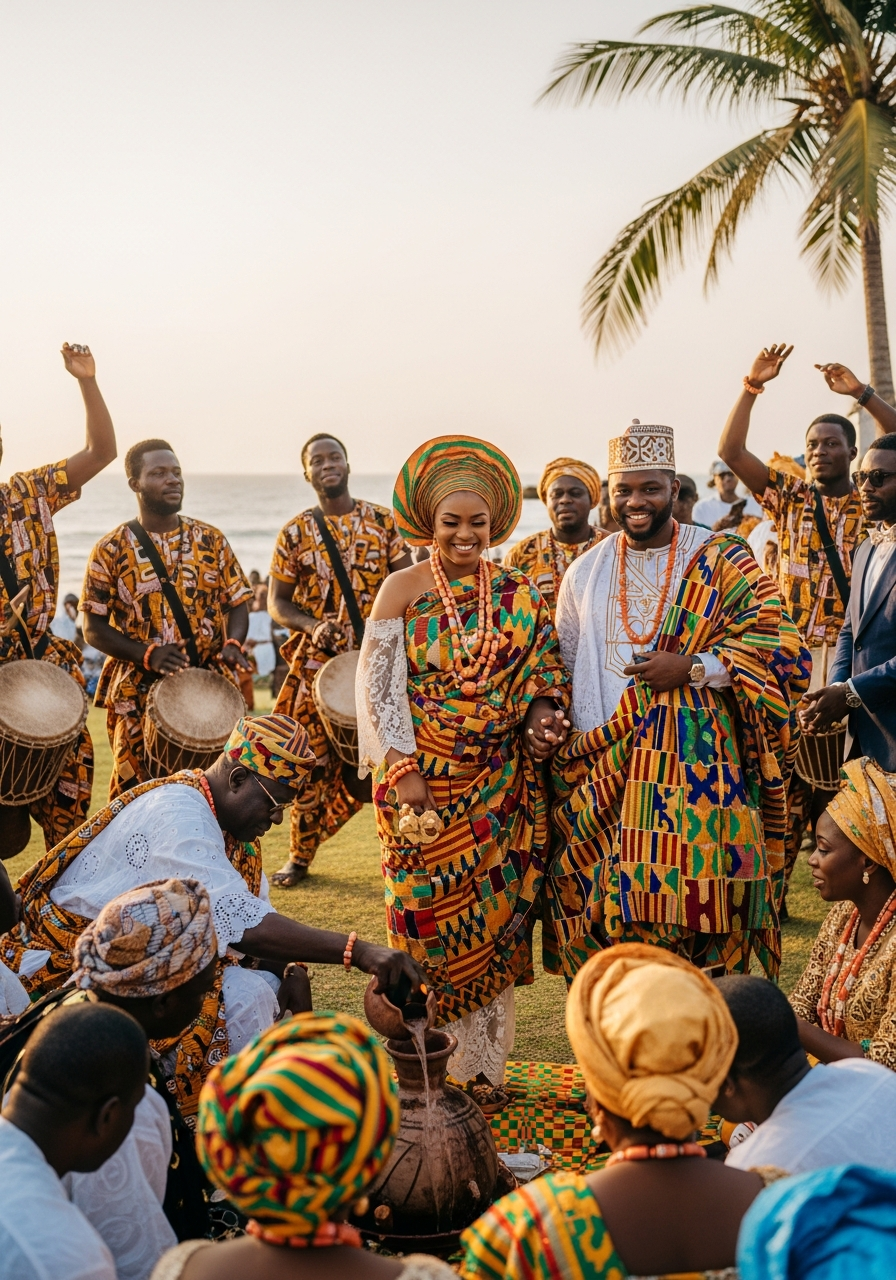
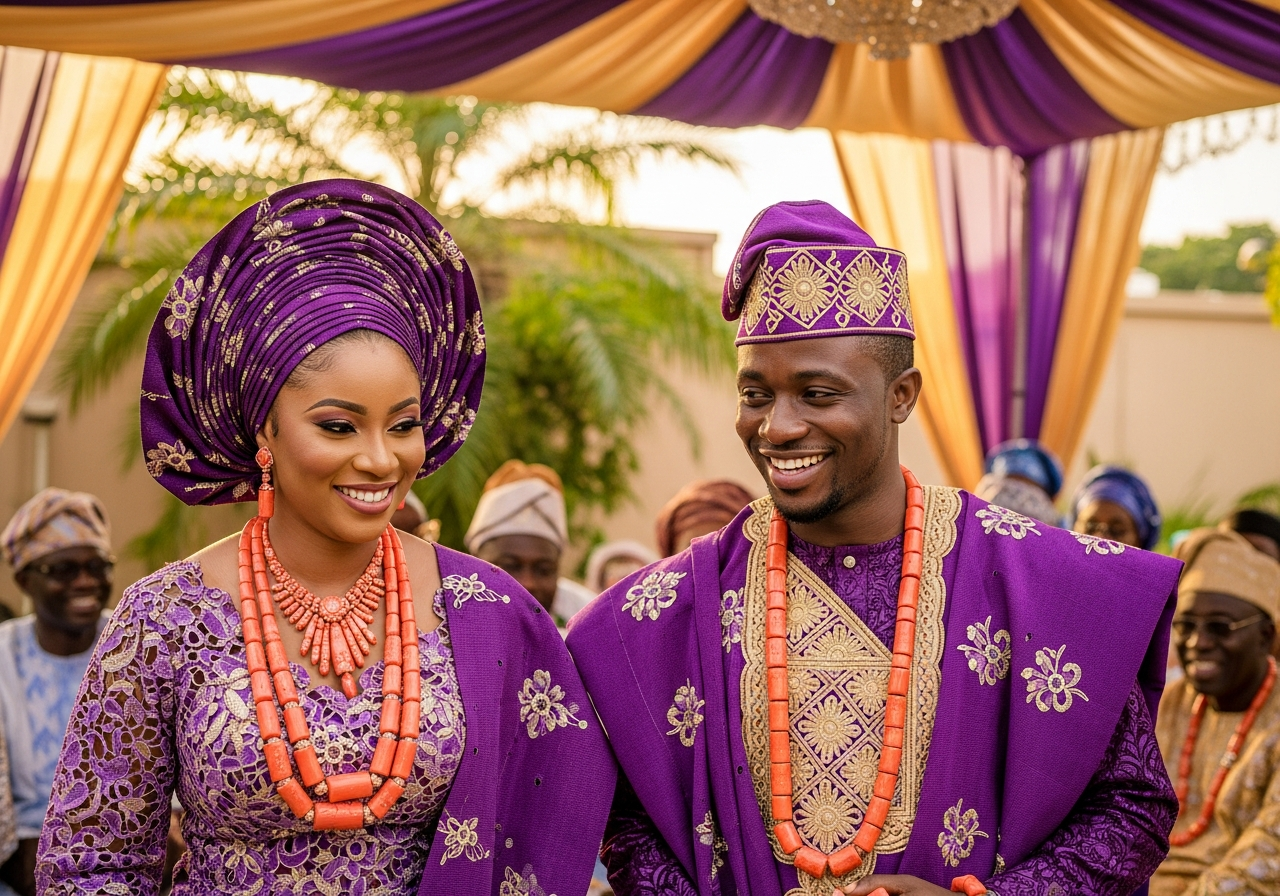
The traditional Yoruba wedding ceremony begins at noon. The bride enters last, flanked by her female relatives, moving to the synchronized rhythm of a professional talking drum ensemble. She is wearing midnight blue aso-oke, chosen to complement her mother's outfit, with three layers of coral beads from a set passed down through four generations. The groom, already seated with his family across the open space, rises when she enters.
The room goes quiet for exactly three seconds. Then the drumming doubles. That is Lagos telling you that this is real.
The oro owo, the bride price negotiation and presentation, follows. It is theatrical in the best way: the groom's family spokesman presenting items while the bride's family spokesman finds reasons to reject or modify each one, all in Yoruba, all with proverbs that draw laughter from elders who understand the references.
The reception: when Lagos becomes itself
By 6pm, the wedding reception is in full movement. A live band (guitar, bass, talking drums, and three vocalists) plays a set that moves from traditional Yoruba praise songs into highlife, then into Afrobeats, then back into traditional music without the seam ever showing. Tables of aso-ebi fabrics create a visual map of the extended family across the room.
At 2am, when most weddings in Europe or North America would have ended hours ago, the talking drums are still speaking. The oldest guests have gone; the youngest are dancing. The couple has changed outfits twice. The food has been refilled. Lagos does not know how to stop celebrating a good union, and in a city of twenty million, a good union deserves every minute it gets.