Culture
Hausa
Location
Kano, Nigeria
Published
January 2026
Traditions
Lalle (Henna Night)
Kamu (Ceremonial Taking of the Bride)
Amina's family has been in Kano for eleven generations. Ibrahim's family arrived from Sokoto four generations ago. Both families are deeply embedded in the Hausa-Fulani aristocratic tradition of Northern Nigeria, and the wedding they planned together was a ceremony shaped by that history: formal, elegant, and conducted with a precision that reflected the centuries of ceremonial refinement that both lineages carry.
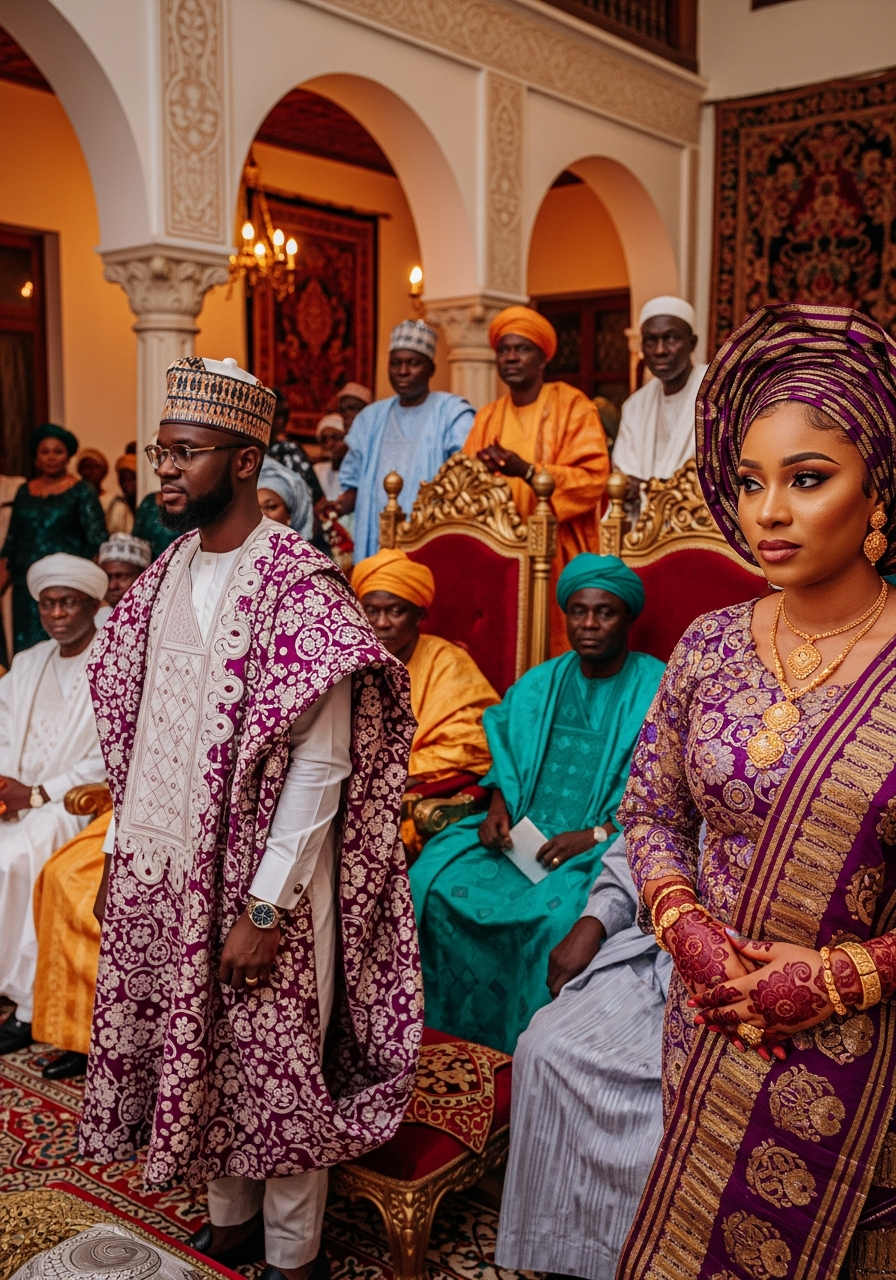
The lalle night, the henna ceremony held the evening before the wedding, was an all-women event that lasted until 3am. A specialist henna artist from Kano applied intricate geometric patterns to Amina's hands, forearms, and feet; patterns that took seven hours and were still fresh when Amina was dressed the following morning. Her abaya for the lalle was deep green silk; her kaftan for the wedding day, ivory and gold.
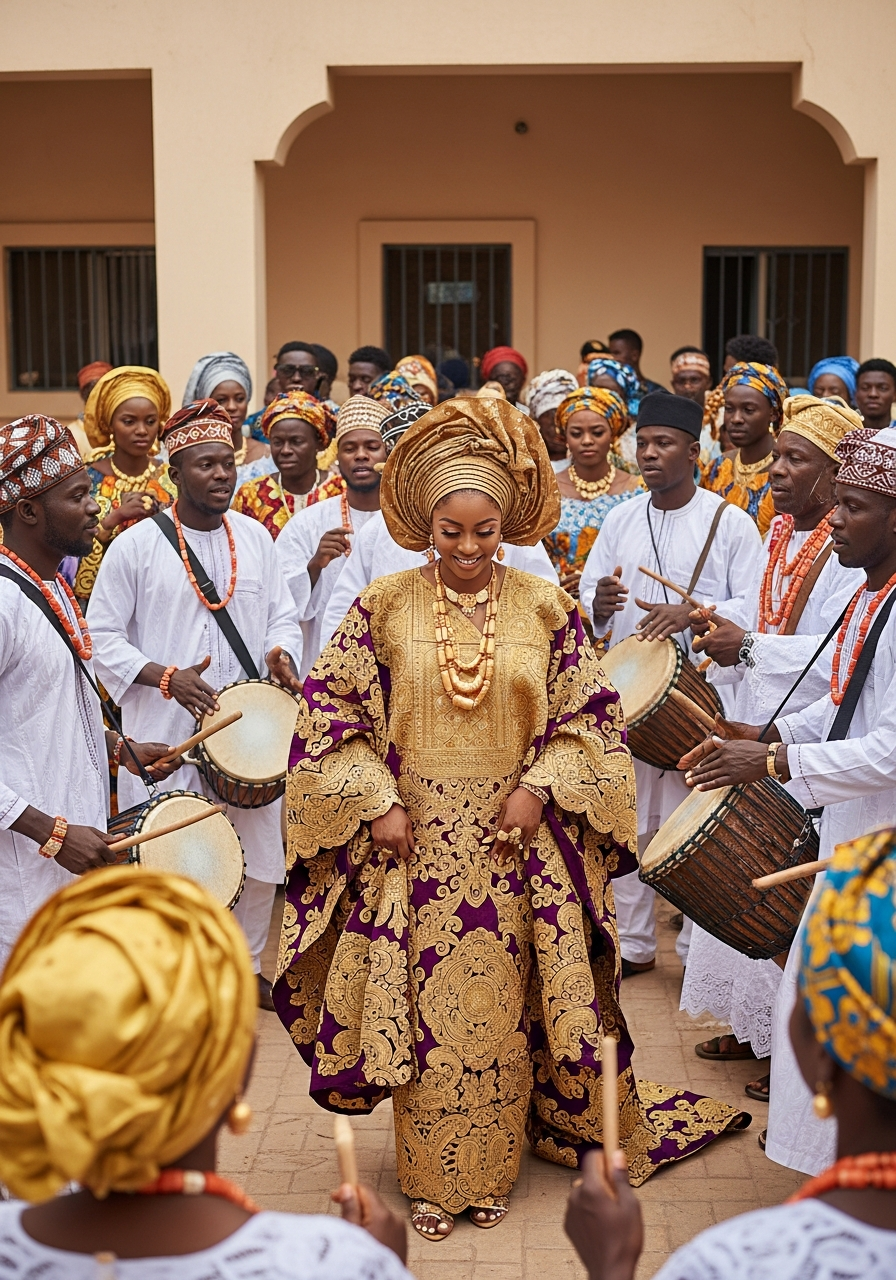
The Fatiha, the formal Islamic marriage rite, was conducted by a respected imam in the presence of two hundred guests and witnessed by the wali on Amina's behalf. Ibrahim wore a white babban riga and a matching fula cap, his family's colours embroidered at the collar. When the imam confirmed the union and the room responded with Al-hamdulillah, Amina, waiting in a separate room with her female relatives, heard it through three walls and began to cry. The Kamu followed: the groom's delegation arrived at Amina's family's door with drumming and song, and the ceremonial exchange of the bride, resisted playfully, surrendered joyfully, drew the two families together under the afternoon sky.
Share this story