Culture
Habesha
Location
Addis Ababa, Ethiopia
Published
November 2025
Traditions
The Habesha Kemis
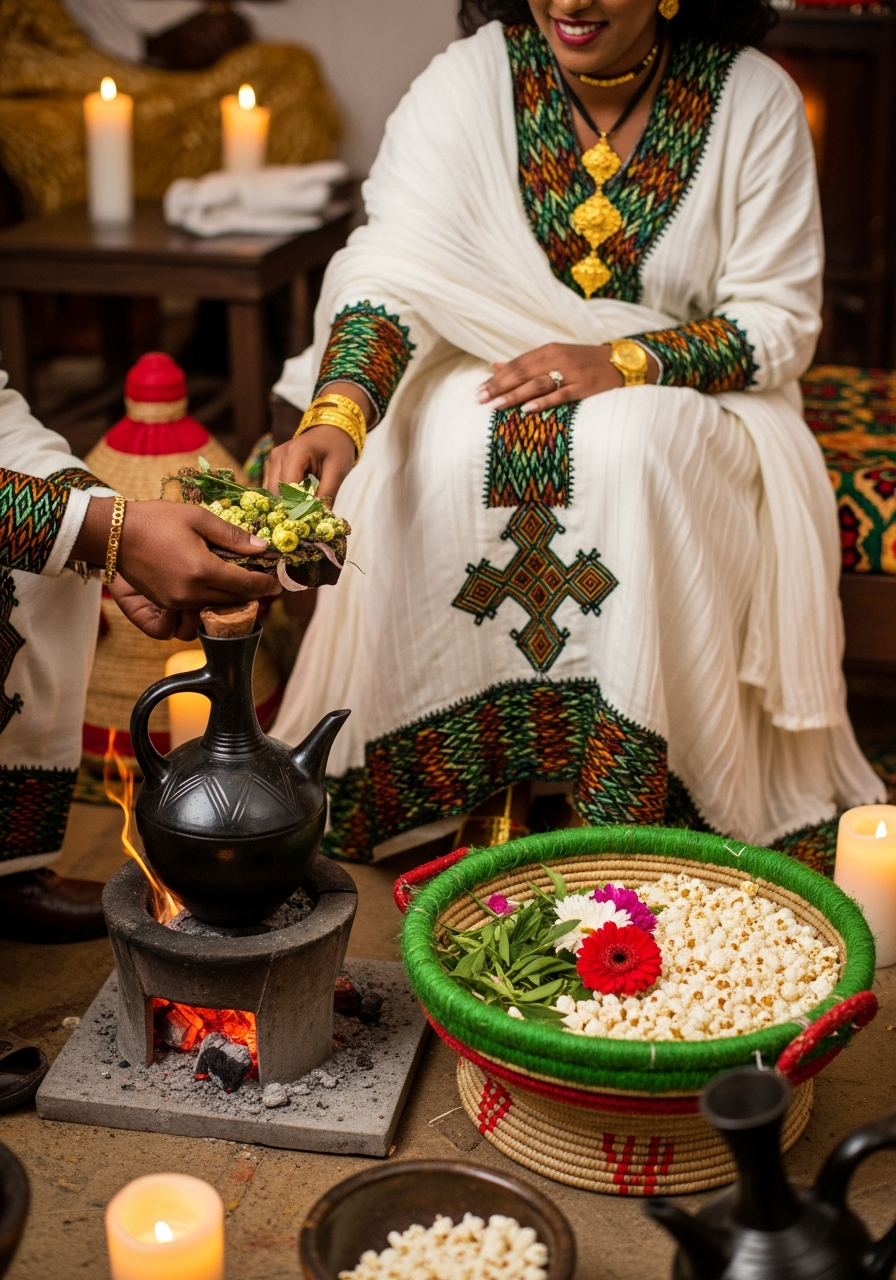
Jebena Buna (Coffee Ceremony)
Tigist and Dawit both grew up in Addis Ababa's Bole district, attending the same Ethiopian Orthodox church, moving in the same social circles for fifteen years before they found each other. Their wedding was held in a reception hall near the church where their families had worshipped for three generations, and the coffee ceremony that opened the celebration was performed by Tigist's aunt, who has been the family's coffee ceremony specialist for forty years.
The habesha kemis that Tigist wore was made by a dressmaker in the Merkato district who had been sewing ceremonial dress for three decades. The fabric, white cotton with hand-embroidered netela trim in the cross pattern of the Ethiopian Orthodox church, took six weeks to embroider. The gold cross pendant at Tigist's neck had been in her mother's family since her grandmother's wedding in Gondar in 1961.
When the coffee ceremony's third round, the Baraka, was served to the children in the room, Dawit's grandfather took the cup, drank from it, and said a blessing in Amharic that no one under fifty fully understood but everyone felt. That is what the Habesha coffee ceremony does at its best: it makes a room of strangers into a family, one cup at a time.
Share this story