Culture
Zulu / Sotho Fusion
Location
Johannesburg, South Africa
Published
February 2026
Traditions
Bogadi (Sotho Bride Price)
Umabo (Zulu Gift Exchange)
Naledi is Sotho. Thabo is Zulu. Their families, from different provinces and different ceremonial traditions, approached the question of the wedding with the care of two people navigating a negotiation they both wanted to succeed. The result, a two-day celebration that incorporated elements of both traditions in a way that felt neither forced nor compromised, became a model that both families now describe as the standard for what an inter-cultural South African wedding can be.
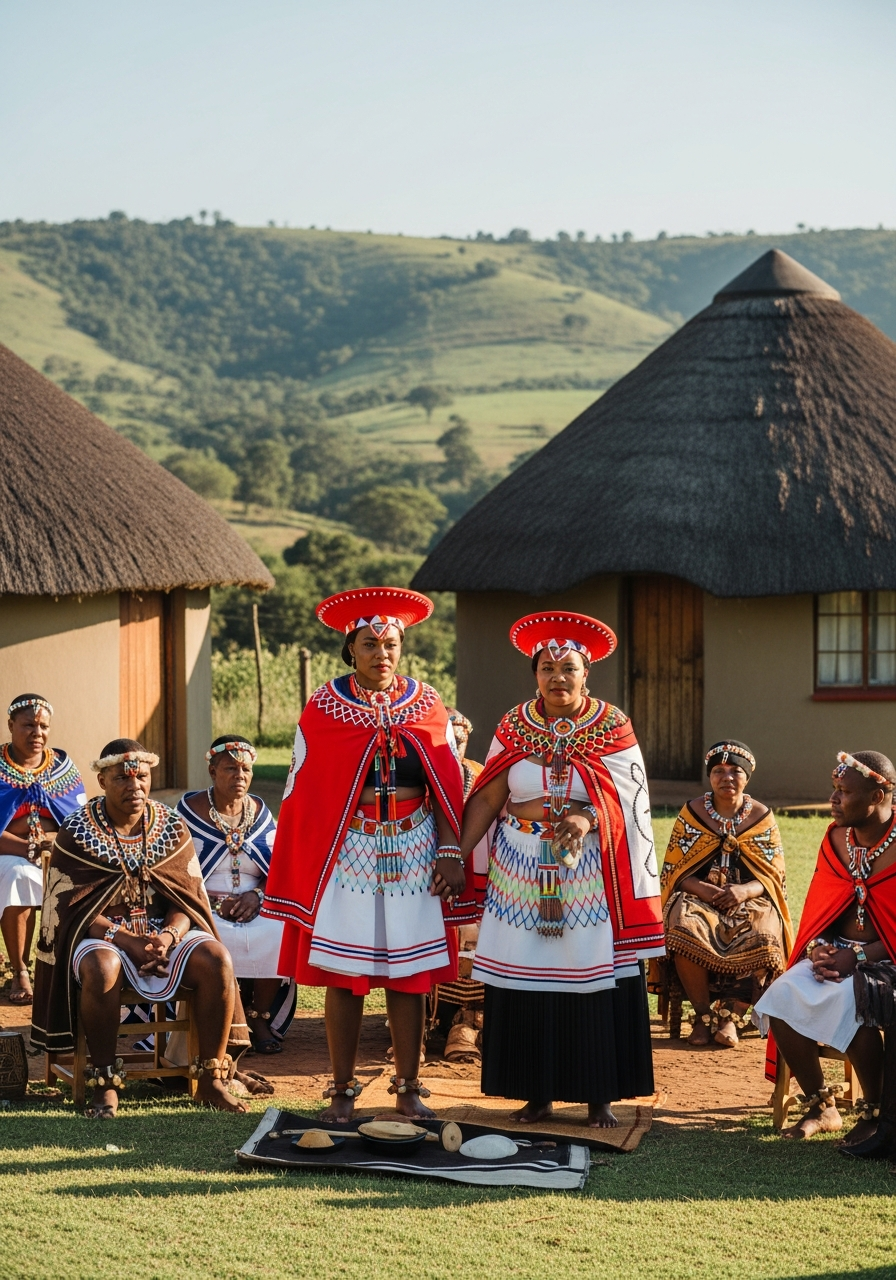
Day one belonged to the Sotho tradition, with a formal bogadi ceremony conducted in Naledi's mother's language, the cattle offering negotiated respectfully and accepted warmly. Day two was Zulu: the umabo, a giving of gifts from the bride's family to the groom's, conducted with the formality and joy that Zulu ceremony demands. Naledi wore red and white on both days, the colours of transition in both her cultures.
What stayed with their guests long after the celebration was the moment at the end of day two when Naledi's Sotho grandmother and Thabo's Zulu grandmother sat together and sang, in different languages, to the same melody, a song about the beginning of something that neither of them could name but both of them recognised.
Share this story