Culture
Zulu
Location
Durban, South Africa
Published
October 2025
Traditions
Inkciyo Beadwork
Slaughter for the Ancestors
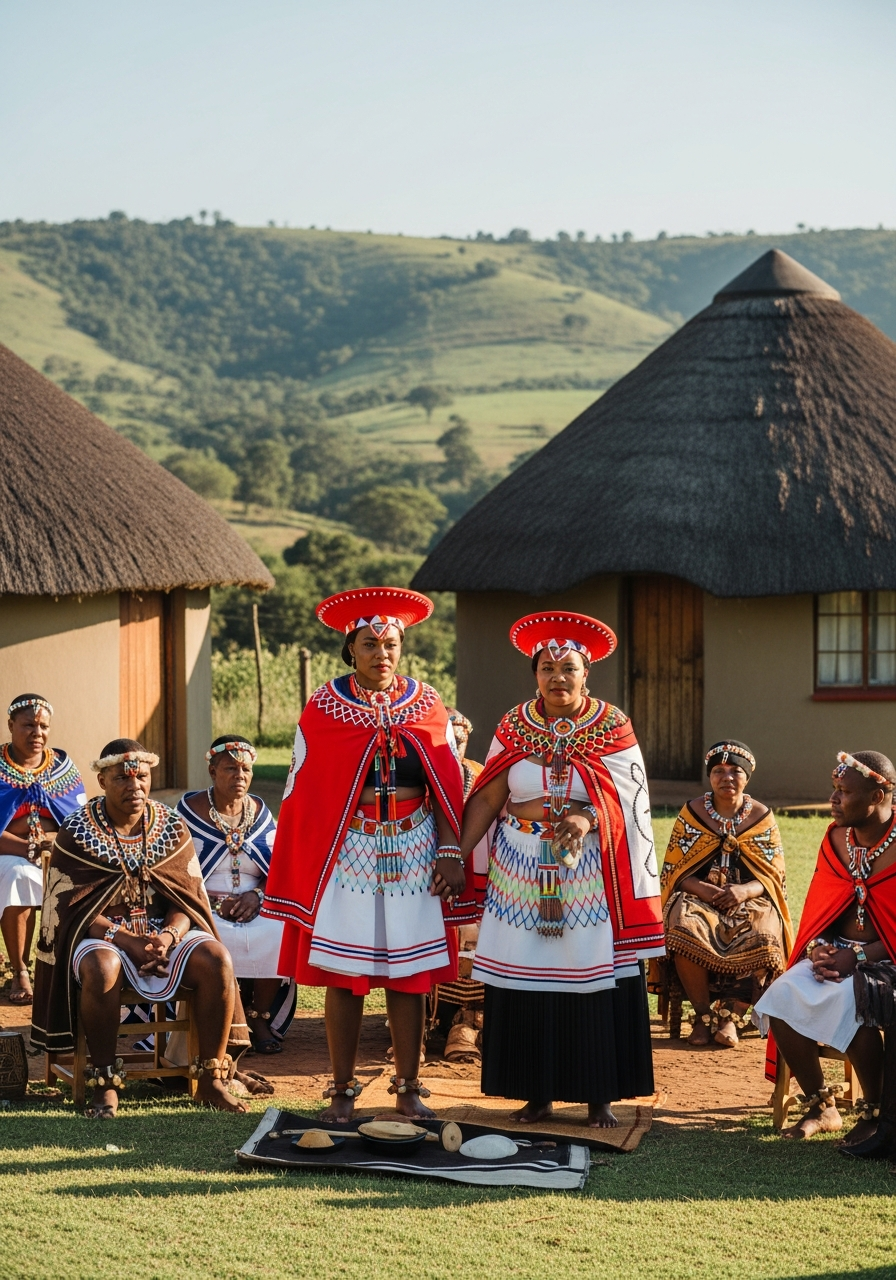
Nomsa and Sipho's wedding was held in eMdlalose, a community outside Durban where Sipho's family has lived for five generations. The umabo ceremony began before dawn, in the traditional manner, with the women of both families gathering to prepare the gifts that would be exchanged before the sun was fully up. Nomsa, dressed in the married woman's isicholo hat, red ochre on her skin, and layers of inkciyo beadwork, entered the ceremony space to a silence that preceded the loudest celebration of the day.
Zulu beadwork at a wedding is a communication system as much as it is adornment. The inkciyo worn by Nomsa had been made by her mother and her aunts over three months, each bead colour and pattern chosen to tell the story of Nomsa's family, her values, and her hopes for the marriage. Sipho, who understood the beadwork language, read it publicly during the ceremony and explained its meaning to the guests: an act of learning and of love that moved everyone present.
The slaughter of the beast for the ancestors, conducted by the eldest male of Sipho's family in the early morning, preceded the main ceremony and sent a message to the spirits of both lineages that a union was being formed in their name. By midday, when the cattle had been prepared and the celebration was fully underway, both families danced together for the first time, the division between them dissolving into a shared rhythm.
Share this story